
Hermosa volleyball community shows up to spike new court policy
Five years of drafting, one morning of public notice, and no clear answer about the problem it is meant to solve. Bureaucracy met beach culture head-on last night.
Five years of drafting, one morning of public notice, and no clear answer about the problem it is meant to solve. Bureaucracy met beach culture head-on last night.

Hermosa Beach spent nearly five years writing rules for its 75 beach volleyball courts. The volunteers who have maintained those courts for decades got the memo Tuesday morning. The Commission took the item up Tuesday night.
They came anyway, enough of them that the lawn bowlers ahead of them on the agenda had to clear the room first. What they found waiting was a city proposing to codify something that has essentially governed itself without seeming to need a written rule book over the last 40 years.
The Parks and Recreation Advisory Commission pushed the policy back to September for a continued conversation. Two commissioners declined to sign on to even that.
Hermosa has no comprehensive policy governing its beach volleyball courts. Twenty-four sit in the commercial zone between 10th and 15th streets; the rest line the residential zone. Outside a few provisions in the municipal code, there are no adopted rules on hours, challenge procedures, decoration, or who maintains what.
Parks and Recreation Manager Brian Sousa presented the draft, filling in for Director Lisa Nichols, who was absent. It would change that. The policy would seek to formalize a Court Liaison Program for the volunteers who have maintained residential-zone courts for decades, to set standards for personalization and public art, and asks whether commercial branding belongs on nets. It also potentially recommends striking the words "for compensation" from the municipal code, so the city could cite unpermitted instruction without first proving anyone got paid.
The subcommittee that produced the policy was appointed October 5, 2021. That appointment is the only entry in the staff report's table of past Commission actions.
Speaker after speaker said they had volunteered for the process and never heard back.
"About five years ago, I was really excited when they put together this committee of actual volleyball people to come up with the rules for Hermosa Beach," said Dan Cavanaugh, a court steward for four courts. "We had two meetings and it didn't really go anywhere, and every six months I'd send an email: what's going on, what's going on. So imagine how surprised I was when I found out that this work was going on, but just without the input of this committee." The feeling now, he said, is "the city doesn't care what we think."
Sousa acknowledged the project sat idle for years under prior city priorities and management before new direction restarted it. The notice went out the morning of the meeting.
Commissioner Elka Worner raised it from the dais before public comment even opened. She had spoken to stakeholders gathered years ago who told her nothing happened in between, she said, and the court caretakers who wanted to be in the room couldn't be, because they "got the memo I think yesterday morning. I'm sorry, today."
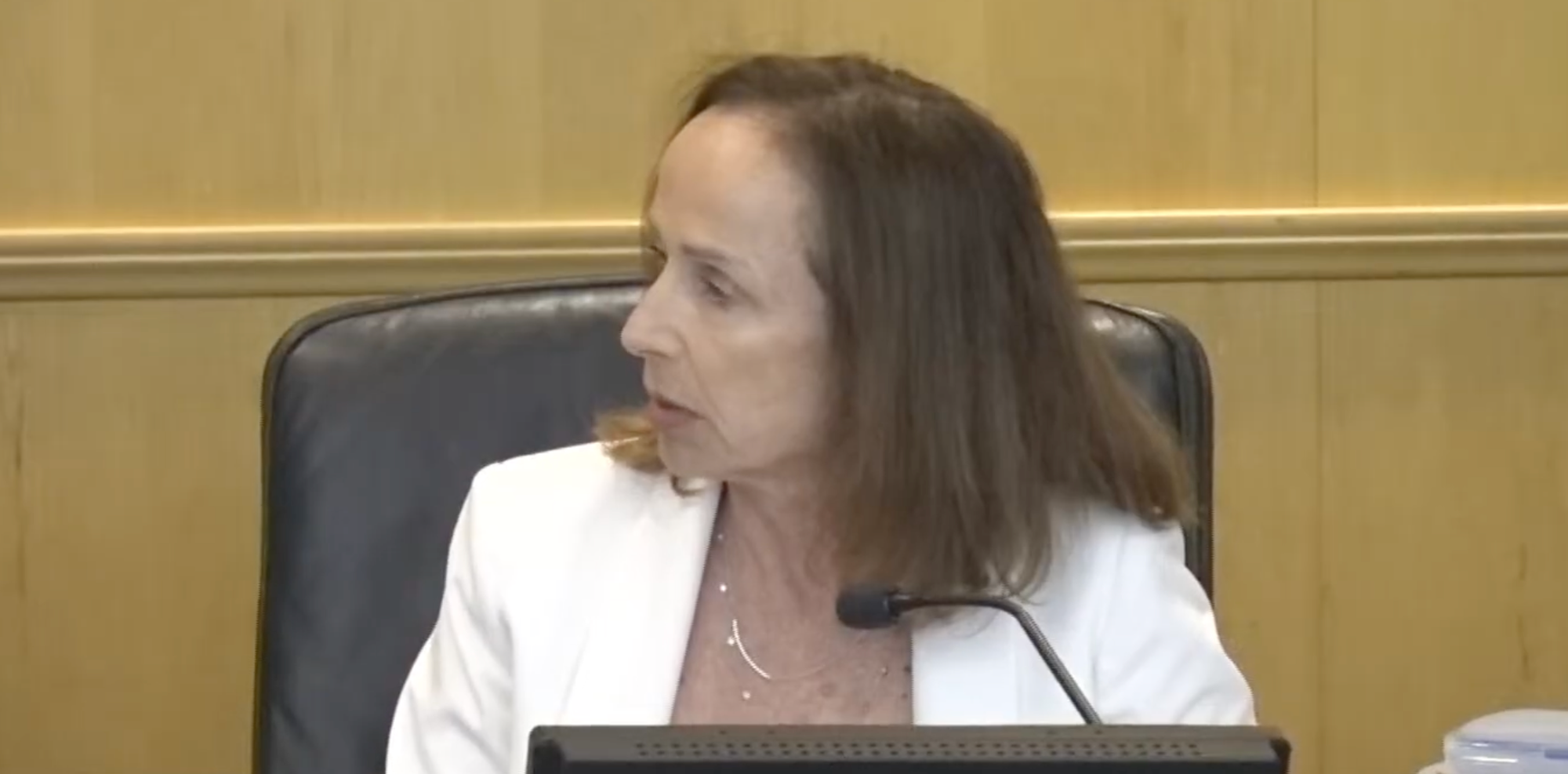
"That doesn't give a lot of warning to people," Worner said. "Maybe we should have had a little more warning and more discussion with these groups, and kept them abreast of what was going on, so they could chime in and participate, which they'd originally been asked to do."
"Less than 24 hours ago, I learned for the first time the commission would be voting on a new volleyball court use policy," said Eric Beranek of Torrance, reading remarks he said a lawyer prepared that day. The policy "goes beyond clarification of existing law," he argued; a key attachment never made the public packet; and the finding of no fiscal impact ignores the coaches and small businesses it would affect.
Commissioner Barbara Ellman, who served on the subcommittee, did not defend the timing. "First of all, I think everyone in this room deserves an apology for what happened today," she said. "It was, I hate to say it, but it was unprofessional, and something I never let my grandchildren say, but I will say it wasn't fair."
The apology was for the noticing. The grievance in the room was older. The subcommittee Ellman was appointed to in 2021, the one Cavanaugh and other stewards had volunteered to serve on, met twice, went quiet, and produced the draft policy without them.
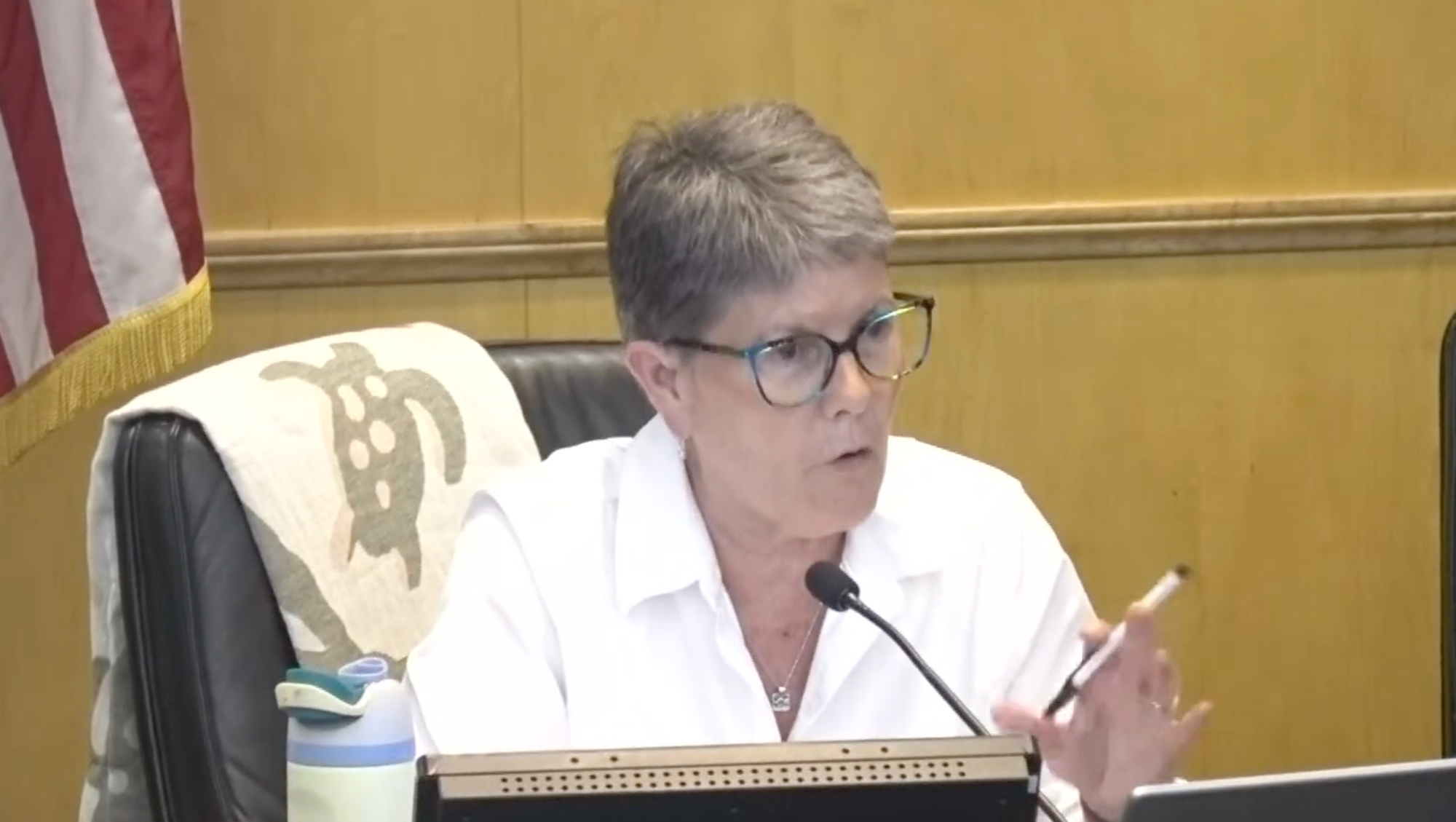
Worner opened the Commission's questioning by asking for the thing the staff report never supplies: a count. "The complaints you received about instruction and things of that nature, who did they come from? Do you have numbers, and what were the complaints?" she asked. "I'm trying to understand why this is coming up."
Staff described phone calls, emails, and observations, some from people who preferred to stay anonymous. The staff report says the department has addressed "more than 30 known cases" of unpermitted activity in recent years. Vice Chair Todd Tullis went looking for them.
"I have all GoHermosa records from 2019 to July 2025, and there's a total of two reports of unpermitted activity," he said. "One report was filed by you, Brian. Another report appears to have been filed by a resident."
Sousa noted not all complaints come through GoHermosa. Asked how many citations had been issued in five years, staff had no number; asked what one costs, Sousa guessed "somewhere between $250 to $500," but wasn't certain.
"If it's breaking municipal code and we're not enforcing it, there's probably a different reason than the fact we don't have a policy," Tullis said. "Wordsmithing the (municipal code) to remove the compensation thing just trades one ambiguity for another."
Pressed on why the city needed the policy at all, Sousa returned again and again to liability. A public facility with no adopted rules "is a very uncommon practice and subjects us to potential litigation and risk," he said. The residential-zone courts may be built and outfitted by volunteers, but "those are donations, those are considered city property. We're held liable for all courts." Direction to produce the policy, he added, had come from "at least two city managers."
Tullis pushed on it.
"Why is not having a standard a problem?"
"Because it is a public facility," Sousa said. "And it opens the city to litigation and risk."
"Right, but why? The community, the public deserves to know why."
The exchange didn't get further than that. Asked from the dais whether decades of painted poles, flags, and memorials had ever actually produced a liability issue, Sousa said he couldn't speak to the liability aspect, though the city had fielded complaints about flags some residents found offensive. Asked what enforcement of the new policy would look like, he confirmed the limit: a policy is not citable, only the municipal code is, and Parks and Recreation has no authority to write citations regardless. "We educate the public," he said. Anything beyond that runs through code enforcement and the police.
That is the fault line running under the whole item. The city's position is the ordinary instinct of government: a public asset with no written rules is an exposure, and the fix is to write the rules. What the volleyball community argued back, liaison by liaison, is that the asset has not been unmanaged for decades. It has been self-managed, by the people who paint the poles, replace the nets, and talk the guy out of chaining his chair to one. The city's own 2022 survey of court volunteers found people who had been maintaining their courts for anywhere from six months to more than 30 years, out of pocket, at $200 to $300 a year apiece.
The personalization question drew the most feeling. Hermosa's courts carry painted poles, flags, totems and memorials, all of which the staff report itself calls "part of Hermosa Beach's unique beach volleyball culture." The draft would let them stay, subject to standards, while reserving the city's right to remove anything at any time. Staff cited complaints about flags some residents found offensive.
"I don't think any of us want to really Walmart Hermosa Beach," said Raymond Dussault, who has organized a free Fourth of July volleyball potluck for more than a decade. "I've been playing volleyball on this beach for 16 years now, and I've never once seen an offensive item on a volleyball court." His larger point: the policy doesn't distinguish neighborhood potlucks and memorials from recurring commercial operations. How would staff walking past tell a tournament from a picnic, or four friends running drills from a paid class?
Not everyone was a player. Cindy Vicks, whose family has owned a house at 1928 The Strand for nearly 100 years, described a second court going up outside her window a few years ago, built by people who were "extremely dismissive" when she questioned it. Since then: loud music, tents, all-day parties.
Ellman was blunt about the same dynamic. "The sense of ownership that happens on the courts is ridiculous," she said. "Just because you've gone to the bottom of 6th Street for the last year or two doesn't give you ownership of that. And I don't care if you are a court steward or a court liaison. You do not own that beach." She found the emailed comments suspect. "It was obvious that people were told what to say." And she drew a hard line on commerce: "I do not think that a public beach is a place for someone to decide that's how they're going to make their living."
At least one of those e-comments made an argument rather than a plea. Derek Rubiano wrote that the city "should be careful not to regulate away the very culture that made its volleyball community so special," and drew the same line Dussault had. The courts host organized drills, small competitions, birthday events, fundraisers and clinics, he wrote, and those activities "help new players learn the game, bring people together, support good causes." Rules on commercial use, court access and large tournaments are reasonable. "But a blanket restriction on drills, instruction, or organized play would do real harm to the community and the culture that has grown here over decades."
Mark Paaluhi, the tournament organizer Ellman called her "guru" for beach history, offered the compromise the Commission largely adopted: restart the subcommittee, set the basic rules, rebuild the liaison roster, then take up coaching and camps. "In the community, we think it's just maybe the city trying to overreach a little bit," he said, "but I think there's a happy medium ground."
Commissioner Tom Moroney warned against treating delay as a win. "Since we set the subcommittee up five years ago, we've got more large tournaments. We've got more flags. We have more commercialization on the courts." The one clear improvement is that courts aren't being locked down, "and that's, I think, directly the liaisons." He moved to continue the item to September 1 and asked staff to bring the community in.
Tullis had wanted more than a delay. The lack of community engagement was "so significant," he said, that the Commission should reject the policy and the code amendment outright. "They should not go to council, they should go back to committee." Sousa told him that option didn't exist. "The commission does not have the authority tonight to strike this and not take this to city council."
The motion to continue passed. Worner and Tullis abstained. They did not have the authority to keep the item off the Council's agenda, and were not willing to lend their names to the staff findings or to the opaque 'subcommittee' process that produced them.
The reprieve is narrow in any case. The challenge rule and the ban on unpermitted commercial activity are already in the code, Sousa noted, and coaches working for compensation "can already receive a citation tomorrow if code enforcement elects to."
That framing is what Worner kept pushing on. She had moved to table the item outright, unpersuaded that rules the city isn't enforcing become urgent the moment they're typed up. "I've played volleyball my whole life. I've never heard of challenges," she said. "I don't think anyone has ever come to a volleyball court and said, 'I challenge you.'" Where were these rules even posted, she asked. How was anyone supposed to know them?
"I think a lot of the volleyball community here, they want to help. They were blindsided by this, and that's not right. You're out there taking care of the courts for the public and the residents here." Better to table it, she said, "until we can figure out everything better, and figure out why we're doing this, what we're doing, and how people find out about these rules."

Hermosa Beach voters will decide in November whether to raise the local sales tax by a half cent — the city's third try in four years. The deciding vote came from Councilmember Ray Jackson, who called the measure a hope rather than a plan and then voted for it anyway.

Hermosa Beach voters won't see a Greenbelt dog park question in November. The City Council declined 5-0 to place the measure on the ballot Tuesday, though it separately approved a privately funded feasibility study of both the Greenbelt and Valley Park East on a 3-2 vote.

A petition with 340 signatures and a ticking federal clock: the Planning Commission sent T-Mobile back to the drawing board over its proposed PCH rooftop antennas in a search for compromise on cell tower plan

Stormy waters as Tuesday's Public Works meeting reopens some old wounds for Greenbelt neighbors
By Hermosa, for Hermosa. Join The Review today.