
The Machine in City Hall
Faced with rising costs and complexity, what role should artificial intelligence play in Hermosa Beach's future?
Hermosa Beach is making it easier to build condos. The Planning Commission voted Tuesday to drop a longstanding permit requirement and speed up approvals for smaller projects, following new state housing rules.

If you've have ever spoken to a builder or developer in Hermosa, you might already know that building a new condominium in town has usually meant a long trip through several layers of city review. On Tuesday night, the Planning Commission voted to make that process shorter — a change driven largely by state law, not necessarily by a change of heart at City Hall.
Here's what's happening, in plain terms.
The old process. Up until now, anyone who wanted to build condominiums in Hermosa Beach typically needed three separate approvals: a Precise Development Plan (a review of the project's design), a Conditional Use Permit (a special permit the city could grant or deny based on judgment calls about whether the project fit the neighborhood), and a Tentative Map (the paperwork that legally divides land into individually-owned condo units). All three usually meant a hearing in front of the Planning Commission.
What's changing. The amendment the commission approved Tuesday removes the Conditional Use Permit step entirely for condo projects. Developers will still need the design review (the Precise Development Plan) and the map approval, but the permit that let the city apply more subjective, case-by-case judgment is going away.
Why. This isn't really Hermosa Beach's choice. In 2023, the City Council adopted a state-mandated planning document called the Housing Element, which lays out how the city will accommodate its share of California's housing needs over the coming years. State housing officials reviewed that document and told the city it needed to remove unnecessary red tape that slows down housing construction — including permit requirements, like the CUP, that give the city broad discretion to reject or delay a project. Separately, a state law called the Housing Crisis Act says cities generally can't judge housing projects against vague, "subjective" standards — things like whether a design fits the neighborhood's "character" — because those kinds of standards can be applied inconsistently and used to slow projects down. So along with removing the permit, the city is also deleting fuzzy language from its condo rules, like references to "architectural harmony," that isn't tied to a specific, measurable rule.
A new fast lane for smaller projects. The amendment also creates a streamlined process for smaller subdivisions — the paperwork step that splits a property into separately-owned condo units. Projects with four or fewer units will now be reviewed and signed off on by the city's Community Development Director, without needing a full public hearing before the Planning Commission (residents in the area still get mailed notice, and there's still a way to appeal the decision to the commission if someone disagrees with it). Projects of five units or more will still go before the Planning Commission at a public meeting, just as before. City staff explained this split simply mirrors a similar small-project/big-project distinction the City Council already created in May for design reviews, so the two processes are no longer out of sync with each other.
The pushback. Not everyone on the commission was fully comfortable with the change. Commissioner Hoffman raised the concern most residents might share: if the city can no longer apply subjective judgment, who decides what fits into the neighborhood? He pointed out that even things we think of as "objective" today — like how tall a building is allowed to be, or how far it has to sit back from the street — were themselves subjective decisions the commission made at some point in the past. He worried that losing this kind of flexibility could make it harder to prevent poorly designed buildings, recalling past cases where the city approved projects that technically followed the rules but didn't turn out well. Other commissioners and staff responded that the city isn't losing all its say — it can still write specific, clearly-defined design rules (a height limit, a setback distance, a requirement for a certain roof style) that apply the same way to every project. What it can't do anymore is leave those decisions to a case-by-case gut check.
What happens next. Because this is a change to the city's rules rather than a specific building project, no individual development is affected by Tuesday's vote. The Planning Commission's recommendation now goes to the City Council, which is expected to take it up in October. If approved there, the new rules would likely take effect in early 2027, after a required waiting period. City planners say this is just the first of several zoning updates coming over the next year or two as Hermosa Beach works through a larger overhaul of its development rules — with a discussion of possible changes to commercial and mixed-use zoning planned for a Planning Commission workshop on September 2.
KEEP READING
 Hermosa Review
 Hermosa Review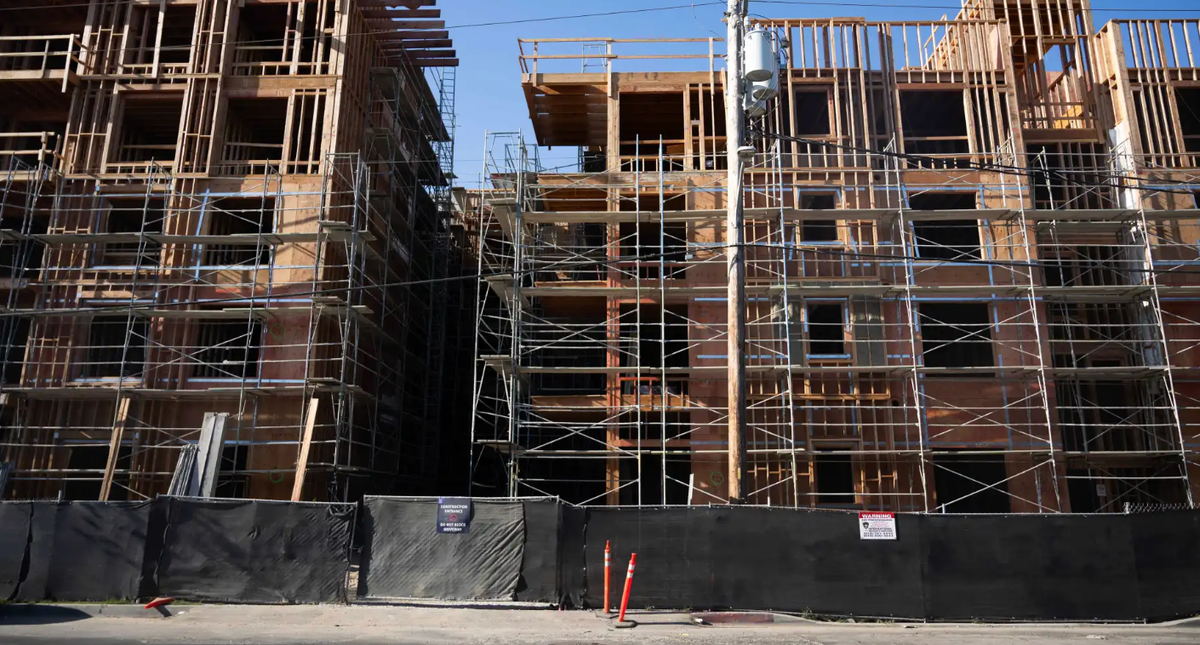
 Hermosa Review

Election season moves into full swing with the first candidate debate last night.

The Parks and Recreation Advisory Commission voted Tuesday night to form an ad hoc pool subcommittee, on a tight mandate and a six-month clock. Neighboring cities' pool projects, and Hermosa Beach's own dog park campaign, tell us that the real work is all still to be done.

Tuesday night's City Council meeting had a bit of everything: a heartfelt tribute to one of Hermosa's most familiar civic voices, a long-simmering fight over vacation rentals that finally came to a head, and a feel-good update from a beloved local club celebrating its 90th year.

Facing a budget hole that could hit $4.2 million, Hermosa Beach is turning to the very thing it spent a decade banning: short-term rentals
By Hermosa, for Hermosa. Join The Review today.