
Final Election Debate : City Council Hopefuls Face Off Again
Third and final City Council Candidate debate promised fireworks with 'challenge card' system. The format ultimately delivered more consensus than disagreement.
The Parks and Recreation Advisory Commission voted Tuesday night to form an ad hoc pool subcommittee, on a tight mandate and a six-month clock. Neighboring cities' pool projects, and Hermosa Beach's own dog park campaign, tell us that the real work is all still to be done.

Hermosa's Parks & Rec Commission just agreed to look at the options for a swimming pool. Here's why and what might lie ahead, and it's complicated.
They voted unanimously Tuesday night to create an ad hoc Aquatics Access Subcommittee, the first formal city body tasked with figuring out what improved pool access for residents might look like. The staff report was careful about what the subcommittee would not do: it "would not evaluate or recommend construction of a new municipal pool within Hermosa Beach at this stage." Staff clarified under questioning that the caveat is narrower than it sounds: it rules out the city itself building and owning a pool, not one built by another entity, a school district, the Beach Cities Health District, or a private developer. Forming the subcommittee carries no fiscal impact "at this time"; a site, a design, a funding plan, come later, if the work leads anywhere.
The city of course has no municipal pool. Manhattan Beach has operated Begg Pool since the 1940s; El Segundo has its Swim Stadium, known locally as the Plunge, dating to 1941. Hermosa Beach residents who want lap swim, lessons or water polo drive to one of those cities or further afield, and advocates say the gap has only grown more visible.
The push has run on parallel tracks. The Hermosa Beach Pool Initiative, founded by three Mira Costa High School students, argues the South Bay's roughly 135,000 residents across the three beach cities are served by a single public pool, and floats two rough concepts, a small community pool or a larger, competition-scale one, with no site, cost estimate or funding plan attached. Alongside it, a Change.org petition that project advocate Tara Stabile started in April 2025 has drawn more than 1,500 signatures asking the Commission to explore a pool, identify city-owned sites, and study how comparable cities fund construction and operation. It notes a pool was the most-requested facility in both the city's 1990 and 2024 park master plan outreach, yet "the final plan barely wades into the topic," a claim that largely checks out: the 2024 plan names a community pool as a resident priority but stops short of proposing one, framing aquatic access instead as something to pursue through "joint-use agreements" with neighboring communities. That plan itself alone cost roughly $350,000.
Stabile herself teased a left-field claim during Tuesday's meeting : She pointed to El Segundo's model of pairing city funds with private donors, said the group has identified some donors and locations, and claimed that the school district has invited them to talk, citing some available space at Valley Park. She floated a three-city solution: since Manhattan Beach and Redondo Beach residents outnumber and outspend Hermosa Beach's, Hermosa Beach's contribution could be land rather than cash. It's not a plan yet, and none of it has been confirmed by the school district or the other cities, but it's the first time a concrete site has been named publicly by anyone advocating for a pool. Earlier she expressed frustration, saying "Just find out what is and isn't possible. What I keep hearing is that staff keeps putting us down,just trying to kick us to the curb. Just go away..."
Earlier in the meeting, Beach Cities Health District CEO Tom Bakaly told the Commission a pool is already coming to BCHD's Redondo Beach campus, and it won't cost the district a dime: a roughly 25-to-50-meter pool will be built entirely by Sunrise Development, an assisted-living operator, in exchange for being allowed to build a memory-care facility there, run through BCHD's fitness center and open to outside users at certain hours for structured programming, not open lap swim. The timeline is distant, a realistic opening around fall 2030, but it's exactly the joint-use, privately built arrangement the subcommittee has been asked to study.
Staff recommended the leanest of four options on the table: a two-commissioner ad hoc body with no assigned community member and no staff lead, citing an already heavy workload. Commissioners worried that would struggle to keep pace with an engaged public, but legal counsel confirmed it was the only structure available that night. The Commission appointed Vice Chair Todd Tullis and Commissioner Tom Moroney and narrowed scope to three deliverables: a demand assessment and resident survey, an inventory of regional facilities, and a tracker of partnership opportunities, due back around March 2027. A joint-use process, a budget analysis and formal recommendations were pushed to a possible second phase, since two unpaid commissioners with no consultant budget shouldn't take on site suitability or cost modeling themselves.
Commissioners also debated whether the subcommittee could look at Hermosa Beach sites at all, given the staff report's language. Nothing legally stops it, and the final motion sidestepped the tension: the first six months target regional partnerships and demand data, not site selection, but nothing forecloses Hermosa Beach later.
Manhattan Beach already has what Hermosa Beach lacks: a pool, on land it doesn't have to buy. Begg Pool sits on school-district land, jointly operated with the city, the kind of arrangement Hermosa's subcommittee has been asked to study. Built in the 1940s and now about 80 years old, it's outgrown demand. In 2024, Manhattan Beach commissioned a $250,000 modernization study, created a nonprofit to raise donations, and opened a second track, a Bay Club Company proposal to build and run a facility near the country club, while separately pricing out building one itself. Two years later, it still hadn't settled on a path. The lesson isn't just the dollar figure, still unfinalized; it's the timeline a city with an 80-year head start, an existing pool and free land is still working through.
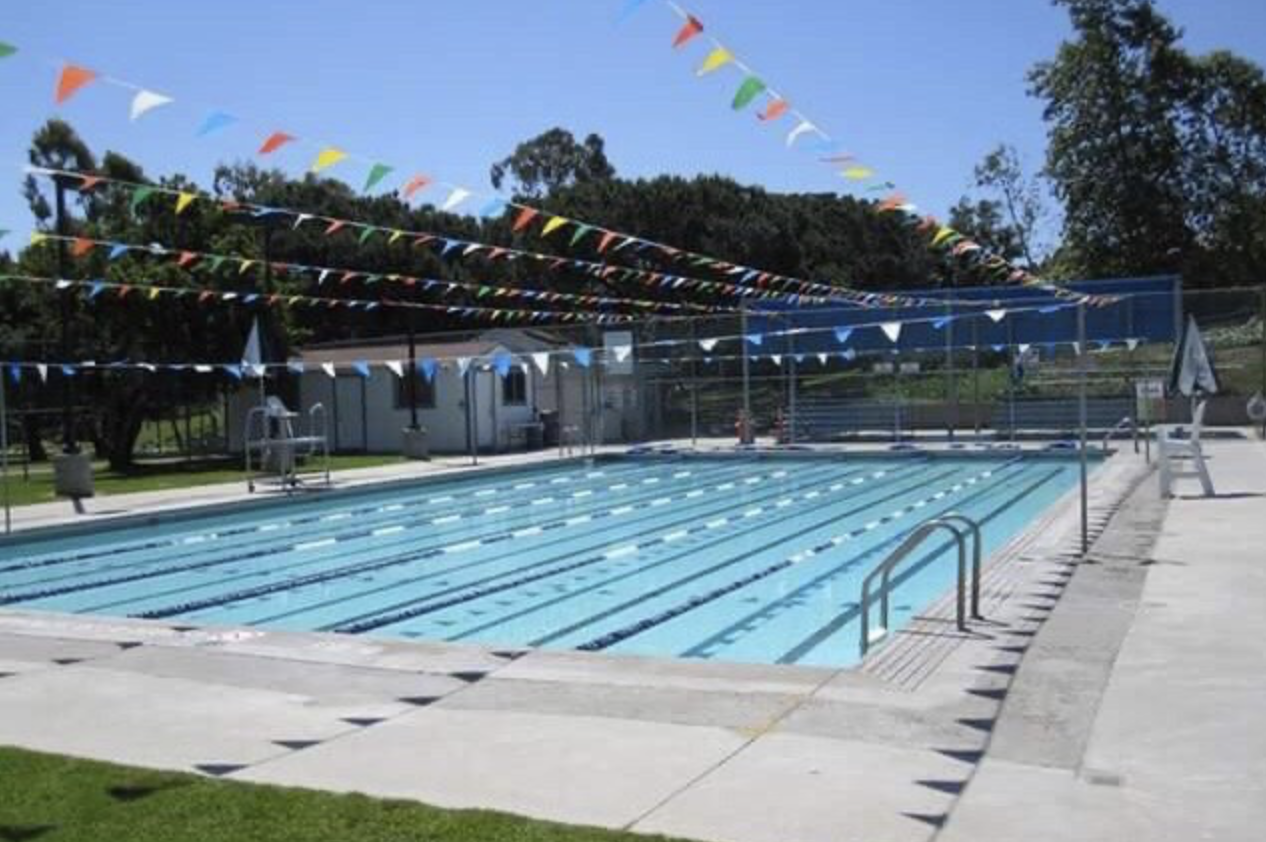
El Segundo offers a cleaner, more sobering number. The Plunge, open since 1941, closed in 2019 for maintenance failures. The Council approved a full renovation in 2023 at $14 million, most through the capital program but with a $5 million private fundraising gap, of which only about $1.6 million had been raised by August 2024, and the reopening date has since slipped from an original 2025 target to sometime in 2026. El Segundo was renovating a pool it already owned and still needed a nine-figure-adjacent budget and a timeline that's run long. Hermosa Beach has no existing structure or site at all; a facility here would be new construction, typically the costlier path.
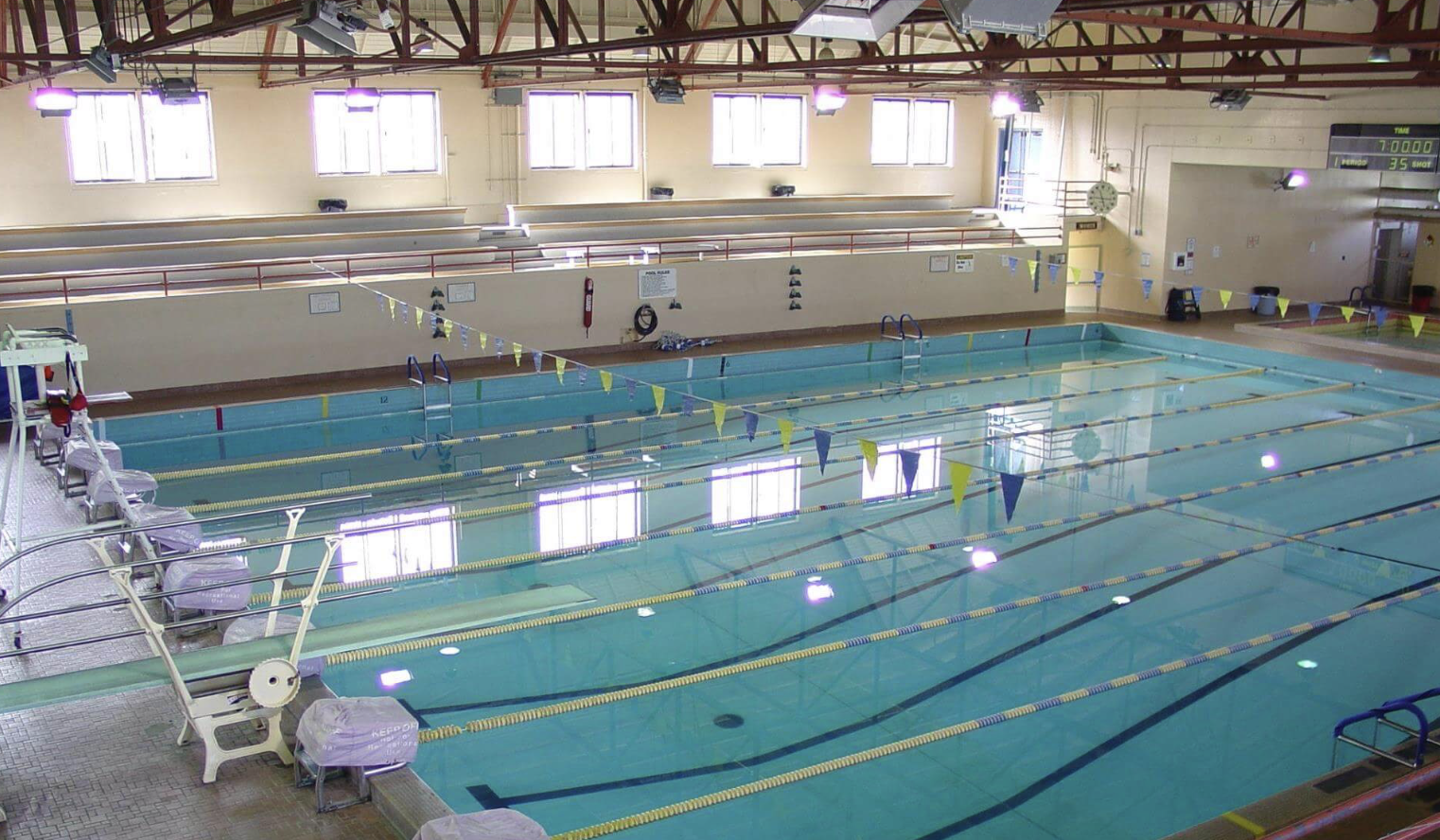
Manhattan Beach's Bay Club track tests that option: letting a private operator, not the city, own the capital risk. Bay Club signed a memorandum of understanding with Manhattan Beach in 2024 to build and run an aquatic center near a country club it owns outright, and its CEO has been explicit that "if you control the real estate, you control your future," a preference that cuts against what a city typically needs, a durable, locked-in commitment to resident access and pricing. More than a year later, terms weren't finalized, and the city was simultaneously pricing out a facility itself, a hedge suggesting it isn't confident a private deal will land on acceptable terms.
A partner could genuinely lower Hermosa Beach's capital exposure if it supplies land and construction capital, essentially the Sunrise-BCHD arrangement above. But Manhattan Beach, BCHD and The Plunge all point to the same unresolved question: Hermosa Beach has no campus, landholding or redevelopment site of its own to offer, and whoever it partnered with would need binding, long-term agreements on resident pricing, not just a handshake.
Construction cost is a one-time number. Operating cost isn't, and it's the figure least discussed so far. Public pools generally aren't self-sustaining, fees typically cover most but not all of what it costs to staff, heat and maintain one, with a city or district absorbing the rest every year. None of Begg Pool, El Segundo's Plunge or the Torrance Plunge publishes a subsidy figure, and neither does the pool campaign. Commissioner Barbara Ellman added a data point that cuts against easy optimism: El Segundo's own city manager told the advocacy group full cost recovery was "pretty much impossible." Whichever partnership Hermosa pursues, the subcommittee will need that number, not just a construction estimate.
Hermosa Beach has one recent example of resident-led advocacy converting into a real line item before the Council. Bark for a Park, behind what would be the city's first off-leash dog park, started on almost the same clock as the pool petition, but organized like an actual capital campaign, reviewing six sites, touring other cities' dog parks, retaining its own consultant, and raising more than $70,000 in pledges plus a matching grant of up to $250,000 before asking the city to commit. In May, the Council voted 3-2 to direct staff toward feasibility studies on two sites, with cost estimates already specific, $72,000 to $233,000 depending on build, and annual maintenance the group intends to cover itself. A dog park and a pool are different orders of financial problem, that pledge total nearly covers the smaller project; a pool needs tens of millions. What transfers is the approach: an independent analysis before asking the city to spend, private capital raised first, and a concrete plan for operating costs.
Three practical problems sit underneath the carefully scoped conversation. The first is land: Hermosa Beach is roughly 1.4 square miles, almost entirely built out, with limited public land beyond its beach, parks and parking lots, and no fully worked-out site of its own yet, only the Valley Park thoughts floated on Tuesday, not yet vetted.
The second is money, and the timing is notable. Hermosa Beach is navigating a structural operating deficit, a capital program with more than $60 million in unfunded projects, and a looming $44.5 million bill to replace the city's pier around a potential 2032 deadline. Resident David Toomey made that case directly on Tuesday, questioning whether a pool is even a top-20 priority and arguing the subcommittee needs clear direction before it goes looking for partners.
The third is precedent: a pool has reportedly been the top-requested park facility in city outreach going back to 1990. Thirty-five years is a long time for a priority to go unresolved, a fair question for skeptics and advocates alike, what would be different now. What passed Tuesday is a research body with a six-month clock, not a funding commitment, a site or a design.
None of this advances or forecloses a pool (Hermosa or not), but the next six months will be a strong indication of the project's ability to stay afloat.

Third and final City Council Candidate debate promised fireworks with 'challenge card' system. The format ultimately delivered more consensus than disagreement.

Election season moves into full swing with the first candidate debate last night.

Tuesday night's City Council meeting had a bit of everything: a heartfelt tribute to one of Hermosa's most familiar civic voices, a long-simmering fight over vacation rentals that finally came to a head, and a feel-good update from a beloved local club celebrating its 90th year.

Facing a budget hole that could hit $4.2 million, Hermosa Beach is turning to the very thing it spent a decade banning: short-term rentals
By Hermosa, for Hermosa. Join The Review today.