
The Machine in City Hall
Faced with rising costs and complexity, what role should artificial intelligence play in Hermosa Beach's future?
Faced with rising costs and complexity, what role should artificial intelligence play in Hermosa Beach's future?

Hermosa Beach runs a full-service city on a small staff and has a looming structural deficit. Council has spent much of 2026 weighing new taxes, a $60 million-plus backlog of unfunded capital projects, and a pier that has to be replaced or rebuilt on a clock. In that environment every staff hour is contested.
A growing number of California cities have decided that part of the answer is artificial intelligence. Some of those experiments are producing measurable savings. Others have produced lawsuits, embarrassing public records, and a chatbot that told business owners to break the law. Hermosa has not yet had a public conversation about where it stands.
Much of what a city does is repetitive: drafting staff reports, summarizing public comment, categorizing service requests, checking permit applications for completeness, answering the same resident questions over and over. That work is where generative AI tools have shown the clearest results.
Staff time is where the money is. The city's own budget documents describe Hermosa as a service business with most of its costs in personnel. It's the largest single employer in Hermosa Beach, with a people cost of around 60% of revenue. that figure rises considerably higher once the contract labor of County Fire and Lifeguards is added.
San Jose has probably gone furthest down the AI road in California. The city built an in-house AI training program for employees and says trained staff save more than an hour a day on tasks like writing memos, reviewing grants and summarizing documents. Mayor Matt Mahan said about 80 employees in the first two training cohorts documented more than 10,000 hours of staff time saved and roughly $50,000 in avoided consulting costs. One IT employee built an assistant to sort the free-text "Other Issues" field of 311 reports into themes, which the city says saves more than 500 hours a year. San Jose has since trained its 1,000th employee and is procuring a platform so all 7,000 city workers can build their own assistants.
The city has also moved beyond office tools. A computer vision pilot on city vehicles flagged nearly 70 percent of street hazards such as potholes and illegal dumping before residents reported them. A separate AI transit signal system raised bus speeds by 20 percent. City officials said about 90 percent of the funding came from state and federal grants.
San Francisco has put Microsoft Copilot in front of nearly 30,000 employees across more than 40 departments, logging over a million interactions between July 2025 and April 2026. Seattle has taken a slower, pilot-by-pilot approach, publishing an inventory of every AI tool and pilot in use, and canceling or pausing tools that did not meet its criteria.
The framing matters. San Jose officials have repeatedly argued that public-sector productivity has been flat for decades while the private sector surged, and that AI is how a lean workforce keeps up without cutting service. That argument resonates in a city of Hermosa's size, where one departure can leave a function uncovered.
The examples are not limited to big cities.
Culver City adopted a formal AI governance policy that states AI will augment, not replace, its workforce, and contracted with Madison AI, a vendor that builds assistants for city manager, community development and procurement offices. According to the company, the tools help draft staff reports, zoning verification letters and requests for proposals using the city's own records.
Los Angeles and LA County deployed an AI plan-check tool from Archistar after the Eaton and Palisades fires. Homeowners and architects can run building plans through the software to check compliance with zoning and building codes before formal submission. Human plan checkers still make the decision. The vendor says the tool has since been procured for statewide use, meaning any California city could adopt it without its own bidding process. AI plan-check has been under review by Hermosa for some time.
Long Beach released a citywide AI strategy last November built around trust, with a stated goal of adopting a formal policy by mid-2026. Its framework says staff remain accountable for any output an AI tool produces.
The more interesting promise for a small city may be on the public side of the counter.
Hermosa already publishes an enormous amount of information: agenda packets that run hundreds of pages, budget documents, staff reports, planning files, meeting video. Almost none of it is searchable in any useful way by an ordinary resident. The same tools that summarize documents for staff can let a resident ask, in plain English, what the council decided about parking on Pier Plaza in 2019, or how this year's CIP compares to last year's.
That is not hypothetical. The capability exists. The question is whether the city provides it, whether residents build it themselves, or whether it sits with whoever can afford it.
San Jose uses AI to improve the translation of its city web pages. Seattle lists public-facing tools and community feedback mechanisms as part of its plan. Access to government information has always depended on time and expertise. AI lowers both barriers, for residents as much as for staff.
The cautionary tale every city official should know is New York's MyCity chatbot. Launched in 2023 to help small businesses navigate city rules, it was found by The Markup to tell users that employers could take workers' tips, that landlords could refuse housing vouchers, and that businesses could refuse cash, all of which are illegal in New York. Then-Mayor Eric Adams defended it as a pilot, saying "it's wrong in some areas, and we've got to fix it." The city added disclaimers instead of taking it down. His successor, Zohran Mamdani, moved to shut it off, calling it functionally unusable and noting it cost roughly half a million dollars.
The lesson is specific. A general-purpose chatbot answering legal and regulatory questions in the city's name is a liability unless it is tightly restricted to verified source material and routes hard questions to people.
The second lesson comes from Washington State. Reporters at KNKX and Cascade PBS filed public records requests for city employees' ChatGPT histories and received thousands of pages from Everett and Bellingham. The logs showed staff using ChatGPT to draft mayoral letters, grant applications, policy documents and replies to constituents, including pasting a senior citizen's email about unaffordable utility bills into the tool and asking for a sympathetic response. Some logs had to be redacted because staff had entered confidential information, including code for a city GIS system. Bellingham's draft AI policy was itself partly written by ChatGPT.
Those chat logs were public records. If Hermosa staff are using consumer AI tools on city business, those conversations may be disclosable, and the city may not currently be retaining them.
Hermosa is not starting from zero. On September 22, HBPD Captain Eric Cahalan presented an informational report to council on the department's automated license plate readers. Systems like Flock use AI software to read and index every passing plate, and they are the most consequential AI deployment in most California cities.
They are also where privacy law is being tested hardest. California's SB 34, in effect since 2016, bars local agencies from sharing plate reader data with out-of-state or federal agencies. In October 2025 Attorney General Rob Bonta sued El Cajon for sharing its data with out-of-state agencies. A class action filed in February 2026 accuses Flock itself of facilitating illegal cross-state sharing. Santa Cruz canceled its contract in January. San Jose cut its retention period from a year to a month. Flock themselves now default newly onboarded cities to a seven day retention period.
 Hermosa Review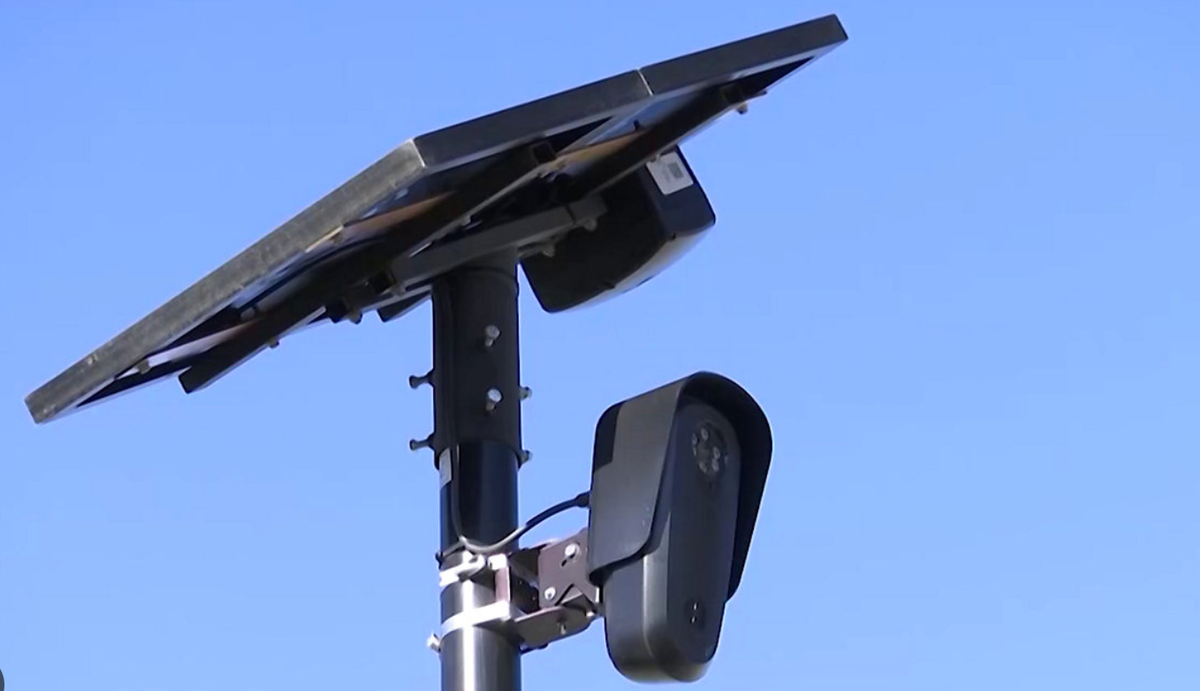
The broader point for any AI system the city adopts: data collected for one purpose might toward others, vendors control infrastructure the city does not, and the city carries the legal risk. Access and privacy guardrails are important.
Most of what cities use today is assistive. A person asks, the tool drafts, the person decides. The industry is now selling "agents," software that can take a goal, break it into steps and carry them out across systems: routing a service request, scheduling an inspection, updating a record, following up on a compliance deadline.
Advocates describe an "agentic city" where a resident states a goal, such as opening a shop at a given address, and agents walk the application through every department. Vendors are pushing hard; a Google-sponsored survey claims more than half of public-sector leaders say their organizations already run agents in production. Those numbers come from companies selling the product and should be read that way. Independent analysts at GovTech report most city AI remains in pilot.
The shift from advising to acting changes the accountability question. When an agent denies an application, misroutes a complaint, or sends a resident the wrong deadline, who answers for it? The more sensible early uses are the unglamorous ones where a human reviews the output before anything happens: checking whether a permit application is complete, suggesting a route for a service request that staff can override, drafting inspection notes.
The efficiency argument is real, and the budget pressure on this city is not going away. Staff costs (including benefits) are rising faster than the largest sources of city revenue.
The pothole camera is a good model for Hermosa: the city already collects the data or could cheaply, and AI does the tedious first pass while staff make the call. The ideas below follow that pattern, roughly in order of how easily a city of 19,000 could start.
Street surveys from vehicles already on the road. San Jose mounted cameras on city vehicles and flagged nearly 70 percent of street hazards before residents reported them. Hermosa is small enough that a single parking enforcement or public works vehicle covers every street within days. The same footage could log potholes, faded crosswalks, broken curbs, damaged signs and illegal dumping, building a running condition record instead of a survey every few years.
Sewer and storm drain video. Cities already pay contractors to film the inside of their pipes, then pay people to watch the footage. Software from companies such as SewerAI and VAPAR reviews that video and flags cracks, root intrusion and blockages. In a New York City Department of Environmental Protection trial, AI pipe review cut defect detection time by 75 percent, and one tool turned 20,000 feet of footage into 162 ranked repair suggestions. Houston uses AI review across its sewer program, though the accuracy figures it cites come from the vendor.
Ranking the backlog. With a $60 million-plus list of unfunded capital projects, how projects are ranked matters as much as how many get funded. Condition data from street and pipe surveys, combined with complaints and repair history, would let staff show council why one project outranks another. [Ask Public Works how the current CIP list is prioritized and how often pipe and street condition is surveyed.]
Hermosa's busiest public space is its beach, and that is where a beach city could do something few inland cities can.
Crowd and parking counts. Camera or sensor counts of lot occupancy could drive signs that steer summer traffic to open spaces instead of circling downtown. Beach crowd counts could inform staffing for holiday weekends and events. "Smart beach" systems in Europe use this kind of counting to warn visitors when a beach is full.
Trash pickup driven by demand. Fill sensors on bins along the Strand and Pier Plaza tell crews which bins need emptying, instead of sending them on a fixed route regardless of the crowd.
Water safety. Researchers have developed camera systems that detect rip currents. Any trial here would have to go through Los Angeles County, which runs the lifeguards.
The catch is that any camera aimed at people raises the same questions as the license plate readers: what is recorded, how long it is kept, and who can see it. Counting systems can be designed to keep only numbers, not images.
Short-term rentals. Commercial services scan rental sites daily and match listings to parcels. Hermosa already uses such services, but new AI tools and agents make it possible to proactively analyze the data in ways that would not have been possible just twelve months ago.
Parking. Parking is one of the city's larger revenue streams. Meter, permit and citation data, analyzed together, could show where prices or enforcement no longer match demand, block by block and hour by hour.
Sales tax. Cities hire consultants to find sales tax misallocated to other jurisdictions and to track receipts by business sector. AI can speed the first pass through that data, which matters more with a sales tax measure on the November ballot.
A searchable meeting archive. Hermosa records every council and commission meeting, but finding what was said about a topic means scrubbing through hours of video. Saratoga, in Santa Clara County, uses an AI platform that summarizes council agendas and recordings and is digitizing years of past records into a searchable archive. Residents could ask what council said about the pier over the last five years and get the clips, with timestamps.
Questions answered from the city's own documents. A resident tool that answers only from agendas, staff reports and the budget, and cites the page each answer came from, avoids the trap that sank New York's MyCity chatbot. When the documents do not hold the answer, it should say so and point to a person.
Public records requests. Searching email and files, then redacting personal information, is a growing load on a small clerk's office. AI can do the first pass, with staff reviewing every release.
Grant applications. San Jose staff used AI to draft a federal grant application, then reused the work to win regional transportation funding. Hermosa chases grants for nearly every capital project.
A shared crime analyst. HBPD has struggled to staff crime analysis. The analysts' professional body suggests small cities share an analyst regionally. A position shared with Manhattan Beach and Redondo Beach, supported by AI tools for routine weekly pattern reports, would cost less than a full-time hire and see crime that crosses city lines. It could also assist in optimizing the use of police overtime, foot patrols, and bring more granular analysis of the 25,500 individual calls for service each year.
What do you think of the potential benefits or dangers of our city embracing artificial intelligence? The next big efficiency leap, or a disaster waiting to happen? What creative uses do you envisage for AI in Hermosa ?

An in-depth look into the pension debt the city rarely talks about — and what it means as Hermosa faces financial pressures from multiple angles.

Hermosa Beach has joined the South Bay's regional housing trust. Could the trust achieve progress that state mandate and city constraints have struggled to unlock?

An in-depth look at the latest moves by Redondo to avoid the dreaded 'Builders Remedy' sledgehammer under state law. What do our neighbor's legal moves mean for the future of housing development in Hermosa ?

Inside Hermosa Beach's Capital Improvement Program, where the fault lines between what we might want for city infrastructure and what we can afford are really starting to show
By Hermosa, for Hermosa. Join The Review today.