
Putting The Cart Before The Stores
Small but mighty - a smartly engineered coffee cart is brewing up something clever on Pier Ave.
An in-depth look at the latest moves by Redondo to avoid the dreaded 'Builders Remedy' sledgehammer under state law. What do our neighbor's legal moves mean for the future of housing development in Hermosa ?

The Builder's Remedy is what happens when a California city loses its certified Housing Element. Under the Housing Accountability Act, a developer can submit a project on virtually any parcel — disregarding height limits, density caps, setbacks, and most local zoning — provided 20 percent of units are affordable to lower-income households or 100 percent are moderate-income. The city has almost no grounds to deny it.
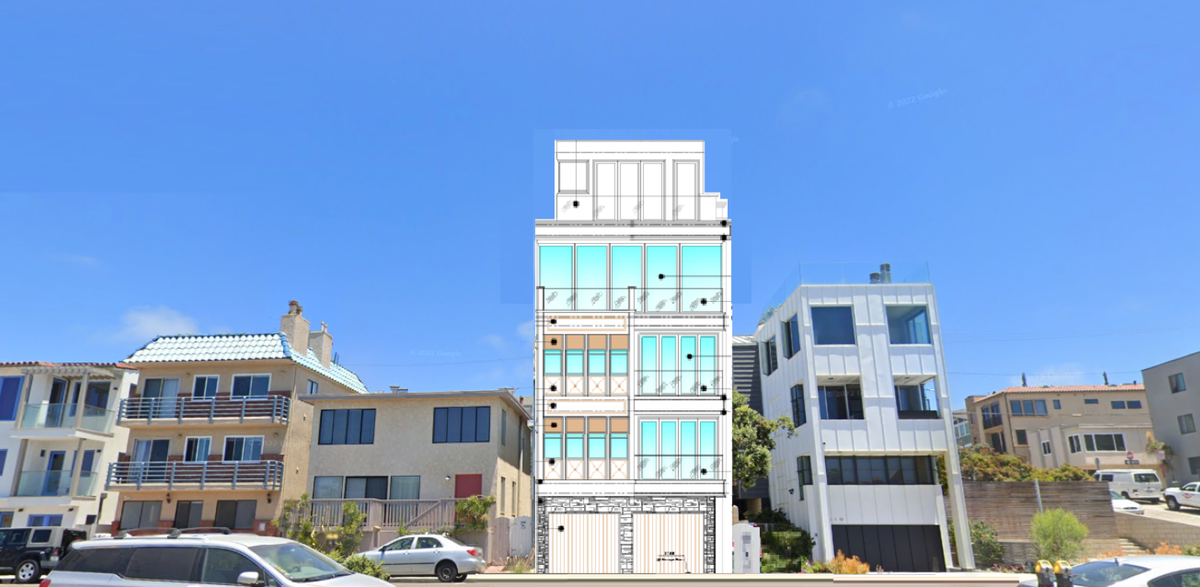
Hermosa Beach has already lived through one. The five-unit, 50-foot building proposed at 3415 Palm Drive — in a neighborhood capped at 30 feet — was filed during the window when Hermosa lacked a state-approved Housing Element, after the city missed the October 2021 state deadline under former City Manager Suja Lowenthal and spent nearly three years cycling through HCD rejections before achieving certification in August 2024. Staff advised the Planning Commission the Palm Drive project had to be approved. State housing law had stripped local control. That window is what the Housing Element is supposed to keep closed.
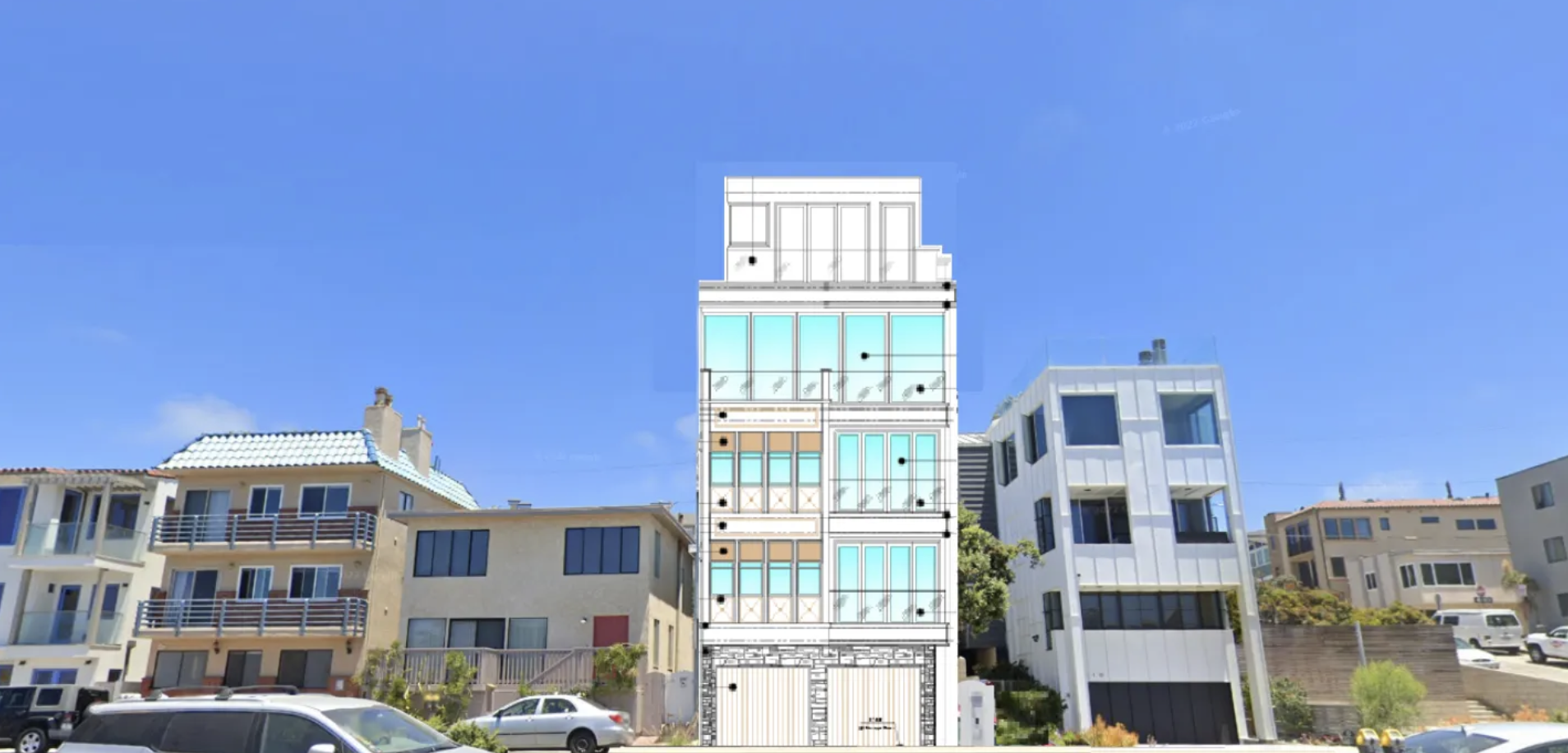
It's not closed. It's just not yet been pried open. In the end, the Palm Drive project was revised by the owners after furious pushback from the community. But it is an exception to the ever more obvious rule.
Redondo Beach's city council voted unanimously Tuesday night, May 5, to approve a new Housing Element that strips out every residential overlay zone. The vote came after the Second District Court of Appeal ruled last October in New Commune DTLA LLC v. City of Redondo Beach that the city's overlay strategy violated state Housing Element Law. The California Supreme Court declined review.
Under the previous plan, Redondo identified six commercial and industrial sites where a residential overlay permitted housing while keeping the underlying commercial or industrial zoning intact. The court found two fatal defects: the overlay did not guarantee the required 20-units-per-acre minimum density because base zoning still allowed projects with zero residential units, and the city had not satisfied the rule requiring at least half of its lower-income need to sit on sites where nonresidential uses are excluded.
The replacement plan eliminates one site — North Tech, at Marine and Inglewood, where a Vons lease made housing infeasible — and increases allowed density on the remaining five. South Bay Marketplace, at Hawthorne and 182nd, jumps from 55 to 80 units per acre. Most importantly, the new plan requires that 50 percent of the floor space on these sites be residential. No more optional housing.
HCD reviewed a preliminary draft in February and found it in substantial compliance.
"We had to make the changes to avoid Builder's Remedy, which basically allows a developer to do whatever they want," Mayor Jim Light said at the hearing.
Hermosa Beach's Housing Element accommodates a sixth-cycle RHNA allocation of 558 units. The plan relies on a residential overlay applied to commercial sites along Pacific Coast Highway, Aviation Boulevard, and elsewhere — sites that retain their underlying commercial zoning while permitting residential development.
This is the structure the appellate court rejected.
The court's holding is published and binding on trial courts statewide. It applies to any housing element using the same overlay-on-commercial mechanism, regardless of whether HCD certified it. Redondo's element was also HCD-certified when it was struck down. As Redondo City Attorney Joy Ford put it after the appellate decision: "Many cities have these overlays in their certified Housing Elements."
Hermosa's harder vulnerability lies in its sites inventory: the large nonvacant parcels assigned lower-income unit counts with active commercial tenants and no public indication of redevelopment intent.
The most prominent example is the 2.8-acre shopping center at 1100 Pacific Coast Highway anchored by Trader Joe's. The Housing Element designates this site for 71 housing units, including 40 lower-income units. The Tech Plan's defense is that the property has "high vacancies in recent years" and is ripe for redevelopment — but the facts have since cut the other way. Park Pacific Realty Partners, which acquired the property, filed a Notice of Exemption with the city in October 2025 for a substantial remodel of the existing 129,736-square-foot shopping center: new landscaping, accessibility upgrades, a parking reconfiguration, new façade treatments, a 35-foot clock tower, and interior tenant improvements. The filing describes the project as preserving the existing structures and uses. The new owner is investing in the shopping center as a shopping center.
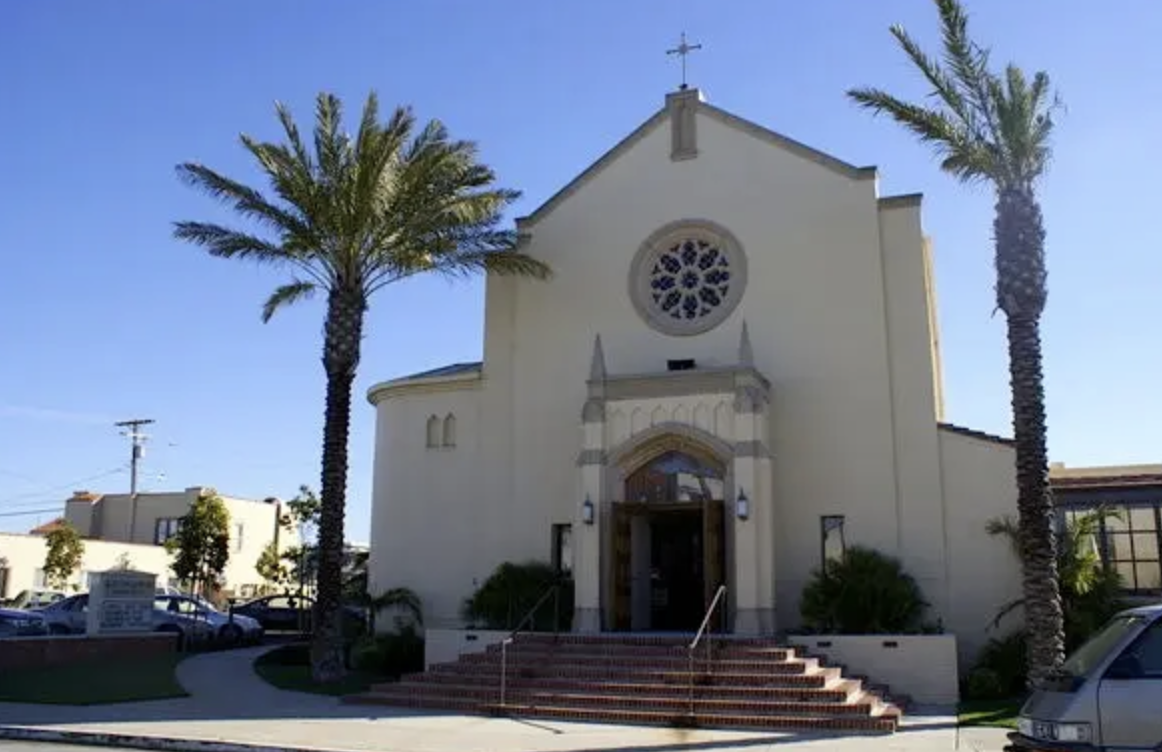
The second example is St. Cross Episcopal Church on Eighth Street. The Housing Element allocates 46 low- and very-low-income units across the church's 15-parcel, 2.2-acre campus. The church operates an active sanctuary, administrative offices, an education building, 18 existing residential units, and surface parking. The Housing Element notes that St. Cross "wrote a letter of support" and is "interested in furthering the existing mission of providing affordable housing." Interest is not a commitment. The August 2023 council action lowered the proposed density at the site to address community concerns but kept St. Cross in the sites inventory.
Not every nonvacant commercial site in Hermosa's inventory presents the same risk. The four parcels at 8, 18, and 26 N. Pacific Coast Highway — auto-related uses just north of the Redondo Beach border, owned by the same entity that operates the Mitsubishi dealership at 900 N. PCH next door — also sit in the sites inventory, designated for 14 lower-income units. But the Housing Element records that the owner has submitted a letter of interest for redevelopment. That is the kind of expressed commitment the New Commune DTLA court looked for and did not find at the Vons site in Redondo. The Mitsubishi-affiliated parcels are a defensible inclusion. Trader Joe's and St. Cross are not.
Under the New Commune DTLA standard, sites counted toward RHNA must demonstrate realistic development potential — not theoretical capacity. The Redondo court was skeptical of identifying sites where the existing tenant had no commitment to vacate. Vons was the example. Vons was operating a profitable supermarket on a long-term lease. The court did not accept that residential zoning overlay made Vons a credible housing site.
The same logic reaches an active 16-tenant shopping center being capitalized by its new owner. It reaches a parish actively running a school, a sanctuary, and existing residential units it intends to keep.
The St. Cross designation drew direct public criticism at a Planning Commission special meeting last fall. Resident Tony Higgins, calling in remotely, asked whether including the church in the inventory put the city at risk of decertification. "We all know it was a scam," Higgins said. "Where exactly are those extra units we're going to need going to come from?"
That question, multiplied across the strongest nonvacant sites in Hermosa's inventory, is where the city's real legal exposure lies.
If Hermosa does eventually need to revise its sites inventory, the most defensible candidate for new lower-income allocations is the city's M-1 light industrial zone — the Cypress District, the only industrially-zoned area in Hermosa Beach. A portion of the district is already in the inventory: Site 26, four parcels at 530 6th Street currently operating as self-storage, rezoned from M-1 to allow residential at 25.1 to 33 units per acre. But the bulk of Cypress remains outside the sites inventory and outside the overlay.
The existing building fabric reinforces the case for adding more of Cypress in the next cycle. The district is dominated by small, aging warehouses — many dating to the mid-twentieth century, single-story tilt-up or wood-frame structures with limited remaining economic life. Several have already been adapted into creative uses, fitness studios, and event venues, but the underlying stock is the kind of low-value, end-of-cycle industrial inventory that redevelops cleanly under modern building codes. There is no historic district overlay, no significant architectural heritage to preserve, and no entrenched residential neighborhood character to disrupt. From a development feasibility standpoint, Cypress is closer to a clean slate than any other part of Hermosa Beach.
Cypress also sits in a natural valley, lower than the surrounding residential blocks to the east and west. That topography is unusual in Hermosa, and it creates a planning option that does not exist anywhere else in the city: height limits in the district could be raised meaningfully — accommodating more units per parcel, and improving the development math for affordable production — without automatically blocking the views of existing homes on the ridges above. Depending on parcel and elevation, a four- or five-story residential building in Cypress might still sit at or below the rooflines of single-family homes a few blocks away. Few overlay sites along Pacific Coast Highway or Aviation Boulevard offer that combination.
The timing question matters, though. Amending the sites inventory mid-cycle to add Cypress could trigger a full HCD re-review of Hermosa's entire Housing Element — opening the city to fresh scrutiny on every element of the plan, not just the new sites. That is a risk no city wants to take voluntarily. The seventh-cycle Housing Element process, which Southern California jurisdictions will begin preparing for in the next year or two, offers a cleaner opening: a full rewrite, on Hermosa's own timeline, where Cypress can be built into the foundation rather than bolted on.
The City Attorney's office walked the Planning Commission through the implications of the New Commune DTLA decision at that same meeting. The key finding, counsel explained, was that base zoning permitting 100 percent non-residential use cannot satisfy the state's 20-units-per-acre minimum even with a residential overlay layered on top. Staff said the city was reviewing the current site inventory list to determine whether changes were warranted.
Community Development Director Alison Becker noted Hermosa's Housing Element remains certified. Resident Laura Peña, speaking during public comment, framed the stakes more directly: "Housing must be realistically buildable, not hypothetically possible. If these sites are not feasible, then our housing element sits on very thin ice."
Manhattan Beach offers a parallel preview. Its Residential Overlay District, adopted in 2023 to satisfy its own RHNA shortfall, covers commercial parcels along Sepulveda and Rosecrans. The 2301 N. Sepulveda site — a former Enterprise Rent-A-Car lot — is now the subject of a proposed seven-story residential building on a 0.4-acre commercial parcel, made possible by the overlay combined with state Density Bonus Law waivers.
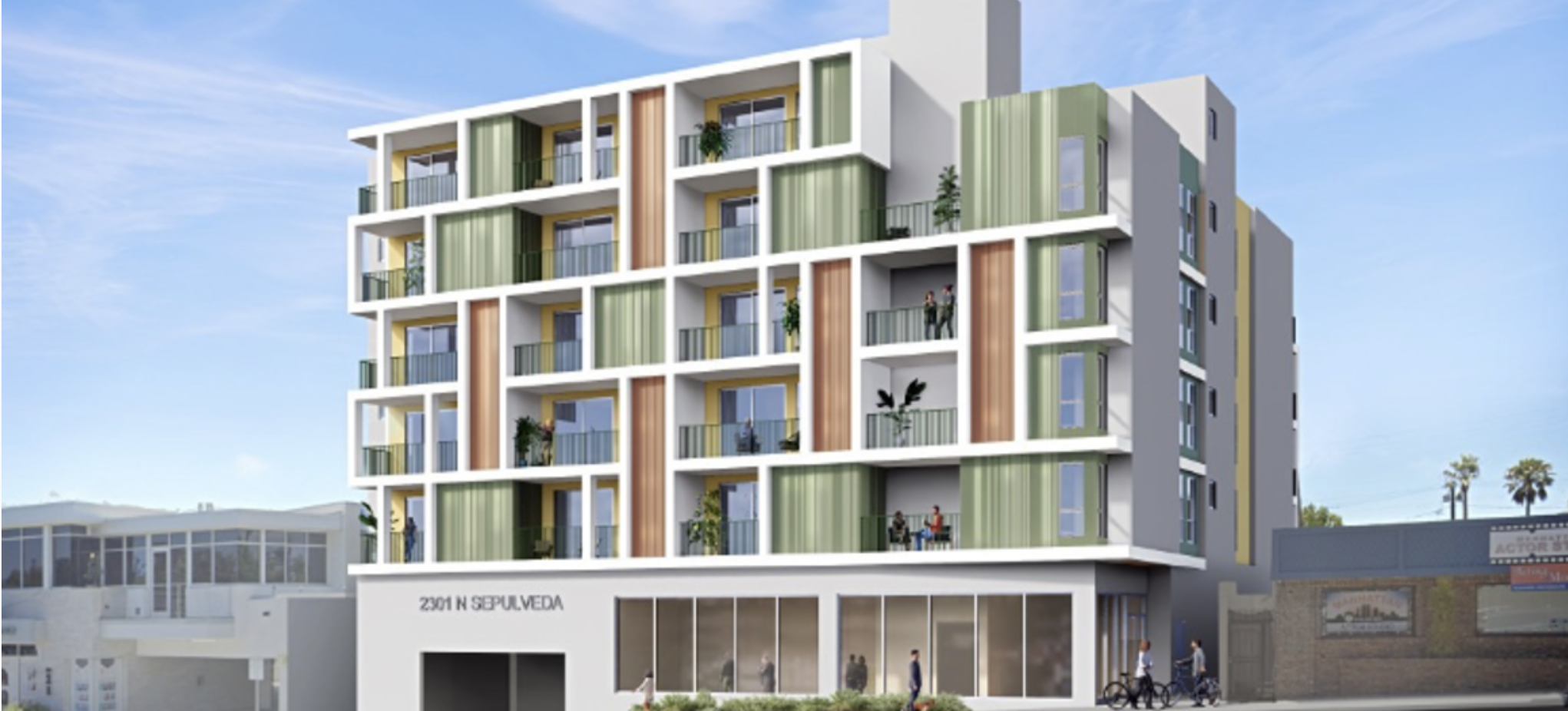
That project isn't a Builder's Remedy filing. It's worse, from the perspective of local control: it's what overlay sites look like when developers actually use them. Manhattan Beach's general height limit is 30 feet. The Density Bonus Law forces the city to grant waivers from height and setback standards on qualifying affordable projects. Once a parcel is designated as an overlay site, the Density Bonus Law turns local development standards into suggestions.
Hermosa's overlay sites along Pacific Coast Highway and Aviation Boulevard are similarly structured. The same arithmetic applies.
Manhattan Beach was also among the Southern California cities sued by Californians for Homeownership in early 2024 over Housing Element compliance — a reminder that affordable housing advocacy groups are actively scanning municipal plans for legal vulnerabilities. The New Commune DTLA ruling hands them a published appellate decision.
A successful legal challenge to Hermosa's Housing Element would expose the city to Builder's Remedy on every developable parcel, not just overlay sites. The pathway is straightforward. A developer or housing advocate files a writ petition arguing the overlay sites do not satisfy state Housing Element Law under the New Commune DTLA holding, or that nonvacant sites like St. Cross fail the realistic-development test. The trial court, bound by the appellate ruling, would have limited room to distinguish Hermosa's structure where it mirrors Redondo's.
If decertification follows, Builder's Remedy reactivates. The Palm Drive project is the only one Hermosa has seen so far. There's nothing to suggest it would be the last.
Hermosa's RHNA allocation is roughly one-fifth the size of Redondo's, and the city's overlay sites are smaller and fewer. But the legal infirmity — base zoning that permits commercial development with zero units of housing, paired with nonvacant sites lacking realistic development pathways — is the same defect the court identified.
Redondo spent years defending an HCD-certified element through trial and appeal, lost, and is now adopting the kind of plan it could have written in the first place. Cities with legally vulnerable elements typically face a choice: revise proactively, or wait to be sued. Redondo's experience suggests the second path is the more expensive one.
But the deeper problem is that neither path produces affordable housing. Redondo's new plan upzones five commercial parcels to 65 and 80 units per acre. Hermosa's overlay sits on top of commercial corridors where land trades at South Bay coastal prices. None of this geography produces affordable units without deep public subsidy that neither city possesses. What it produces, reliably, is market-rate towers that override local height limits under the Density Bonus Law — exactly what's now planned at 2301 N. Sepulveda in Manhattan Beach. The affordable component is the legal key that unlocks the building. The building itself is a luxury apartment block.
Sacramento's Housing Element framework is built for jurisdictions where land is cheap enough that 20-units-per-acre zoning translates into 20 actual units of affordable housing. In Hermosa Beach, where a quarter-acre lot trades for several million dollars, the same zoning translates into a developer's calculation about how many market-rate units are needed to absorb the inclusionary requirement. Industry estimates put the all-in development cost of a single dwelling unit in the South Bay at over $650,000 — a number that climbed before recent tariff, labor, and energy disruptions, and continues to climb after. The 558-unit RHNA allocation assumes a development economics that does not exist in three-square-mile beach cities with built-out parcels and no industrial vacancies.
The result is a planning document that satisfies neither the state nor the community. HCD demands site capacity that pencils out only through density bonus math. Residents see overlay zoning that promises affordable housing and delivers seven-story market-rate buildings on commercial corridors. The city's only tools to push back — discretionary review, height limits, design standards — have been preempted by the same statutes that created the mandate.
A more honest framework would acknowledge that beach cities cannot solve California's affordable housing crisis by upzoning their own corner of the coast. The crisis is regional. The solution requires regional infrastructure, regional subsidy, and regional land that costs much less than Hermosa Beach's current market value.
Some of that machinery already exists. The South Bay Cities Council of Governments — the joint powers authority representing Hermosa Beach, Manhattan Beach, Redondo Beach, Torrance, and twelve other South Bay jurisdictions — has established a regional housing trust funded in part by Los Angeles County's voter-approved housing taxes. The trust is designed to direct public money toward affordable housing production and preservation across the sub-region, on sites where the math actually works: parcels with lower land costs, infrastructure capacity, and proximity to transit and jobs. It is the kind of tool the RHNA framework does not contemplate, because RHNA assumes every jurisdiction will solve its share of the housing problem on its own land, regardless of whether that land can produce affordable housing at any plausible price.
A serious regional approach (at larger scale than what is currently planned) would let Hermosa Beach contribute to South Bay affordable housing production through subsidy and partnership rather than through overlay zoning that cannot pencil out. It would let cities with industrial vacancies and lower land costs absorb units that beach cities cannot realistically build. It would replace the fiction of paper compliance with actual housing on actual sites.
That is not the framework Sacramento has imposed. What Sacramento has imposed is the Builder's Remedy, reinforced by the New Commune DTLA ruling, and a growing roster of advocacy groups filing lawsuits. Hermosa Beach can revise its Housing Element to remove the overlay structure now, on its own terms. Or it can wait, and revise it later, on a court's terms, possibly while a Builders Remedy project, or several of them, work their way through entitlement.
Whether Hermosa moves first remains a council question. Whether the RHNA framework itself gets fixed is a Sacramento question — and one that beach cities have so far been asked, but not allowed, to answer.
KEEP READING
 Hermosa Review
 Hermosa Review
 Hermosa Review

An in-depth look into the pension debt the city rarely talks about — and what it means as Hermosa faces financial pressures from multiple angles.

Hermosa Beach has joined the South Bay's regional housing trust. Could the trust achieve progress that state mandate and city constraints have struggled to unlock?

Inside Hermosa Beach's Capital Improvement Program, where the fault lines between what we might want for city infrastructure and what we can afford are really starting to show

What the rise, fall, and uncertain revival of piers around the world can tell us about the costly decision Hermosa Beach now has to make about its own ailing landmark
By Hermosa, for Hermosa. Join The Review today.