
Putting The Cart Before The Stores
Small but mighty - a smartly engineered coffee cart is brewing up something clever on Pier Ave.
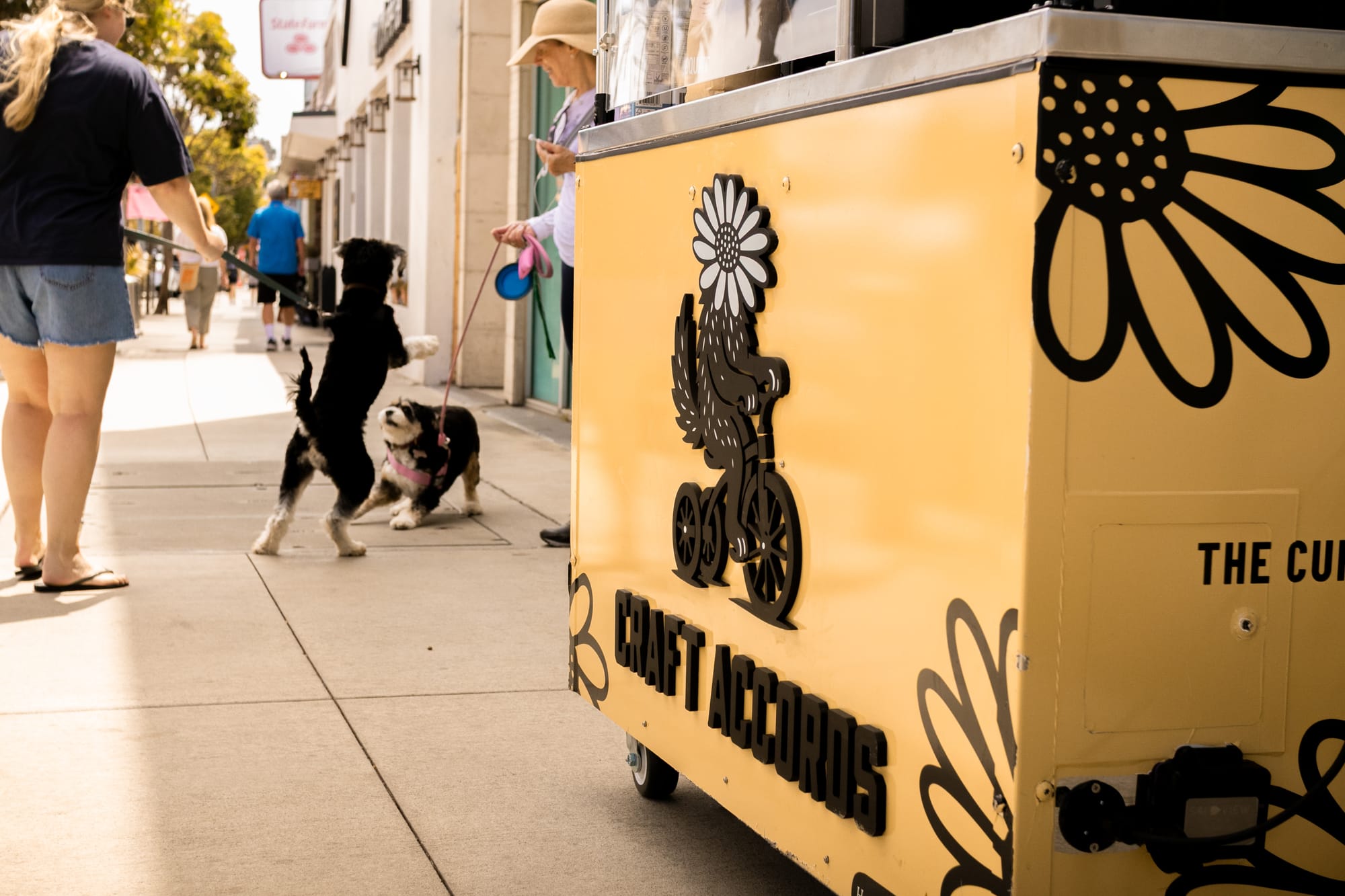
Small but mighty - a smartly engineered coffee cart is brewing up something clever on Pier Ave.

Stefan Orton-Urbina engineered his own solar-powered espresso cart, then spent more than a year getting permission to park it on Pier Avenue. He may be the first real test of Hermosa Beach's new sidewalk vending permit.
Every Friday, Saturday and Sunday morning, dog walkers along Pier Avenue stop at a small cart for an espresso, a cortado or perhaps a signature latte. The cart is Craft Accords. It belongs to Stefan Orton-Urbina, 27, who designed and built it himself and spent about 13 months getting it permitted.
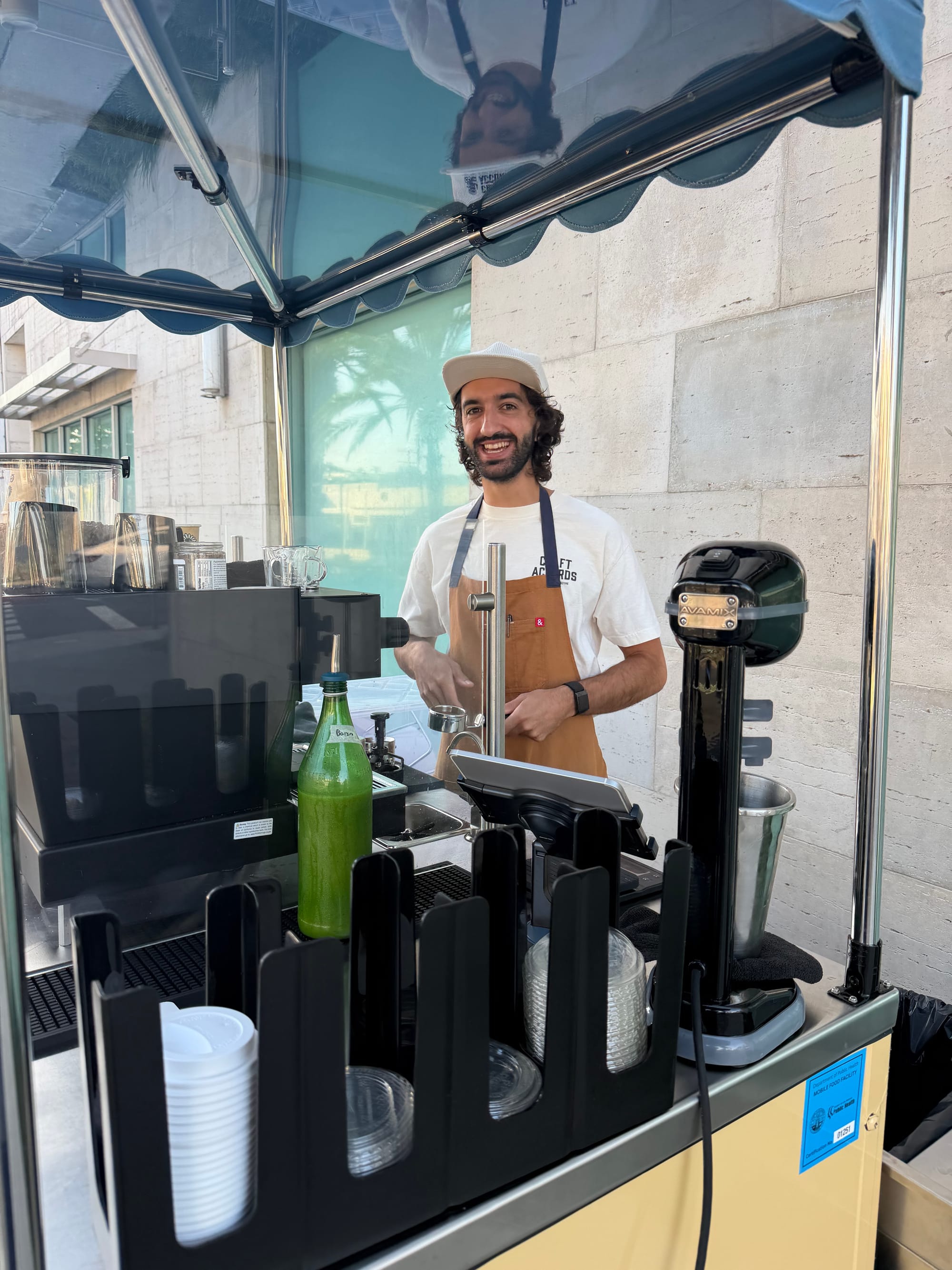
He opened three months ago. He is, as far as he can tell, the only food cart operating under the city's new sidewalk vending permit.
"They say that they've given like two or three of these already, but I don't see them around town," Orton-Urbina said.
Orton-Urbina was born and raised in Colorado, and studied engineering at Carnegie Mellon University in Pittsburgh. Both of his parents were software engineers at Apple, and his father grew up in Costa Rica. He attributes his cart engineering curiosity to their early encouragement.
As a college freshman he spent about four months bartending at his uncle's restaurant in Costa Rica, working for very little pay. It was his first time behind a bar, and he was learning Spanish at the same time. He called it difficult but formative.
"That's where my love for people and making cocktails and hospitality for people really came from," he said.
Coffee came from a more practical place. He was spending about $6 a day on coffee at college, so he bought a Breville home espresso machine for around $600 and taught himself.
"Didn't seem too clever to spend $6 every day when I can think about making it for myself," he said.
He finished school as the pandemic hit the hospitality industry. He moved to North Hermosa after graduating, about six or seven years ago. He then tried hosting private cocktail parties built around custom-made pieces, including a table lit from inside that guests drank from. It was too expensive to sustain. He went back to bartending full-time.
The cart, he said, is his attempt to combine the two halves of his background.
Orton-Urbina could not buy a cart off the shelf that met LA County's health code. The county is one of the strictest permitting jurisdictions in California, he said, and manufacturers rarely build to its standards.
So he built his own. The cart carries two freshwater tanks, a gray water tank and a bank of solar batteries. Hermosa's permit does not allow generators, and Orton-Urbina said he had already ruled them out.
Power was the hardest problem. Good espresso machines draw a lot of electricity, and the off-the-shelf battery and inverter systems big enough to run one did not fit the footprint he wanted. He designed a separate compact enclosure to hold the batteries, inverter, breakers and monitoring equipment. His student-era Breville has been replaced by something grander. Pride of place on his new cart goes to a more sophisticated machine - his gleaming La Marzocco Linea cost $7000.
The engineering, he said, was easier than the permitting.
Orton-Urbina began the LA County public health permit in April 2025. He described a process with few written rules, where requirements for how a cart must be built depended on which inspector he asked.
"A lot of the rules and necessities for the things that you could put on the cart and the way it's constructed were kind of not really written down anywhere," he said.
Answers often meant driving to the county's Baldwin Park office and waiting an hour to ask two questions, then coming back the next day with two more.
"Coming from someone who's an engineering and processes person, it's so broken," he said.
Food carts became easier to permit statewide under SB 972. The law was signed in 2022, took effect in 2023, and rewrote the California Retail Food Code to create a path for street food vendors. Orton-Urbina said the state left counties to design their own processes, and that LA County's lacks structure.
"It feels like people want there to be the opportunity for people who have food carts to go and get the permits, but there's no intelligent design and structure for how those people are actually going to do it," he said.
A county health permit is required before an applicant can even apply to the city. Orton-Urbina started the Hermosa Beach sidewalk vending application in December 2025 and received his permit around June 1, 2026.
He said the city work itself was manageable, but slow. He submitted a packet, waited a week and a half to two weeks for review, made a change and waited again. That cycle repeated several times, with staff working Monday through Thursday. Nothing could be done online.
He praised the Public Works staffer who handled his application. "Joshua was always super respectful and helpful," he said. "It just took a long time."
The city gives applicants a list of about 15 siting requirements. Carts must leave five feet of clear sidewalk and stay at least 10 feet from any building entrance. They are barred from the pier area, the Strand and residential zones. Applicants propose a location and pay a nonrefundable fee for the city to inspect it. If the spot fails, the fee is lost. Once a location is approved, the cart must stay there.
Orton-Urbina said he had heard the city is "can be difficult to work with for small businesses," but he understood the caution. His was the first food permit of its kind, in a town without a street-vending culture.
He estimates he pays the city $400 to $500 a year for his business license and sidewalk permit, and about $500 a year to the county. Counting the county's initial inspection and setup fees, his administrative costs came to roughly $2,500 to $3,000, not including the cart.
Before opening, Orton-Urbina visited brick-and-mortar businesses on Pier Avenue to introduce himself and hand out coupons for a free drink. The reaction was split, he said. Many were positive. Some were taken aback.
He said he understands the concern. Business owners paying high rents may fear a cart setting up outside their door, and they have no easy way to learn that the rules prevent it. The map of where carts can apply is not published online. It is available by email request.
Orton-Urbina believes that some of the early skepticism from local storeowners was simply a misunderstanding. There was never the option for him to simply wheel his cart into a new location if he felt like it. He is always stationed outside the original Marlin Equity office on the south side of Upper Pier Avenue.
He also pushed back on the idea that a cart contributes less than a storefront. He pays sales tax and permit fees to the city, generating good sales out of a tiny footprint.
"I really do think that it is a net positive in the economic direction that you want to go in the long term," he said. "That may not show up in the short term. New ideas to take time to gain acceptance."
The menu is short. Alongside standard espresso drinks, Orton-Urbina serves one signature drink, a spiced banana bread latte. It is made with cinnamon, vanilla, brown sugar, with a banana and fried brown butter addition of his own creation. The drink is finished with applewood smoked salt, and served hot or iced. Not your average latte.
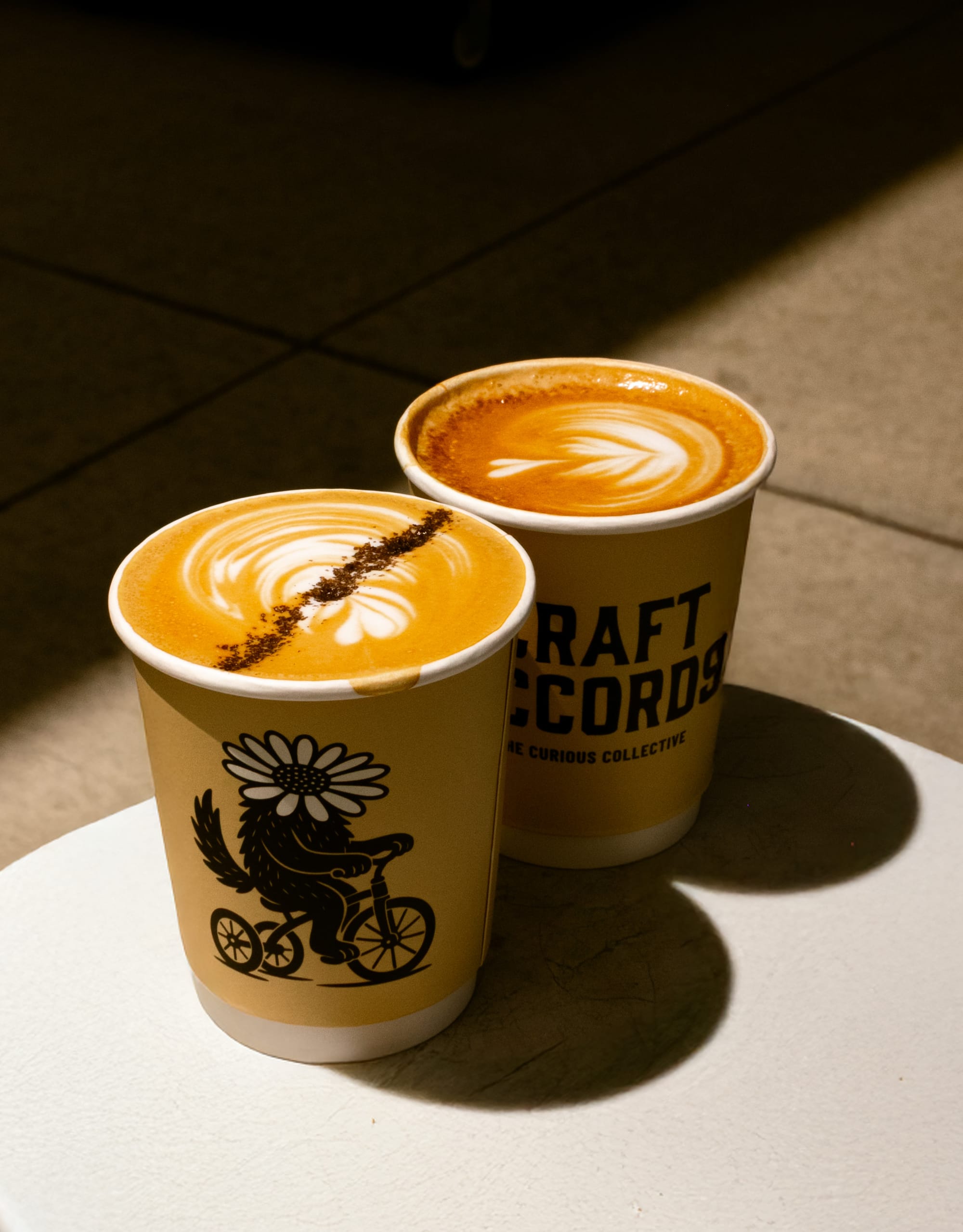
It's become a firm early favorite, he said, while the coffee connoisseurs lean toward espresso and cortados.
Craft Accords runs about five hours a day, three days a week. That is not enough to grow on, Orton-Urbina said, so he is booking more private events during the week at businesses and organizations.
Beyond that, he is weighing more carts elsewhere in Los Angeles, a café, or a place that serves coffee by day and wine and beer at night. He said he sees the business as a way to prove hospitality can treat its workers better.
"I really believe that the industry can be run and in the future can be set up in a way that's empowering and respectful and accepting of everybody," he said.
And eventually? Orton-Urbina smiled as he said "maybe one day, maybe a cocktail cart. I imagine the permitting for that might take a bit longer!"
Craft Accords operates 8am to 1pm Fridays through Sundays on Upper Pier Avenue. craftaccords.com

Greenbelt is back on the table as a possible site for Hermosa Beach's first off-leash dog park, six weeks after the community group driving the project had walked away from it, following a Council vote Tuesday that revived the option and put a potential November ballot measure into play.

Hermosa Beach has roughly 3,000 dogs and not a single place to legally let any of them off-leash. The City Council on Tuesday will consider whether to change that, with Valley Park East emerging as the preferred location for the city's first off-leash dog park.

The Hermosa Beach Lawn Bowling Club celebrates its 90th anniversary this week, and the organization is on top of its game.


Spending time talking with a group of young e-bike riders shows that there are two sides to this high-profile local issue
By Hermosa, for Hermosa. Join The Review today.