State drops wage case against Rock n' Roll Car Wash, 19 months after it was forced to close. Owner Chris McKenna says that they have acted as 'judge, jury and executioner' in his case.
Council defers some business-permit fee hikes, but phases in other increases
Division among council on the subject of business fee hikes. Jackson pushes for more, while Saemann makes the case for a more careful approach in the current climate
Councilmember Rob Saemann, making the case on Tuesday for a phased approach to business fee hikes, referencing cost pressures on local businesses and the difficulties of establishing new enterprise in the city
The Hermosa Beach City Council voted 3-2 Tuesday to hold off on raising a set of business-permit and zoning fees until the city finishes reviewing the processes behind them, while approving a phased increase on the remaining fees in a long-running study. Councilmember Ray Jackson and Mayor Mike Detoy dissented.
The vote closed out a hearing first held in April and continued twice since. At issue was a group of 19 fees the council had set aside for further discussion, drawn from a broader cost-of-service study, the city's first since 2016. Staff recommended raising all of them to full cost recovery, on the principle that the city can legally charge only what a service actually costs to provide, no more.
Instead, the council split the group in two. Fees tied to zoning approvals and permit processing were frozen at their current levels, with no increase until the Community Development department and the Planning Commission finish reviewing and streamlining the work behind them, a process expected to take up to a year. Finance Director Brandon Walker said staff would return with revised figures afterward, adjusted if the streamlining lowers the actual cost. The rest of the fees will rise to 75 percent of full cost recovery, phased in over two years.
The reasoning was that businesses should not pay more for a permit before the city has made that permit faster or simpler to obtain. If the process improves, several council members argued, the fee can be set to match the reduced effort rather than locked in at today's cost.
The dissents came from the revenue side. Jackson argued the city had gone ten years without adjusting these fees and faces real budget pressure, and questioned why this particular group was being held back when hundreds of other fees had already been raised to full recovery. He favored a uniform increase this year, with any further hike deferred until staff could show evidence of efficiency gains. Detoy's no vote reflected the same concern: that singling out these fees for gentler treatment was inconsistent, not that relief itself was unwarranted.
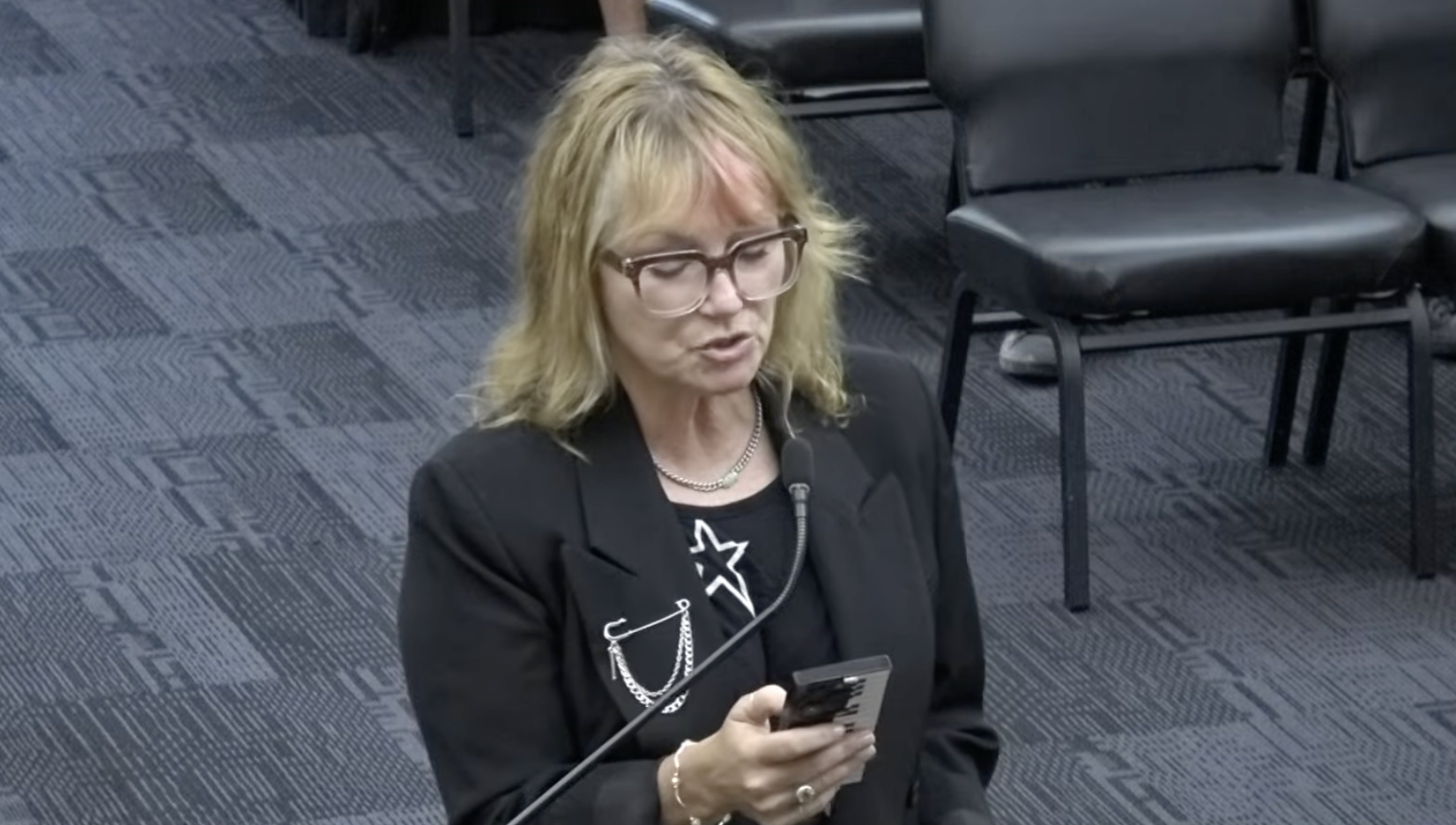
Public comment ran heavily in favor of holding off. Speakers framed the fees not as abstract line items but as real costs that shape whether a business invests in a storefront, a sign, or a new space. Elka Worner, a Parks and Recreation commissioner who has filed and announced her candidacy for City Council in November, spoke on behalf of a downtown retail business and said raising fees before improving the approval process would leave businesses paying more with no guarantee of better service in return.
Resident Laura Peña, who submitted a detailed written analysis, warned that one early-stage review fee, the step where an owner or small business first asks the city whether a project is even feasible, was slated to rise by more than 600 percent. Pricing that initial conversation too high, she said, risks discouraging investment before it starts. She also pointed out that some Hermosa fees run well above neighboring cities, citing a variance fee near $9,985 against roughly $3,414 in Redondo Beach.
The Chamber of Commerce, represented by Michelle Crispin, supported the deferral and urged the city to consider tiered fees based on project complexity, lower charges for repeat applicants, and a formal review of permit processing times within the year.
Chamber of Commerce CEO Michelle Crispin urged caution around raising fees for local businesses
The case for relief was carried most directly by Councilmember Rob Saemann, who framed the question around the cost of opening and running a business in Hermosa and pressed early for the lower-recovery approach the council eventually adopted. After several competing motions failed, Saemann put forward the version that passed: freezing the process-review fees and setting the rest at 75 percent recovery over two years.
The Parks and Recreation Advisory Commission voted Tuesday night to form an ad hoc pool subcommittee, on a tight mandate and a six-month clock. Neighboring cities' pool projects, and Hermosa Beach's own dog park campaign, tell us that the real work is all still to be done.
Tuesday night's City Council meeting had a bit of everything: a heartfelt tribute to one of Hermosa's most familiar civic voices, a long-simmering fight over vacation rentals that finally came to a head, and a feel-good update from a beloved local club celebrating its 90th year.