
Final Election Debate : City Council Hopefuls Face Off Again
Third and final City Council Candidate debate promised fireworks with 'challenge card' system. The format ultimately delivered more consensus than disagreement.
Inside Hermosa Beach's Capital Improvement Program, where the fault lines between what we might want for city infrastructure and what we can afford are really starting to show

Somewhere beneath the sidewalk on 11th Street, between Prospect Avenue and Harper Avenue, city contractors recently discovered over a dozen sewer laterals that were not shown on any plans. They had to be reconnected, one by one, to a new sewer main. On the top deck of the Lot C parking structure, demolition crews uncovered compromised reinforcement in the concrete, forcing an emergency closure of the entire facility and an unplanned structural shoring operation. At the Community Center, ceiling penetrations for new gas lines revealed material requiring abatement before work could continue.
This is what infrastructure maintenance looks like in our city with buildings, pipes, and roads that are decades past their expected service lives. It is also the daily reality of Hermosa Beach's Capital Improvement Program, the city's formal mechanism for building and maintaining its physical assets. The program currently encompasses 28 active and pending projects with a combined budget of roughly $36 million. It is overseen by a Public Works team of about a dozen engineers, plus outside experts. For context, the entire annual budget of the city (including staff costs) is around $57 million. So the choices that the City Council make on capital improvements are hugely significant to the overall financial picture.
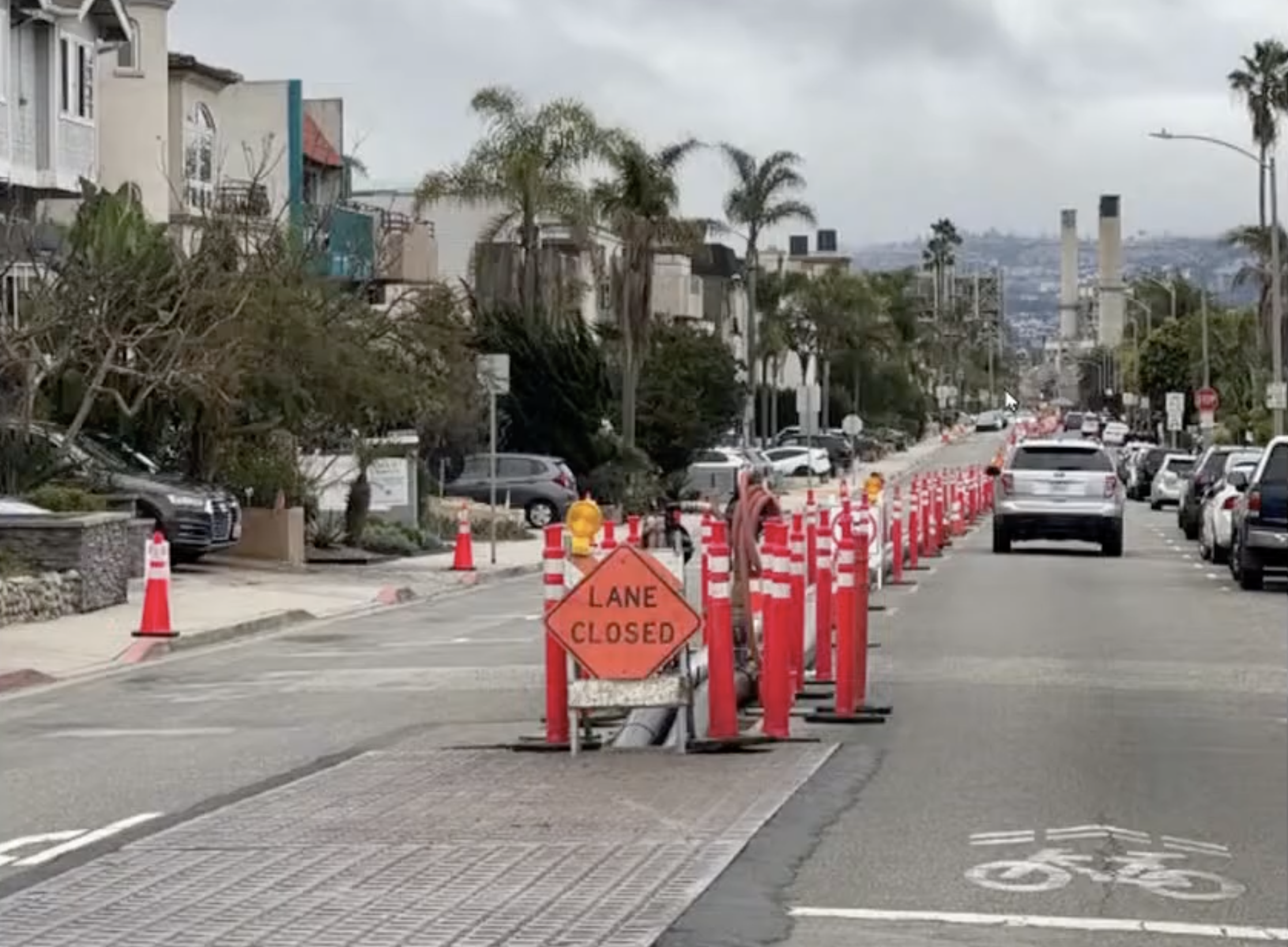
The numbers tell a story of ambition, progress, and arithmetic that does not quite work. The city is delivering projects at a rate that would have been unimaginable five years ago. But the backlog is long and the revenue picture is constrained. The annual process for allocating funds and prioritizing choices for next year's program begins again in just a few weeks.
The Capital Improvement Program is the city's comprehensive plan to develop and maintain capital facilities and infrastructure. Projects are typically high-cost, can take a year or more to complete, and result in the creation or preservation of a capital asset. They are organized into four categories: streets and highways ($13.7 million), sewer and storm drain ($6.1 million), parks ($2.4 million), and public buildings and grounds ($13.7 million).
The annual cycle begins in February when department heads submit budget estimates. The City Manager and Finance Director meet with each department, and the CIP budget is developed alongside the operating budget. A dedicated CIP study session, held last May for the current fiscal year, gives the Council and the public an opportunity to discuss project status, funding, and sequencing. Formal adoption follows with the annual budget a month or two later.
Public Works Director Joe SanClemente and his staff present a holistic review of every project, weighing new requests, grant timelines, public safety needs, regulatory requirements, available funding, and engineering staff capacity.
There is no published scoring methodology. But the documents reveal a consistent tension between what the city needs, what people might wish for, and what taxpayers will agree to pay for.
On the needs side, staff has been explicit. The May 2025 study session report recommended prioritizing deferred maintenance and safety projects, including building maintenance, sidewalks, sewers, storm drains, and paving, over enhancement projects. The logic is straightforward: continued investment in foundational infrastructure reduces future maintenance and capital costs. Defer a $3.1 million annual paving program and the streets don't wait. The Pavement Condition Index has already slipped from 70 to 68. Sewer mains collapse. Gas and water mains leak.
Some projects have no flexibility at all. Grant-funded work must hit deadlines or the city loses the money. The city's Real Time Crime Center has a federal grant with a completion deadline, though the government shutdown has stalled processing.
Emergencies jump the queue entirely. When a gas leak forced the Community Center's gas service offline, or an electrical fire closed a city building on Valley Drive, staff created new CIPs mid-year and fast-tracked them to construction.
In practice, this means the city's most visible public-facing infrastructure, the streets residents drive on, the sewers beneath them, the sidewalks their children walk to school on, must compete for engineering hours with conceptual studies, signage programs, and enhancement projects that may be desirable but are not urgent. Staff is pushing to resolve that competition in favor of the basics. Whether council continues to back that approach will determine what Hermosa Beach looks like in five years, and what the cost of the program means for local taxpayers.
The FY 2025-26 CIP budget totals $35.9 million, of which $15.3 million represents new funding requests. New funding breaks down as $6.9 million from the Capital Improvement Fund, $4.3 million from special revenue sources, and $4.0 million for the Greenwich Village undergrounding.
The five-year CIP plan projects $87.5 million in total spending through FY 2029-30. The heaviest year is FY 2027-28 at $27.3 million, driven largely by an anticipated $18 million construction phase for the new City Yard.
But the five-year plan captures only what is currently programmed. Beyond it sits the Deferred and Unfunded Future Projects list: 20 items with estimated costs ranging from $30 million to $162 million. That list includes Community Center theater renovations ($5-14 million), Parks Master Plan implementation ($8-21 million), Civic Center deferred maintenance (more than $10 million), and additional pier deck repairs ($3-5 million). Combined with the $60 million in unfunded needs identified within the five-year CIP itself, the total unmet capital need exceeds $90 million and could approach $220 million.
The growing funding gap is part of a backdrop against which Hermosa Beach voters have now twice rejected a three-quarter-cent sales tax increase. Measure B failed in November 2022 with 55 percent voting no. Measure HB failed again in November 2024 by an even larger margin. Each would have generated roughly $3 million per year. At the June 2025 budget session, Administrative Services Director Brandon Walker warned of fiscal headwinds from pending LA County Fire and Lifeguard contract negotiations, rising pension costs, and inflation.
Public trust in the CIP has not always been helped by the city's own track record. Under former City Manager Suja Lowenthal, several projects became symbols of delay and cost escalation. The Clark Building renovation, a relatively straightforward facility upgrade involving a new commercial kitchen, HVAC system, and interior improvements, stretched across multiple budget cycles with repeated scope revisions, re-advertisements, and value engineering before finally reaching completion in late 2025 at a total cost that approached $3,000,000. A project to renovate park restrooms turned into an environmental boondoggle that ran massively late and over budget.
Meanwhile, the grandly titled 'Civic Facilities Project Advisory Group' convened under Lowenthal's tenure unveiled a vision for new civic center facilities with a price tag that could have reached $150 million or more, a figure that struck many residents as disconnected from a city that could not keep its public bathrooms functioning or its community buildings open. The advisory group's recommendations were quietly received and filed by the Council in July 2025. Since the arrival of new City Manager Steve Napolitano in June 2025, the focus appears to have shifted toward practical delivery: deferred maintenance, paving, and getting construction contracts executed.
Public Works has dramatically increased its throughput. Historically, the department completed about four CIPs per fiscal year. In FY 2024-25, it reached 15, with an estimated construction value of $12 million. Several projects came in under budget: the South Park irrigation project released $1.15 million back to the CIP fund; storm drain projects on 5th Street and Bard Street returned a combined $273,000.
But the estimated project schedule through FY 2027-28 shows workload exceeding staff capacity in most months. The City Yard alone is projected to consume around 5,000 engineering hours over three years. Staff has been direct: with the number of projects in the CIP, the workload-to-capacity gap will likely continue through FY 2027-28, with apparently little to no capacity to take on new projects.
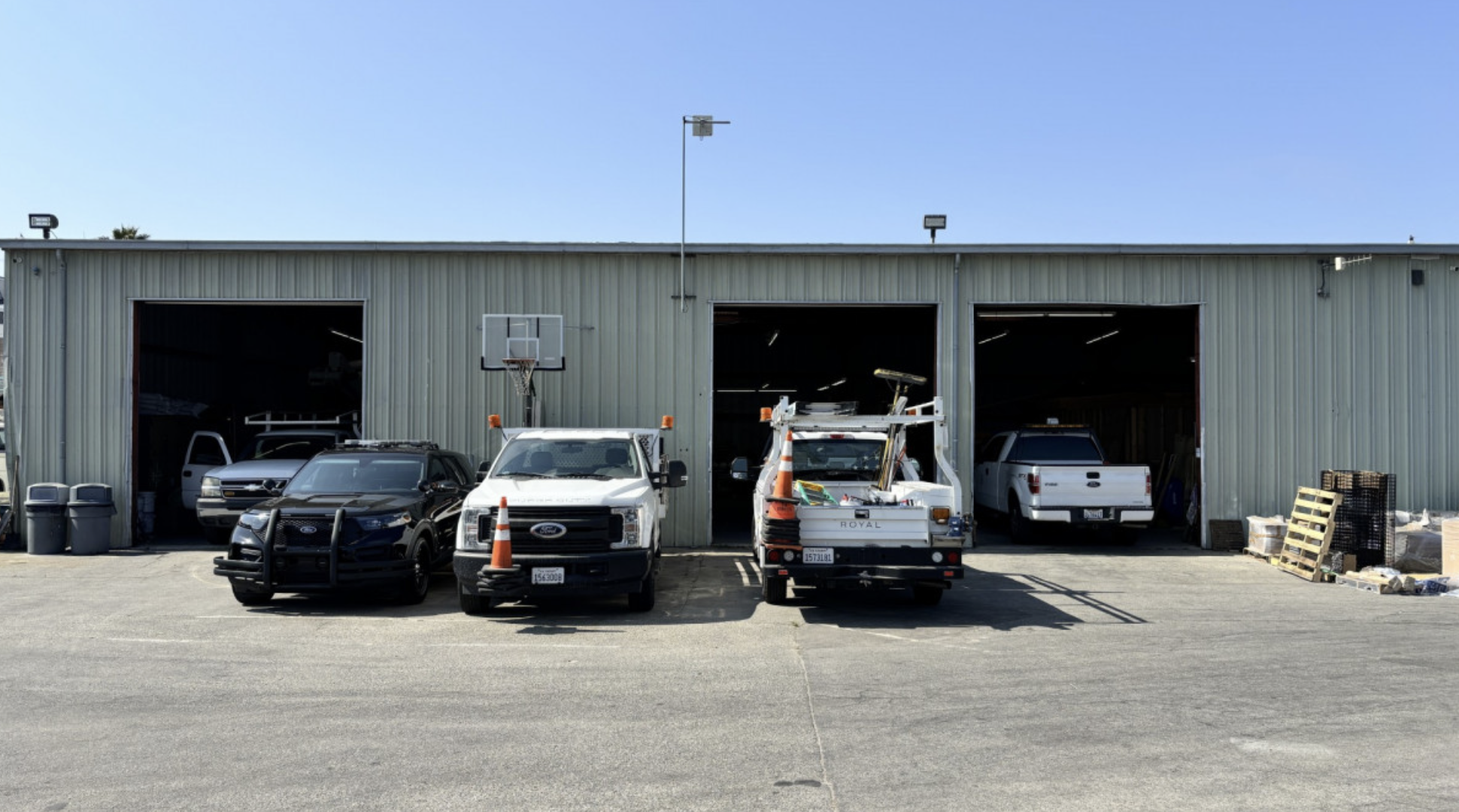
The CIP documents paint a picture of a city simultaneously making real progress and falling further behind. The tripling of project completions is a genuine achievement. But the unfunded backlog is growing faster than the city can close it. The Pavement Condition Index is declining. The pier needs $6.7 million in repairs over five years. The Corporate Yard reconstruction could cost $15-20 million, with only $2.6 million set aside. And the deferred project list keeps getting longer.
Every unforeseen condition widens the gap between what the city needs to spend and what it can afford. Productivity alone cannot solve a structural funding shortfall. Until Hermosa Beach finds a way to close the revenue gap, whether through winning back enough public trust to enable a future tax measure, creative financing, grant windfalls, economic growth, or some combination, the CIP will remain a triage exercise: choosing which infrastructure to fix now and which to let deteriorate a little longer.
The city's streets, sewers, buildings, and pier are not waiting for that decision. They are aging on their own schedule.
 Hermosa Review

Third and final City Council Candidate debate promised fireworks with 'challenge card' system. The format ultimately delivered more consensus than disagreement.

Faced with rising costs and complexity, what role should artificial intelligence play in Hermosa Beach's future?

Election season moves into full swing with the first candidate debate last night.

The Parks and Recreation Advisory Commission voted Tuesday night to form an ad hoc pool subcommittee, on a tight mandate and a six-month clock. Neighboring cities' pool projects, and Hermosa Beach's own dog park campaign, tell us that the real work is all still to be done.
By Hermosa, for Hermosa. Join The Review today.