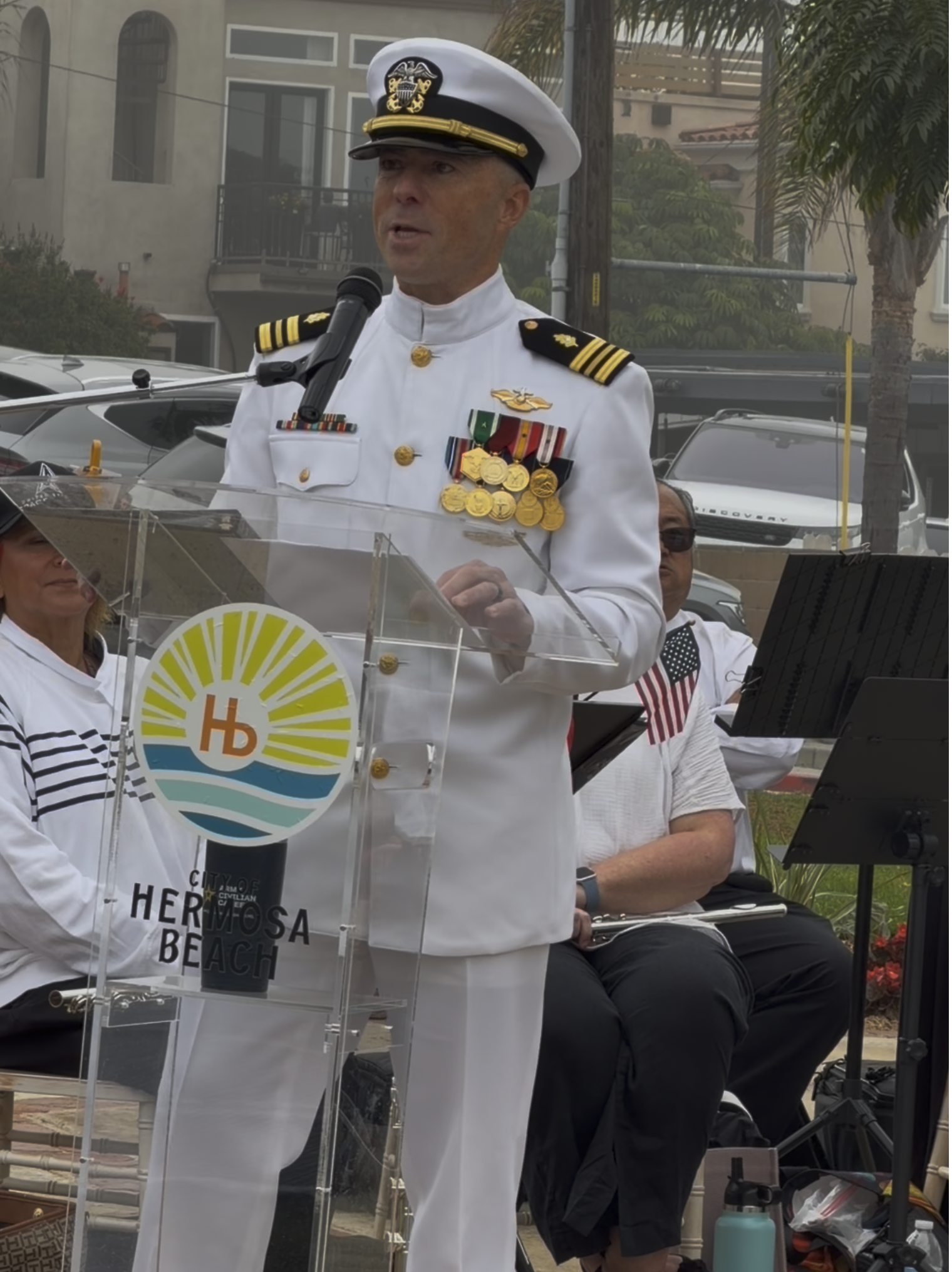
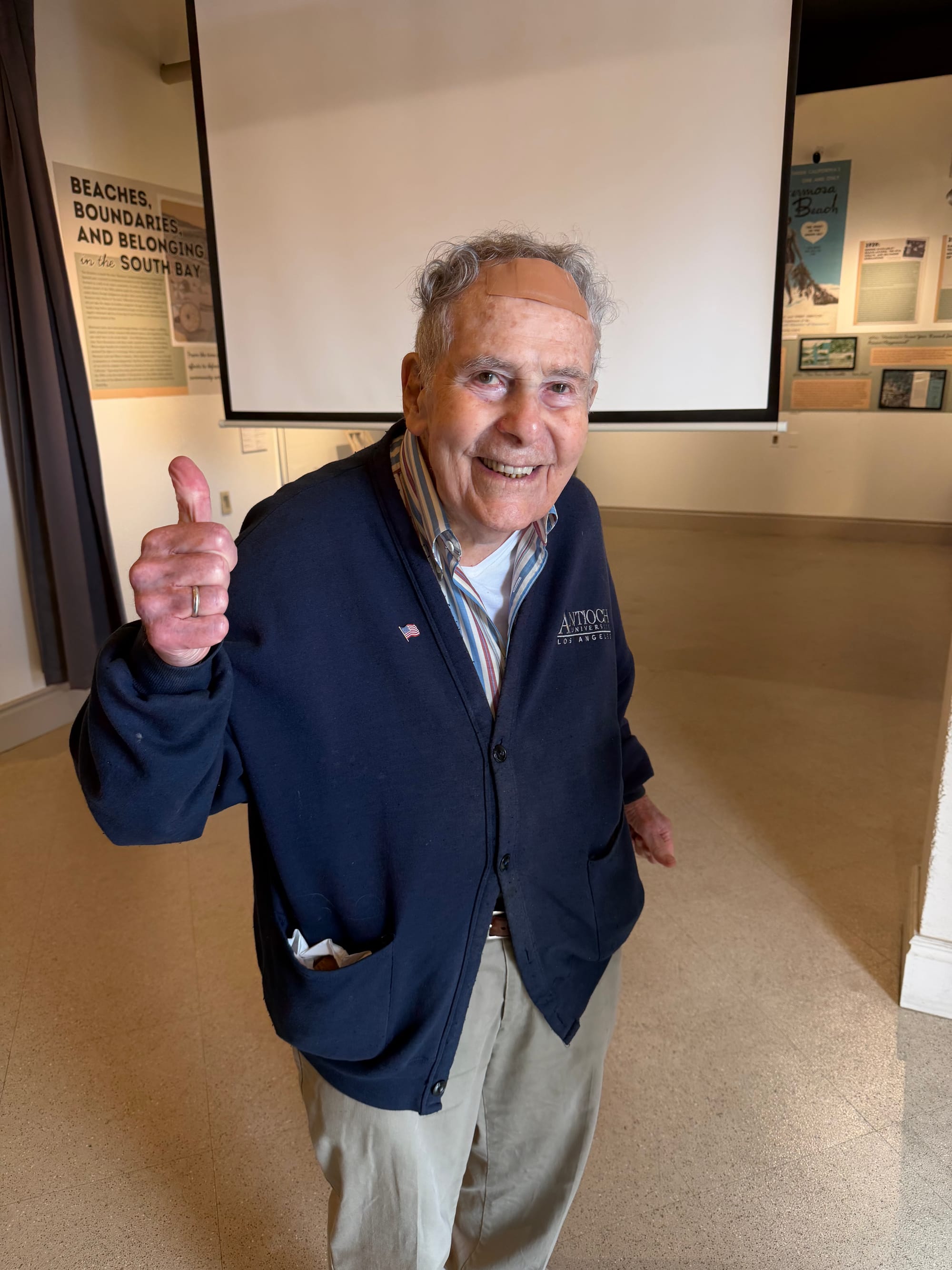
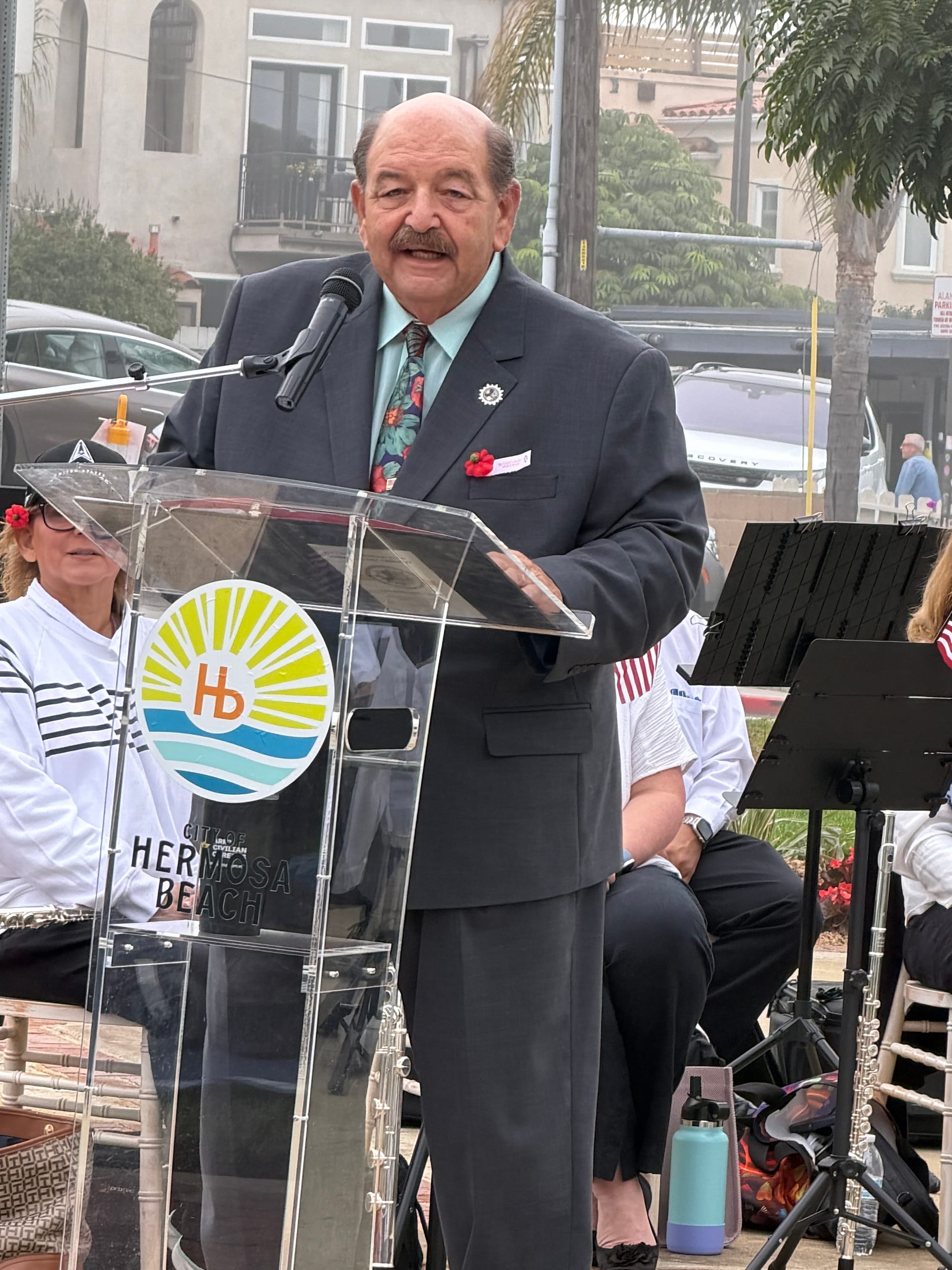
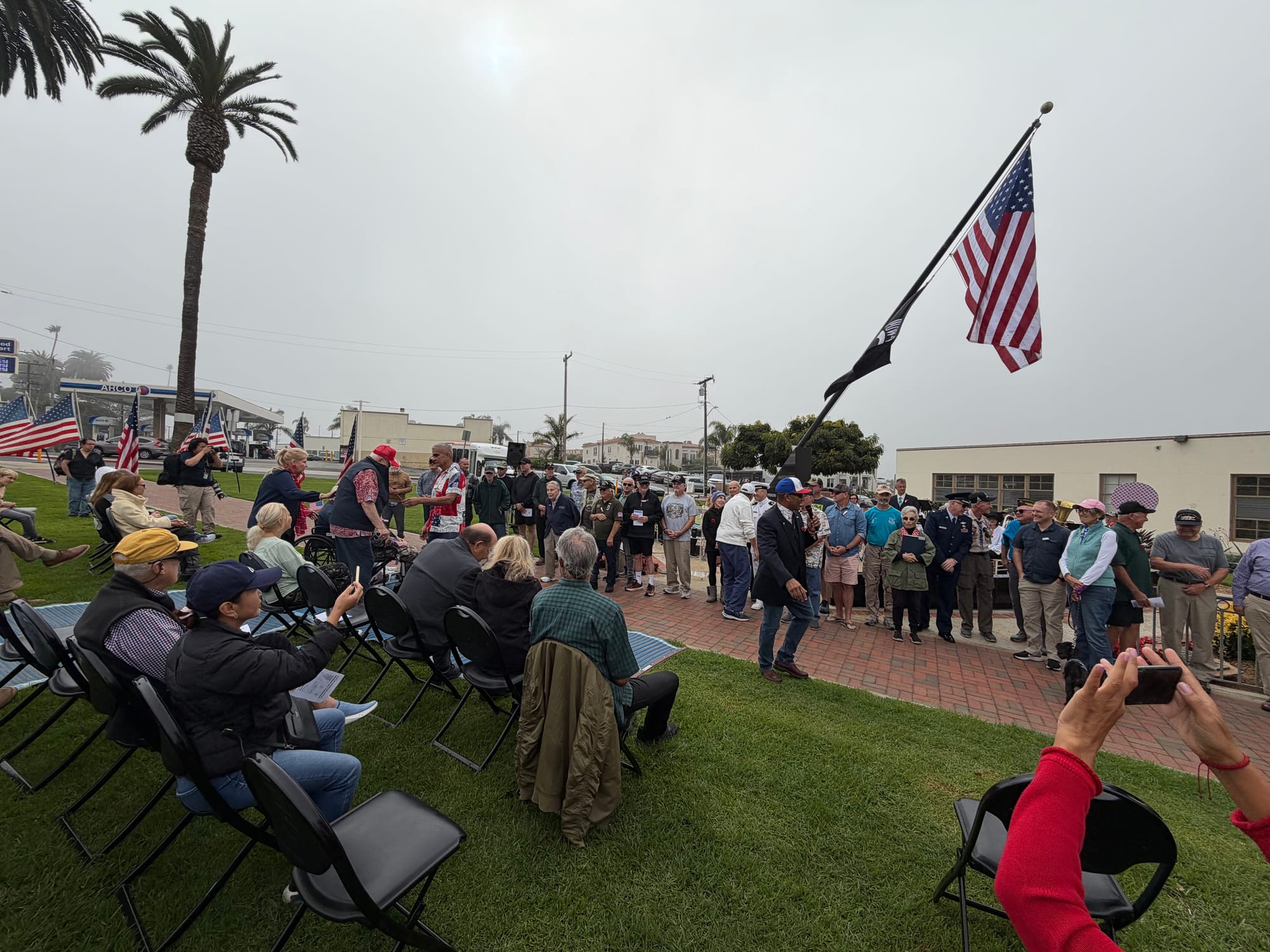
Good morning everyone. Thank you for coming out today. I wouldn't be here if not for Steve Crecy, that gentleman we were talking about earlier. I live just a few blocks away. And I don't really like public speaking. Much as it does not quite look like that today.
But we had a city council meeting a little over a year ago. And there was something I was passionate about. Kind of like this. And they were talking about building some big buildings near our home. And I felt compelled to get up in the public forum part and speak. And in that speech, I felt, let me give a little gratitude or a little weight to what I'm saying. And just add that I'm a veteran.
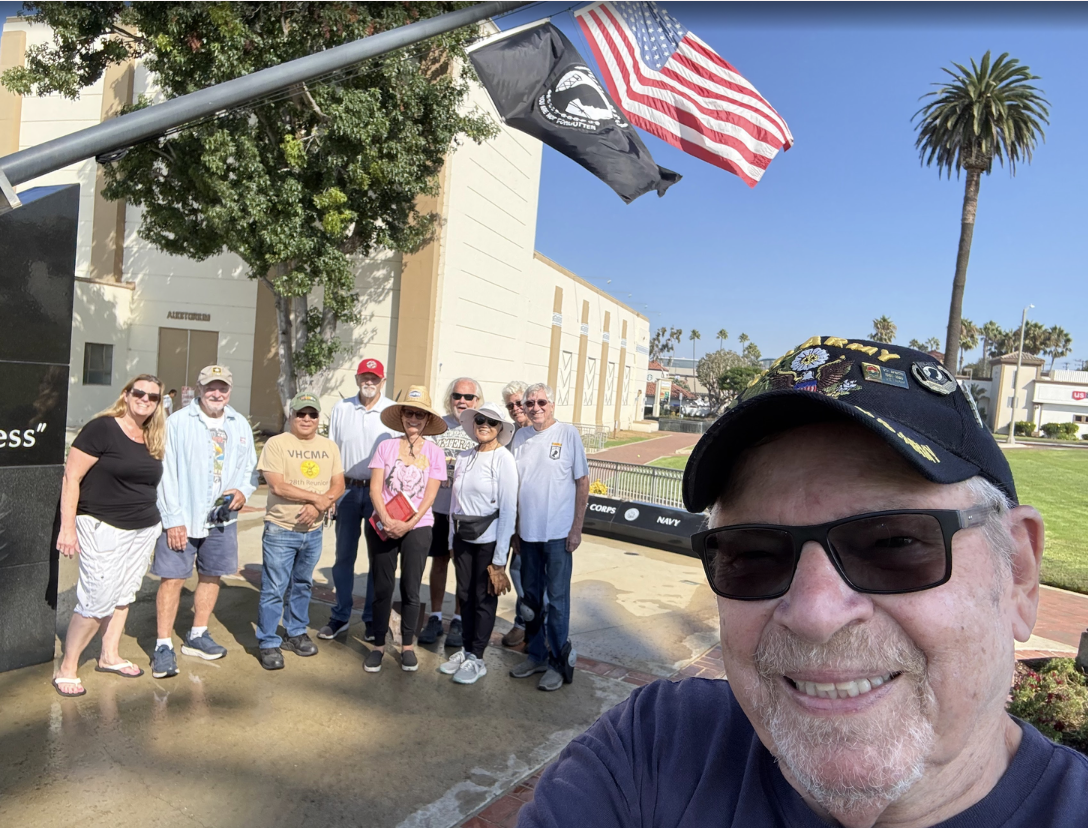
Sure enough, Steve picked up that little tidbit. And about a week later, my wife and I got a handwritten snail mail letter, stamp and all, in Steve's handwriting. He talked about coming out and maybe spending some time the first Saturday of each month, cleaning and maintaining the memorial. Which actually, I was really grateful that he did that. And I enjoy these first Saturday of every month. I certainly would invite everyone to come out and support and help us preserve and maintain this the way Steve and Mike have done over 32 years already.
I'd like to say thank you to all veterans. Combat and non-combat. Because service and sacrifice doesn't just come on the battlefield. It comes stateside. It comes overseas, abroad. Veterans all write that blank check. That blank check that means no matter when, no matter where, you're called, that you're going to step up and you're going to fulfill that request, that duty, that responsibility. So I just want to say thank you to all veterans here and serving overseas.
It's a true honor to stand here today on this Veterans Day, a day our nation pauses to honor those that have served and sacrificed in defense of our freedom. It's a day of remembrance, gratitude, and pride. But also it's a day of hope. Because every generation of veterans reminds us that courage and commitment are American values. Today, not just for reflection but for connection between all those who've worn the uniform and all those who benefit from that uniform and the service provided. The benefit from the freedoms that the uniform serves to protect.
For me, Veterans Day is deeply personal. I served 25 years in the Navy, 14 years on active duty. My journey did not begin as a doctor. It began as a young hospital corpsman just 10 days out of high school. Those early years taught me what service really truly means. It means showing up when it's hard, standing shoulder to shoulder with others, and putting duty before self. Being a corpsman was my first lesson in leadership and compassion. It taught me that heroism looks ordinary oftentimes. It looks like quiet, steady courage to do your job and do it under pressure. I learned that leadership sometimes looks like kneeling next to someone in pain or staying calm when things are chaotic. Later, when I became a Navy physician, there's a lot of steps along the way. I'll leave that out because we don't need to go to the 18th inning, third game, all night long. We'll just cut to the chase. That lesson guided me again. The tools, however, changed. The Unit 1 medic bag that I carried became a stethoscope, chest tube, central line, medications, advanced equipment.
But the mission was the same. Take care of those who take care of America. In 2012, I deployed to Kandahar, Afghanistan as an emergency physician embedded with Army. It was an individual augmented deployment where I was in charge of the emergency department there for 10 months. It was a frenetic time during our war. And during those 10 intense months, our hospital is called the NATO Role 3 Multinational Medical Unit. It's essentially like a Level 1 trauma center that isn't down the street in Harbor City like Harbor-UCLA is or County-USC. Rather, it's actually in country. It's in Kandahar.It's on an active battlefield.
We prepared that trauma-receiving emergency department area and that facility to receive casualties. During those 10 months, casualties came throughout the day and night by helicopter, by medevac. We received casualties from all across that southern region of Afghanistan for those 10 months. They were American soldiers. They were Marines.They were airmen. They were Navy sailors and Marines. Our coalition partners from various nations that were in that war with supporting us. There were local Afghans, Afghan military troops and civilians caught in the crossfire. We treated everyone that came through our doors. But we all had one goal, and that was to save lives. That was the main goal, save lives.
Those months changed me forever. I saw courage that still humbles me. Young men and women catastrophically injured, and their first question when they came through those doors wasn't about whether they were whole, whether they lost a limb, whether they were going to be okay. It was, how's my buddy? How are my men? That courage, it sticks with you. Sure, eventually their next question after they found out their buddies were okay was about themselves, whether they were going to be okay, but that unbelievable courage just, it stays with you.
There was also courage among our team members, the teamwork, the humanity.I saw doctors, nurses, medics, corpsmen, all of our medical professionals push through exhaustion at times because one more life might possibly, I'm sorry, one more life might be saved if they just pushed further, pushed harder, and just kept going. And I saw sacrifice up close. One of those sacrifices was First Sergeant Russell Bell who was killed in Kandahar in 2012 in August. I wear a memory bracelet for him. He stood out to me because we cared for him when he first came in when his dismounted patrol encountered an IED and their unit was blown up. A couple of guys came in in bad shape. He came in also not in such bad shape, but we got to know him over a couple of weeks. And when it came time to assess his wounds, assess his mental and physical health, and make a decision of whether getting back to fight or going home was the right call, we tried to push him home, but not First Sergeant Bell.
If you know anything about the military, First Sergeant is like the next from sergeant major.It's the next highest rank among enlisted. And those guys, those guys and gals, they shouldn't be leading from the front, but not First Sergeant Bell. He was a leader of extraordinary strength and heart who made everyone around him better. On this Veterans Day, I want to say his name out loud so it echoes beyond this gathering. We honor him and all those like him whose courage continues, continues to guide us well after they're gone.
But service doesn't end with those who wear the uniform. There are no medals or rank for families. The families who sacrifice and wait at home, who live every deployment through worry, hope, and faith (voice breaking with emotion). Is it misty out here?
In 2012, when I was in Afghanistan, my son was just four years old. For ten long months, he gave up his dad. Every phone call was precious. Even back then, 2012, there was Skype. It was basic. It was pixelated. There was all kinds of connection problems, but we could Skype each other from time to time. And when we did, we would actually wait for that connection to finally sync up, and he would wait. He would wait for me to come on that screen. I can't look at you. Because as soon as he confirmed that I was okay by making eye-to-eye contact with me through that screen, he would immediately turn his back, turn his back away like any four-year-old child, because that was the only way he knew how to show me that he was mad at me. He was upset. He was hurt.
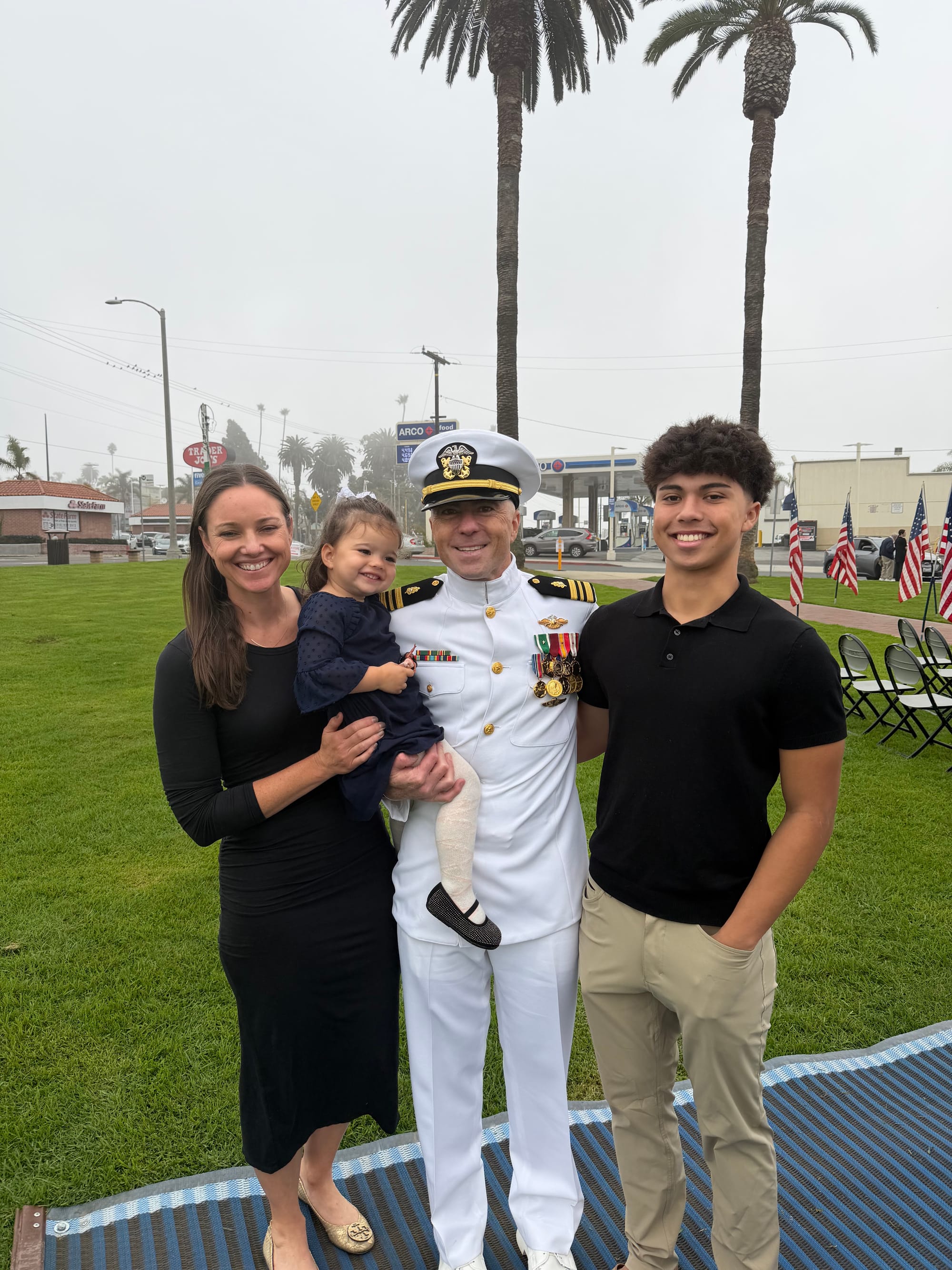
Just when he thought I might have hung up, he would still look over his shoulder and look back and make sure I was still there. And even though I really wanted to reassure him that everything was gonna be okay, buddy, the truth was that none of us really knew. I remember hanging up more than a few times and just thinking about it, quietly, about how young he was, to be carrying such, such weight for someone his age. Now he's 17 years old, and I want to take a moment to thank him. Thank you, Mateo, for being brave when I couldn't be there. Thank you. You carried more than a child should have to carry, and you did it with courage. You're part of my service story.You served, too, and I hope you know how proud I am of you.
And so today, my life has come full circle. I have a wonderful wife of four years and a beautiful two-year-old little girl. My wife didn't just marry a man, she married a veteran. A veteran who carries the memories, the memories of war and the weight of duty. She's shown patience, grace, and strength beyond words. To my wife, thank you. Thank you for the countless sacrifices, for loving me through countless transitions. The quiet ones, the not-so-quiet ones, the times of reflection that come after years of service.
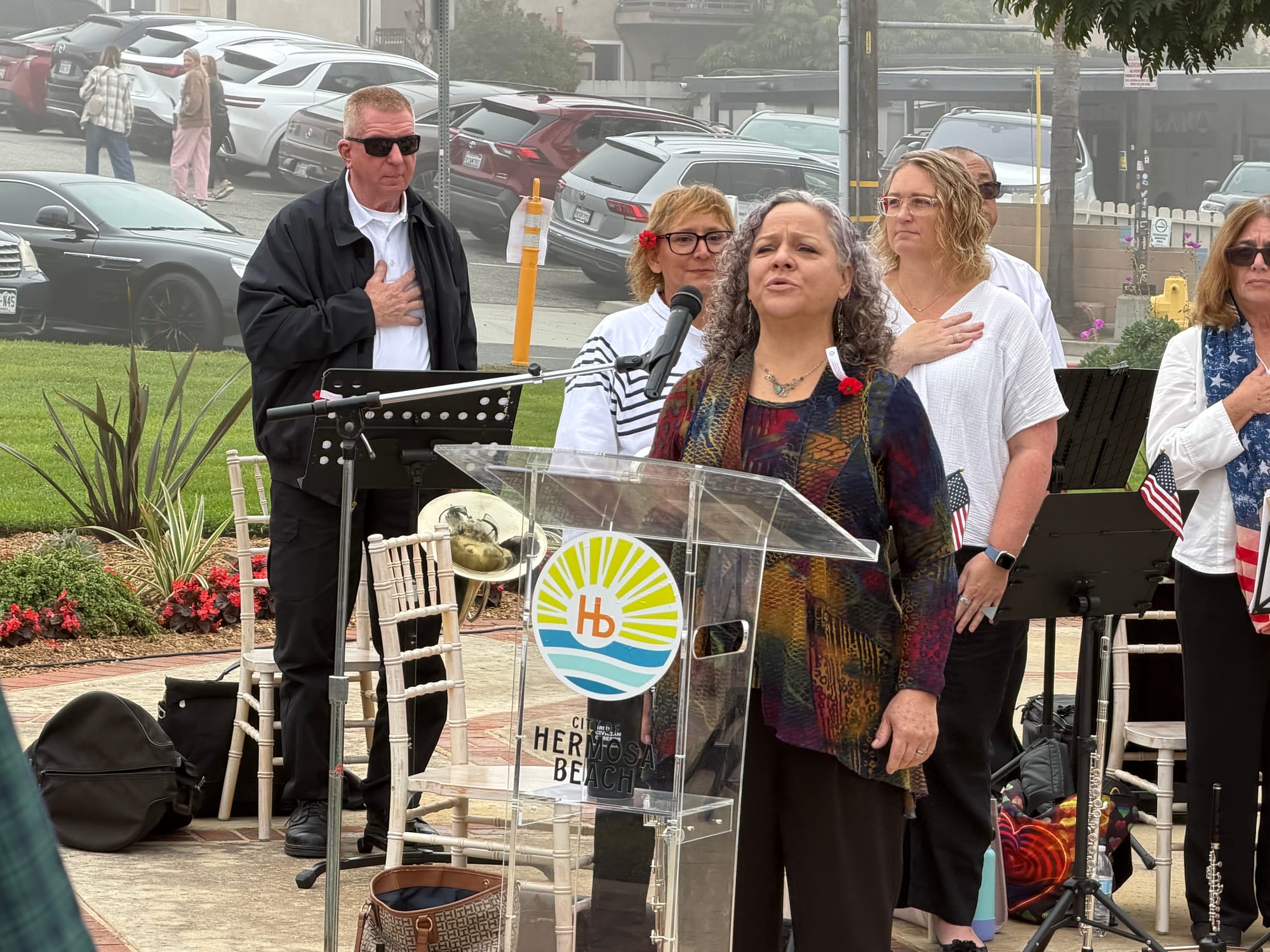
And to my little girl, one day you'll understand why your daddy's eyes misted up. My eyes. When I sing the National Anthem, because I do, I sing the National Anthem not quite as beautifully as it was sung today. I sing it to her as a little lullaby each time I put her down for a nap or for bedtime. And it's come to her to be known as daddy's song, so hearing someone else sing it so beautifully probably confuses her a little bit. But I sing her the National Anthem at least a handful of times a week, and it's our little, our little precious song. But sometimes I get misty, and I hope she understands one day that the reason I get misty is because every word of that, of that beautiful song carries the faces, names, and memories of those that we served with in battle and served beside.
A few years later, in 2017, I deployed again, this time aboard a U.S. Navy ship, USS Somerset, into the Persian Gulf, assigned to a Marine Corps unit. So I served with Army, served, deployed with Marines as well. This deployment was different. It was quieter. Quiet, but you never knew what was gonna happen outside those steel walls. The world could change in a moment. So even though it was quiet and there wasn't a whole lot going on, it was no less meaningful. Life at sea teaches you patience, teamwork, and humility.Every sailor and Marine on that ship depends on one another, from the cook to the commanding officer and everyone in between. We depended on each other. It reminded me that service is not just about combat. It's about readiness, about discipline, and the daily choice to serve with honor wherever, wherever duty calls.
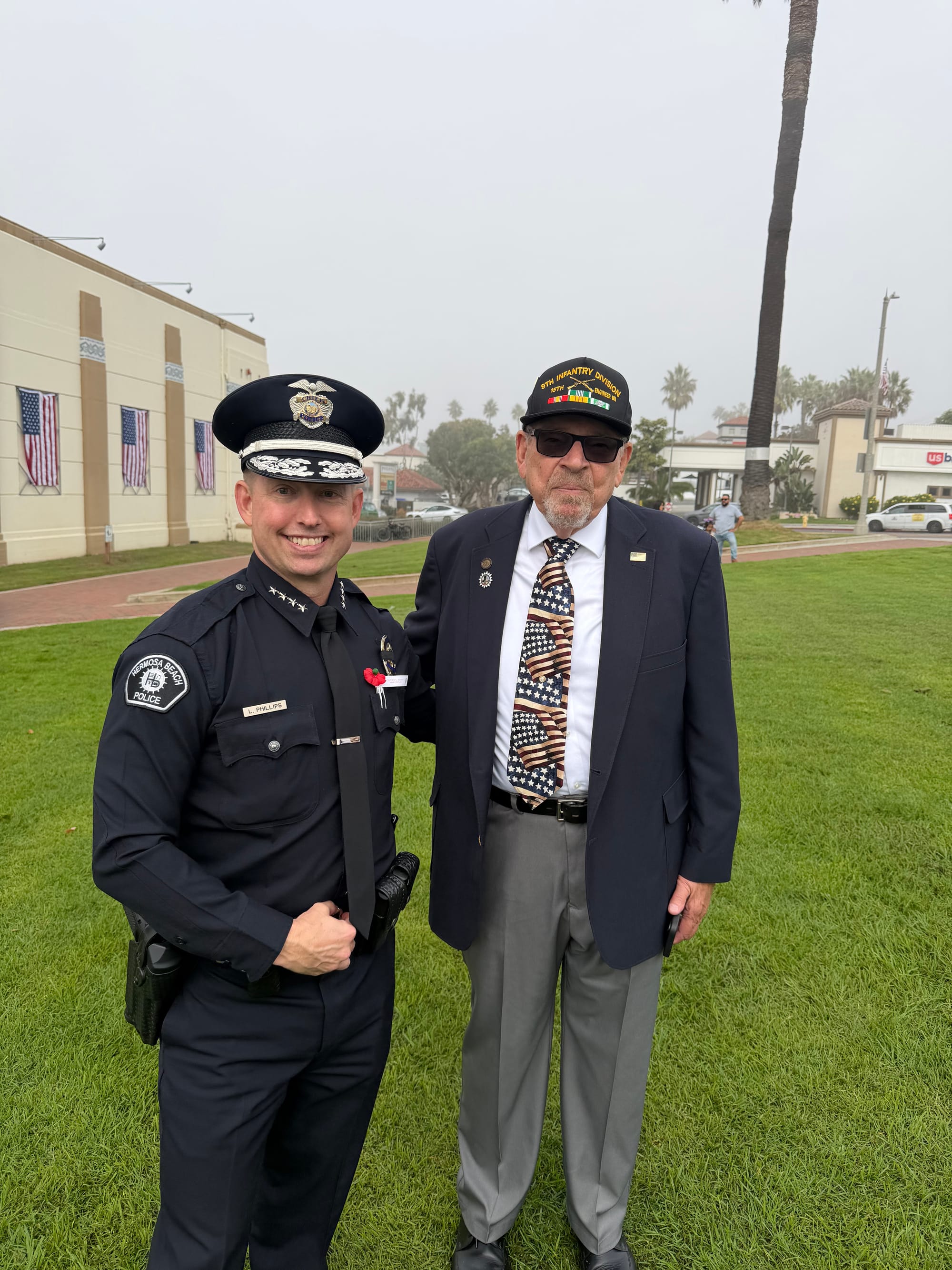
But Veterans Day is not just about war. It's about people. It's about men and women who raised their right hands and promised to defend, to defend the freedom and defend this country. It's about their families, their families who endured, endured long nights in empty chairs at the dinner table. It's a day to honor every man and woman who took an oath to serve this country. Whether they fought in World War II or they served in peacetime, whether they were in combat zones or they were stateside, whether they were draftees or volunteers, each one gave a piece of their life for something bigger than themselves. It's also about responsibility, our responsibility to look out for our veterans, like the mayor said. Many veterans come home carrying invisible wounds, as was mentioned. They need our understanding, our compassion, our continued care. Approximately 20 veterans die every day, some of those by their own hand. It's a staggering statistic. So let that sit in for a moment. When you see a veteran, don't just thank them for their service, though. That is appreciated, trust me.
Many of us talk about how sort of awkward and uncomfortable it feels just, you know, thanking us for something that we're honored to do. And Steve and I have talked recently about how we all have a little bit of survivor's guilt because the sacrifice that we made doesn't doesn't compare to the sacrifice that some others. But when you do see a veteran, don't just thank them for their service. Ask how they're doing. Listen to them. Reach out. Reach out today if there's someone you know, someone that served. Reach out, not just today, but all the 364 days in between to those veterans who may need a, may need, you know, an ear to listen to them, a shoulder to lean on. Support the organizations that help veterans reintegrate into civilian life. Choose the organization that you like. The mayor mentioned some. There are many out there.
But the best way to honor their service is to ensure they never have to walk alone. The younger generation here today, your future is built on service, on the service of those who came before you. The Redondo Color Guard, thank you. Thank you for that beautiful presentation of arms. But service doesn't only happen in uniform. Service can happen in your schools, in your neighborhoods, in your communities. Service is about giving of yourself, standing up for what's right, and taking care of others. The same courage that drives a soldier in battle can drive a citizen to make a difference right here at home.
In closing, after 25 years in uniform, I can say this, service definitely changes you. It reminds you that freedom is not a given. It's a gift paid for by men and women like First Sergeant Russell Bell and protected every day and currently by those serving in uniform, both stateside and overseas. So on this Veterans Day, let us celebrate not only the courage of those that have served, but also the hope that they inspire. Let us care for our veterans, support their families who wait, and the children who grow up knowing that courage comes in many forms.
May we live each day with the same spirit of unity and compassion that defines our military family. May we honor the fallen by lifting up the living. May we cherish, cherish our freedoms by serving one another right here. And may God bless our veterans, their families, and the United States of America. Thank you.