

The End Of The Pier, Or A Fresh Start ?
What the rise, fall, and uncertain revival of piers around the world can tell us about the costly decision Hermosa Beach now has to make about its own ailing landmark

The Hermosa Beach pier has less than ten years of economic life left. The recently submitted structural condition assessment found the deck in 'poor to serious condition', its load rating already reduced by half, and the cost of keeping the existing structure running through 2070 at a cumulative $210 million in inflation-adjusted dollars. A new pier is estimated at $44.5 million. According to the survey, the optimal replacement year is 2032. After 2036, the math gets significantly worse.
That assessment coincides with other major financial decisions facing our city. A renovation of the city yard is estimated to cost around $20 million. The deferred maintenance and unfunded project list is north of $100 million.
What the city does with its pier is now a political question, not just an engineering one. To understand the range of possible answers, it might help to look at what has happened to piers elsewhere when that same question came due.
THE QUICK CLICK (click for summary)
- The pier is failing. Engineers say replace it by 2032 or costs spiral fast.
- Repair vs. replace: continued repair gets exponentially more expensive
- The window closes around 2036. After that, the structure starts making the decision for you.
- Half of Britain's piers are gone. Many of them deemed uneconomic.
- The Hastings Pier won an architecture prize and went bankrupt six months later. Building it is not the same as running it.
- A pier-head restaurant could generate $500k a year for the city. Real money for maintenance. Not remotely enough to pay for construction.
- San Diego's pier has been closed since 2023 with no rebuild start date. They waited too long.
- Capitola assembled its funding stack — sales tax, state grant, HUD money — before the storms hit. That is why they rebuilt in a year.
- Parcel tax could cost every homeowner $550 each year per $1m of assessed value
Origin Story
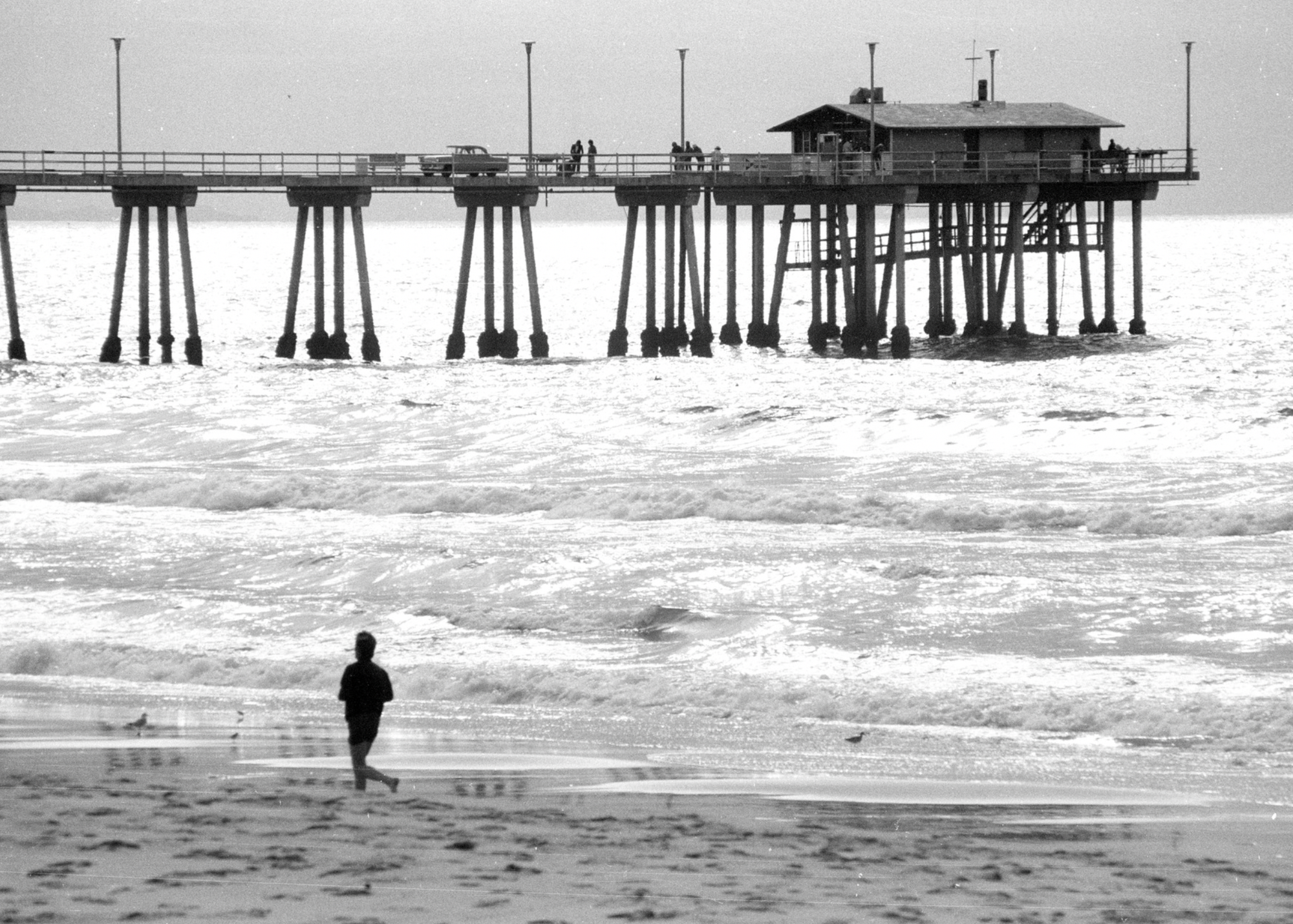
Britain is where the pleasure pier was invented. The first opened on the Isle of Wight in 1814 — a wooden landing stage built so ferries could dock at low tide — and the form spread rapidly until, by 1914, more than a hundred piers served English seaside resorts from Cornwall to Yorkshire. They were the original model for what Hermosa Beach's pier, and thousands like it, eventually became: a structure extending over open water, available to anyone who wanted to walk out over the sea.
Britain is also where the consequences of getting pier stewardship wrong have played out at the largest scale and over the longest time. Fewer than 55 of those hundred piers survive today. The rest went to storms, fire, deferred maintenance, and the economics of resorts that ran out of visitors. The American version of the pier evolved differently - less bandstand, more bait shop - but the structural and financial pressures are the same. Salt water and marine organisms do not care which country a pier is in. Neither does the arithmetic of neglect.
Iron-clad Problems
The most consistent lesson from pier failures globally is that deferred maintenance is the most expensive option. Every city that chose to keep patching an aging structure found that costs compounded until replacement became the only viable choice — but from a weaker position, with less time, and fewer options. The Hermosa engineering report makes this point in inflation-adjusted dollars. History makes it in demolished piers.
Birnbeck Pier in Weston-super-Mare, England is the extreme version. Opened in 1867, it closed in 1994 when storm damage and decades of underinvestment made it unsafe. For nearly thirty years afterward, a private holding company sat on the asset and did nothing. Parts of the deck fell into the sea. Historic England put it on their Heritage at Risk register in 1998 and left it there for twenty-five years. When the local council finally forced a compulsory purchase in 2023, restoration costs were roughly fifty times what sale and repair would have cost three decades earlier.
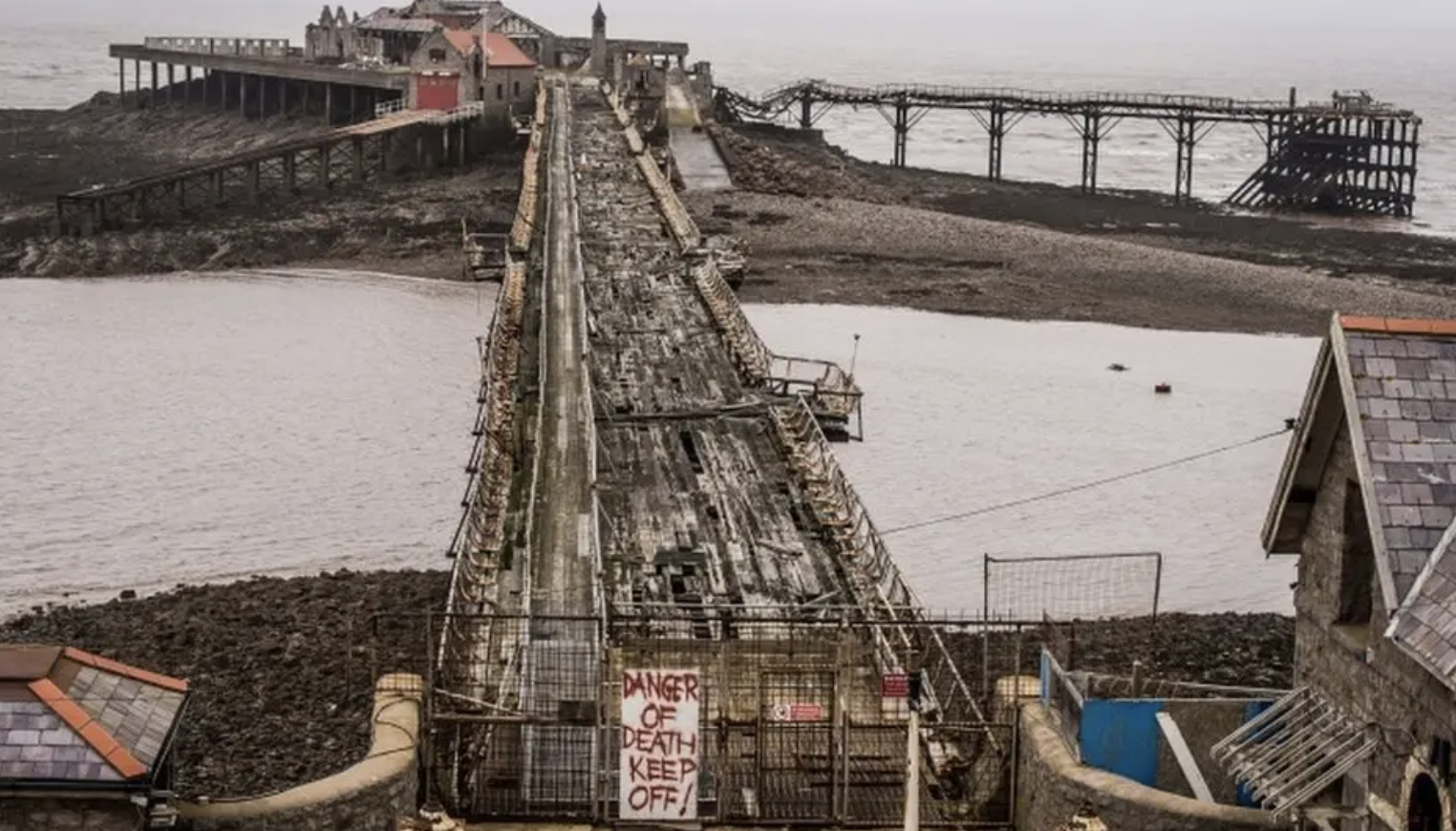
Hermosa's pier is not Birnbeck. It is publicly owned, actively used, and now formally assessed. The point is simply that the gap between the cost of acting and the cost of waiting tends to widen faster than cities expect.
Operating Pressures
Hastings Pier on England's south coast, built in 1872, closed in 2008 after its owners allowed the structure to become unsafe. In October 2010, a fire destroyed 95 percent of it. A community group rebuilt it anyway: the Heritage Lottery Fund awarded £11.4 million, a community share scheme raised £550,000 from 3,000 local shareholders, and the pier reopened in April 2016. In 2017 it won the Stirling Prize, the UK's most prestigious architecture award.
Six months later, the Hastings Pier Charity went into administration.
Rebuilding a pier requires one set of skills. Running it commercially — generating enough revenue from events, food, fishing, and footfall to cover maintenance of a metal structure in an ocean climate — requires a completely different set. The charity had the first and never adequately solved for the second. A private buyer purchased the pier for £50,000. The 3,000 community shareholders lost their investment.
The lesson is not that community ownership is the wrong model. It is that the operating question must be answered before the groundbreaking, not after. A rebuilt pier needs a commercial strategy that covers ongoing maintenance costs from day one. Otherwise you are just postponing the crisis, as Hermosa is now finding out.
Innovation
The piers that are currently drawing visitors and covering their costs have typically made a deliberate choice about what they are for, and built around that answer.
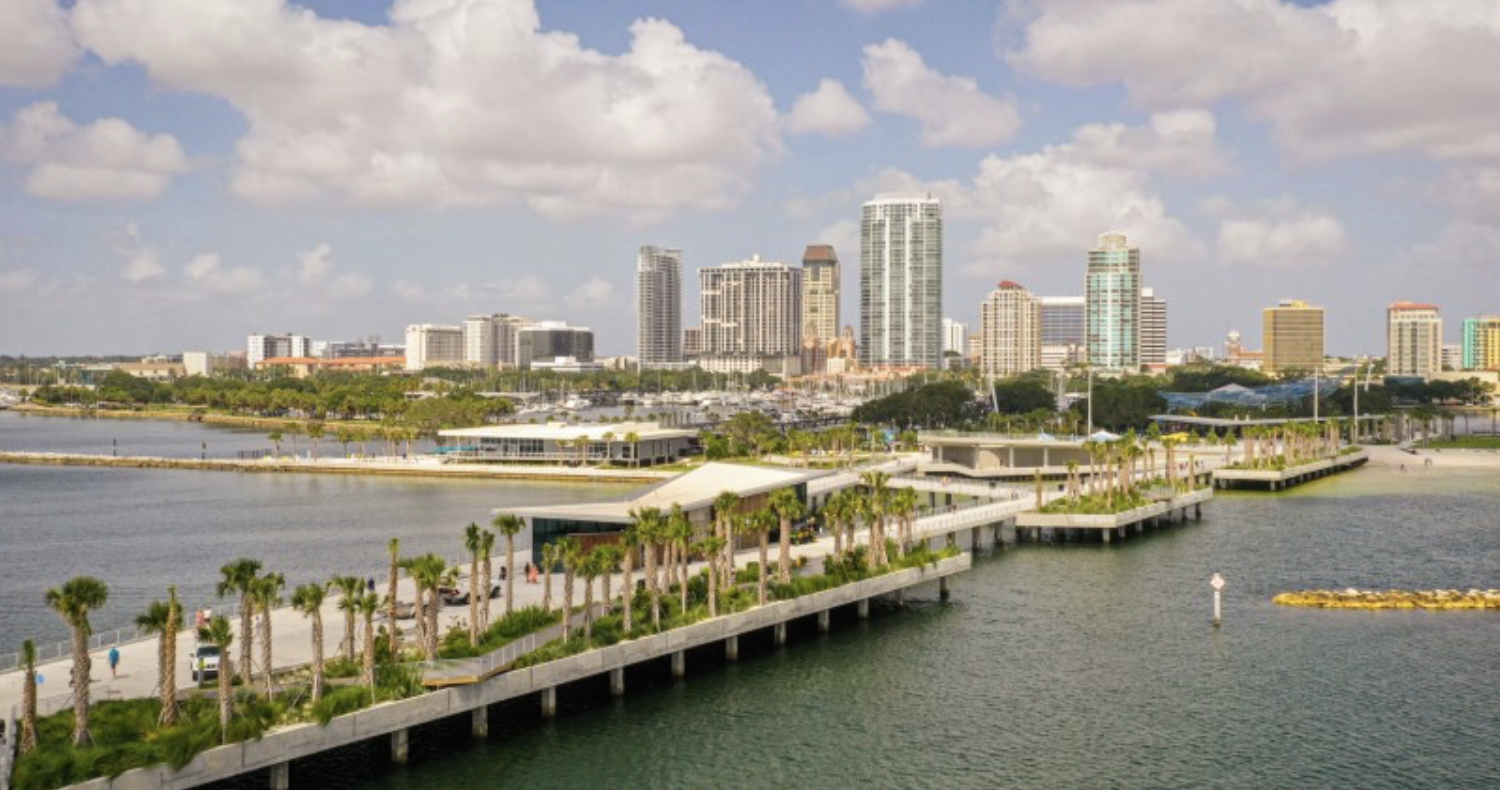
One recent example is the St. Pete Pier in St. Petersburg, Florida. The city's old 1973 pier — an inverted concrete pyramid that had become unprofitable and underused — was demolished and replaced through an international design competition. The result, opened in 2020, is a 26-acre public district stretching 1,380 feet into Tampa Bay. Rather than piling everything at the pier head, the design distributes programming along the entire length: a naturalized beach created by a new artificial reef and breakwater, a one-acre coastal thicket of native plantings housing an ecology education center, a tilted lawn for yoga and events, restaurants, fishing areas, a children's splash pad, and a local vendor marketplace. Hydrodynamic modeling produced calm enough water for a genuine swimming beach where none had existed before. The pier won the Urban Land Institute's Global Award for Excellence in 2022. Total cost was around $90 million.
In England, Bournemouth Pier installed a zip line from the pier head down to the beach, and converted its former theatre into a climbing wall and aerial activities complex. Folkestone's Harbour Arm, a former working pier redeveloped in 2016, runs a champagne bar at its tip and rotating pop-up food and music programming along its length. Weston-super-Mare's Grand Pier burned down in 2008 and reopened two years later with an enclosed amusement complex built around an indoor suspended go-kart track — purpose-built to draw visitors regardless of English coastal weather.
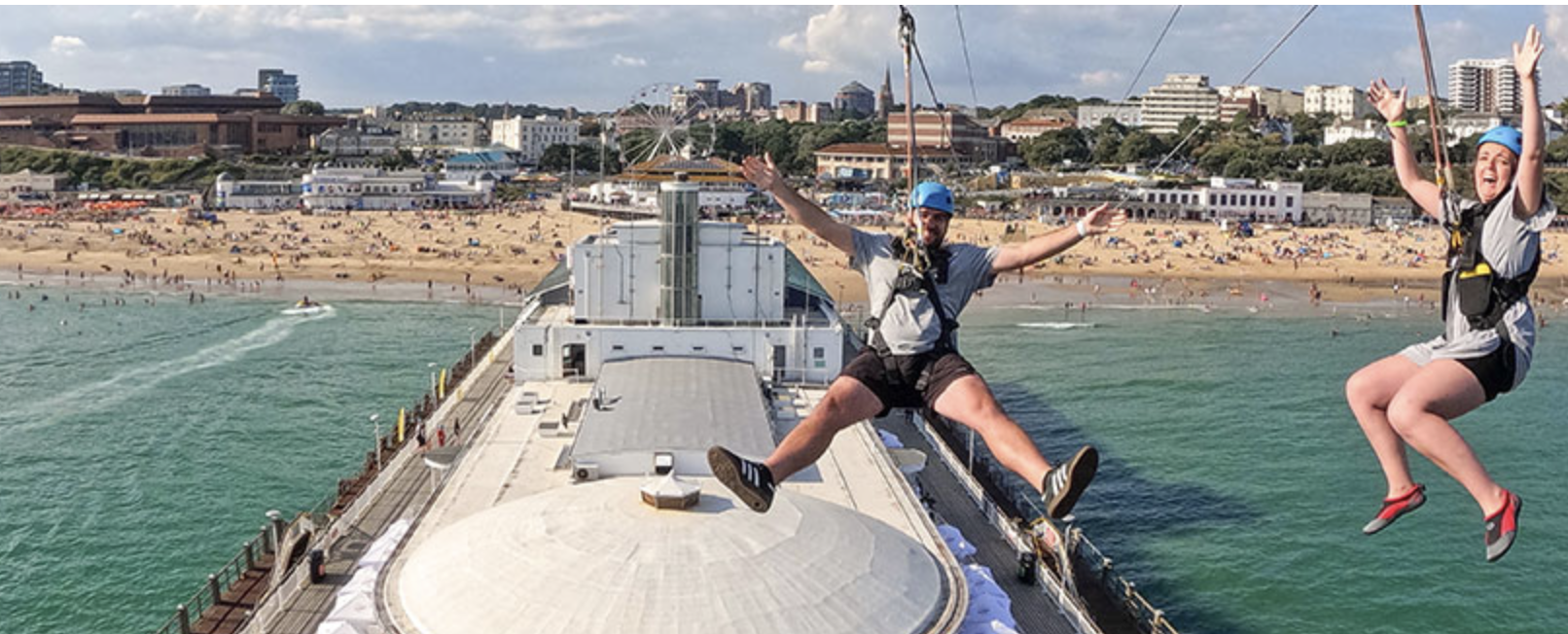
None of these are the piers their grandparents knew. All of them are full. The Hermosa pier is simpler than any of them — no concession stand, no amusements, no commercial tenant. It is a fishing and recreation pier, and a landmark at the foot of Pier Avenue, and for most residents that has been enough. The question facing the city is not just whether to rebuild, but what a rebuilt pier should be for the next sixty years.
A rebuilt pier could certainly include some version of what other cities have added at the pier head: a restaurant space, most likely with a full liquor license, positioned to capture the view that is the site's principal commercial asset. At the end of the pier, a well-run operator could realistically generate $3.5 to $4.5 million in annual gross revenue out of a 4000 ft² space. Under a standard percentage-rent structure — the model used at comparable public waterfront sites up and down the California coast — the city as landowner would likely collect somewhere around 10% of that revenue. That would equate to $9.10 per foot/month, which is definitely at the top end of current market rates. The following table makes some estimates of potential revenue from a restaurant and concessions, versus the financing cost of a new pier. The gap is startling, with projected revenue covering just 18% of the debt cost. That would almost certainly mean a parcel tax of some type, with an annual bill reaching north of $1000 for some Hermosa homeowners. That's without considering the cost of actually building the restaurant or other facilities.
Closer To Home
Down the coast, the Ocean Beach Pier in San Diego has been closed since October 2023, when high surf caused structural damage engineers determined was not worth repairing. A 2018 study had already found it beyond its useful service life. The city kept patching. Then a winter storm knocked a pile into the ocean and the decision was made for them.
San Diego is now pursuing full replacement at an estimated $170 to $190 million. The design — a curved structure called The Braid — is in environmental review under CEQA, which in California can take two to five years. As of early 2026, Ocean Beach residents have been without their pier for over two years with no construction start date.
Naples, Florida (population roughly the same as Hermosa) is currently rebuilding its hurricane-damaged pier for $26 million. Federal FEMA funding of $11.4 million arrived in December 2025, three years after the storm. The city hired a former federal employee specifically to navigate the permitting process, and the mayor eventually used a personal connection to get the Secretary of Homeland Security to personally intervene and unblock the review. Construction is now underway with an 18-month timeline.
Anna Maria, a small Gulf Coast city more comparable to Hermosa in scale, rebuilt its pier walkway after hurricane damage for $7 to $8 million — assembled from FEMA, county tourist development taxes, and state appropriations, all fronted by the city and reimbursed later.
Capitola offers the most recent California example of a small city navigating exactly this sequence. January 2023 storms split the Capitola Wharf in half – the structure, which dates to 1857, had already needed significant work before the storms hit. The city had actually been building toward a major renovation for years: voters approved Measure F in 2016, a quarter-cent sales tax increase dedicated in part to protecting the wharf from storms and rising sea levels, and in 2020 the California State Coastal Conservancy awarded the city $1.9 million for a resiliency and public access project. A $3.5 million HUD grant followed in December 2022, just weeks before the storms struck. That pre-assembled funding stack meant the city could move quickly: it signed a $7.9 million construction contract with Cushman Contracting, construction began in September 2023, and the rebuilt wharf – wider, with new pilings and decking – reopened in September 2024.
A Capitola community fundraising effort raised an additional $425,000 for enhancements including seating, viewing stations, and public art. What the wharf does not yet have is the restaurant and bait shop that stood on it before – both were partially collapsed by a second storm in December 2023 and demolished in February 2024. Whether to rebuild them is now an open and contested question, with options ranging from a $600,000 basic package to a $6.2 million plan including a full restaurant, stage, and boat storage. The Capitola case is instructive for Hermosa on two counts: the funding stack that made rapid action possible was assembled over several years before the crisis arrived, and the structural rebuild and the question of what to put on it turned out to be two entirely separate decisions, each with its own politics.
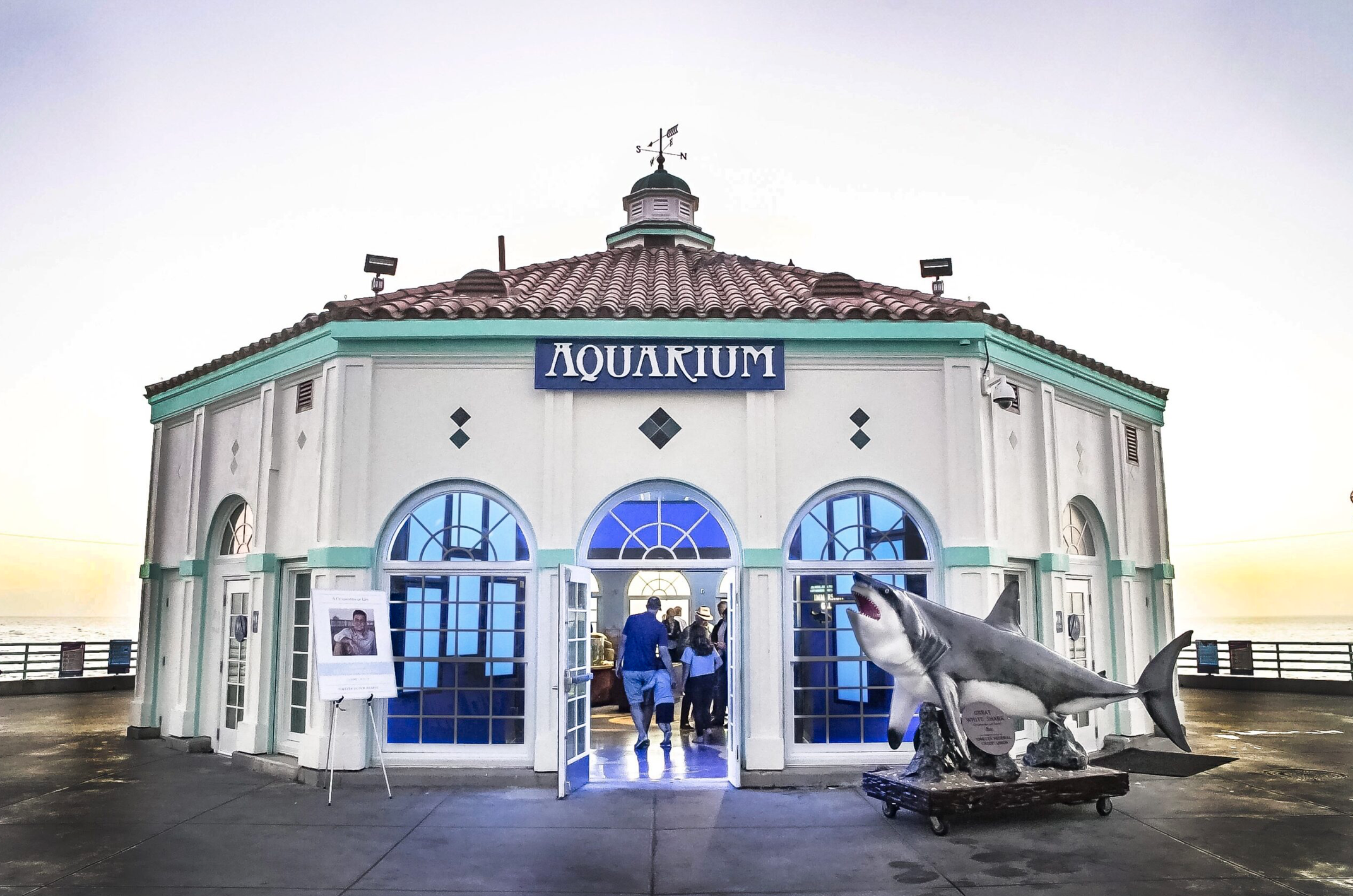
Manhattan Beach offers the nearest local example of a pier head put to a different use. The Roundhouse Aquarium was originally built as a pavilion in 1922 and converted in 1979 into a free marine science education center operated by a nonprofit. It draws around 300,000 visitors a year and runs school programs serving students bused in from across Los Angeles County. A $5 million revitalization completed in 2018, funded primarily through a private donation from the Harrison Greenberg Foundation and led by Skechers president Michael Greenberg in memory of his son, transformed the interior into a state-of-the-art teaching facility. The model is not without its financial fragility — the aquarium recently had to ask the Manhattan Beach City Council for $80,000 a year in maintenance support.
The Hot Potato
There is a reason pier decisions tend to get deferred, and it is not purely financial. No elected official wants to be the one who brings the hammer down on a community landmark. The pier is popular. It photographs well. It appears on city branding. Proposing to close it, demolish it, or replace it with something that requires a bond measure or significant new spending is not an obvious career enhancer for anyone on a city council. The path of least political resistance has always been the patch-up: spend enough to keep it open, avoid the big decision, and leave the harder question to whoever comes next.
Hermosa has, in various forms, been on that path for years. The structural report is significant not just for what it found, but for what it does to the political calculus. Deferred maintenance and incremental repair have been the default not because anyone formally chose them, but because no one formally chose anything else. The engineering assessment changes that. It establishes, on the public record and in inflation-adjusted dollars, what the default option actually costs: $210 million through 2070 versus a $44.5 million replacement. It is now harder for any council member to vote for another round of patch-up repairs without acknowledging what they are voting for.
Pier cost calculator
Project cost
$44.5M
Interest rate
6.0%
Bond term
30 years
Annual payment
—
principal + interest
Total paid
—
—
Total interest
—
—
Per $100k AV
—
annual ad valorem
Cost by assessed value per property owner
Ad valorem: cost scales with your assessed value. Flat parcel tax is equal across all parcels.
The funding challenge is real and should not be minimized. Hermosa has no hurricane on its insurance claim, no FEMA trigger, no standing federal disaster declaration. Any significant pier work would need to be funded through state coastal grants, federal programs without obvious applicability, local bond measures (most likely), or private sources. None are quick, and some require a committed direction before the money appears. Coastal Commission approval adds another layer of complexity and time that other states' pier projects do not face.
The risk for Hermosa is that the political difficulty of committing to a course converts instead into another cycle of repairs, and another after that, until the structure's condition removes the choice entirely. That is roughly what happened in Ocean Beach. The 2018 report found the pier beyond its service life. The city kept patching. A 2023 storm knocked a pile into the ocean and settled the matter.
The engineering window the Hermosa report identifies closes between 2032 and 2036. That is close enough that the current council will need to at least begin the formal planning process if the recommended timeline is to be met. What the city builds, how it pays for it, and what the pier is for when it is done remain genuinely open questions. Whether to engage with those questions seriously is, at this point, less open than it used to be.
Assuming that Hermosa taxpayers have to fund the cost of a pier replacement, that would equate to an average parcel tax of $500-$600 per property. Each year for 30 years. That burden should accelerate the conversation about innovation, commercial partnership and how much we want to ensure that our city has a pier for the next 50 years and beyond.
FURTHER READING
 Hermosa Review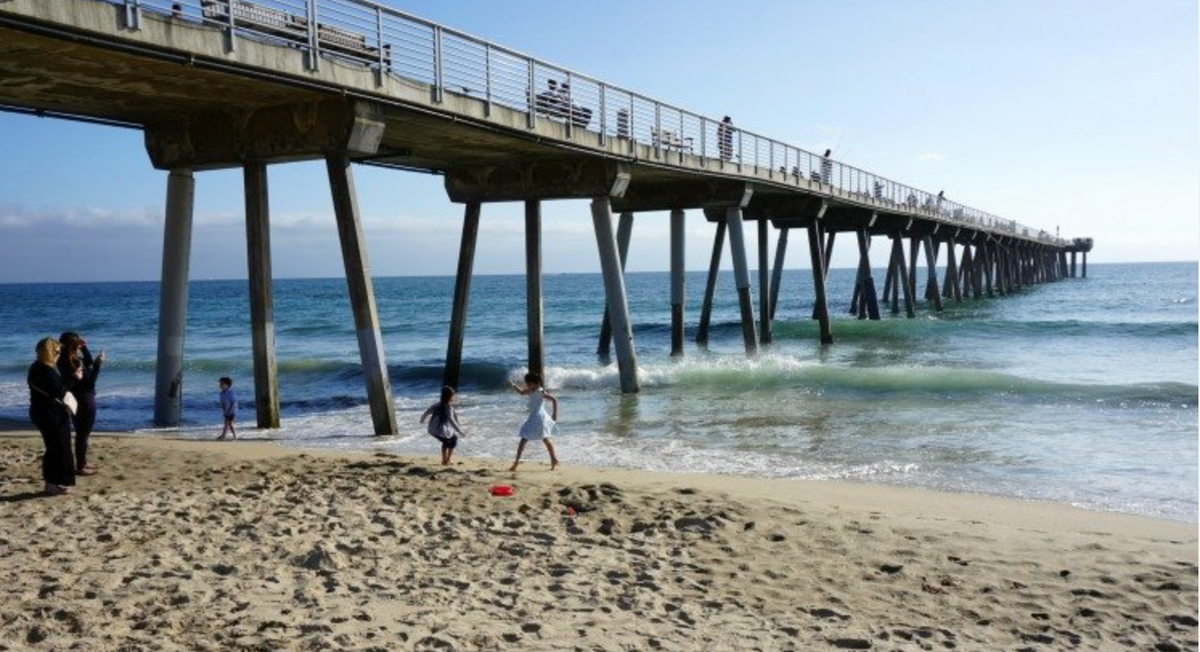
 Hermosa Review
Read next

SPECIAL REVIEW : The Coastal Commission Is Coming for Hermosa's Walk Streets
The Coastal Commission is quietly using building permits to force Hermosa Beach toward charging walk street and Strand homeowners annual fees for front yards they've maintained for generations. And finishing the city's Local Coastal Program is unlikely to save them.

Valerie's Story
From Survival to Service: One Woman's Journey Through Homelessness. A Harbor Interfaith outreach worker shares her story of childhood homelessness, addiction, and transformation.


IN DEPTH : Hermosa Beach's Green Energy Switch: Cost and Confusion Spark Resident Concerns
Questions of cost and transparency frustrate residents

IN-DEPTH : Housing Development
How did one apartment building become a lightning rod for the argument over housing density ?