

Planning Commission Approves Controversial 901 Hermosa Avenue Redevelopment
Historic showroom redevelopment gets go-ahead after lengthy debate over square footage and parking

Contention over square footage, enforcement and parking concerns dominates debate on historic building's future
The Hermosa Beach Planning Commission approved a contentious renovation plan for 901 Hermosa Avenue Monday night, but only after extensive debate about a novel design feature that one commissioner called fundamentally unenforceable.
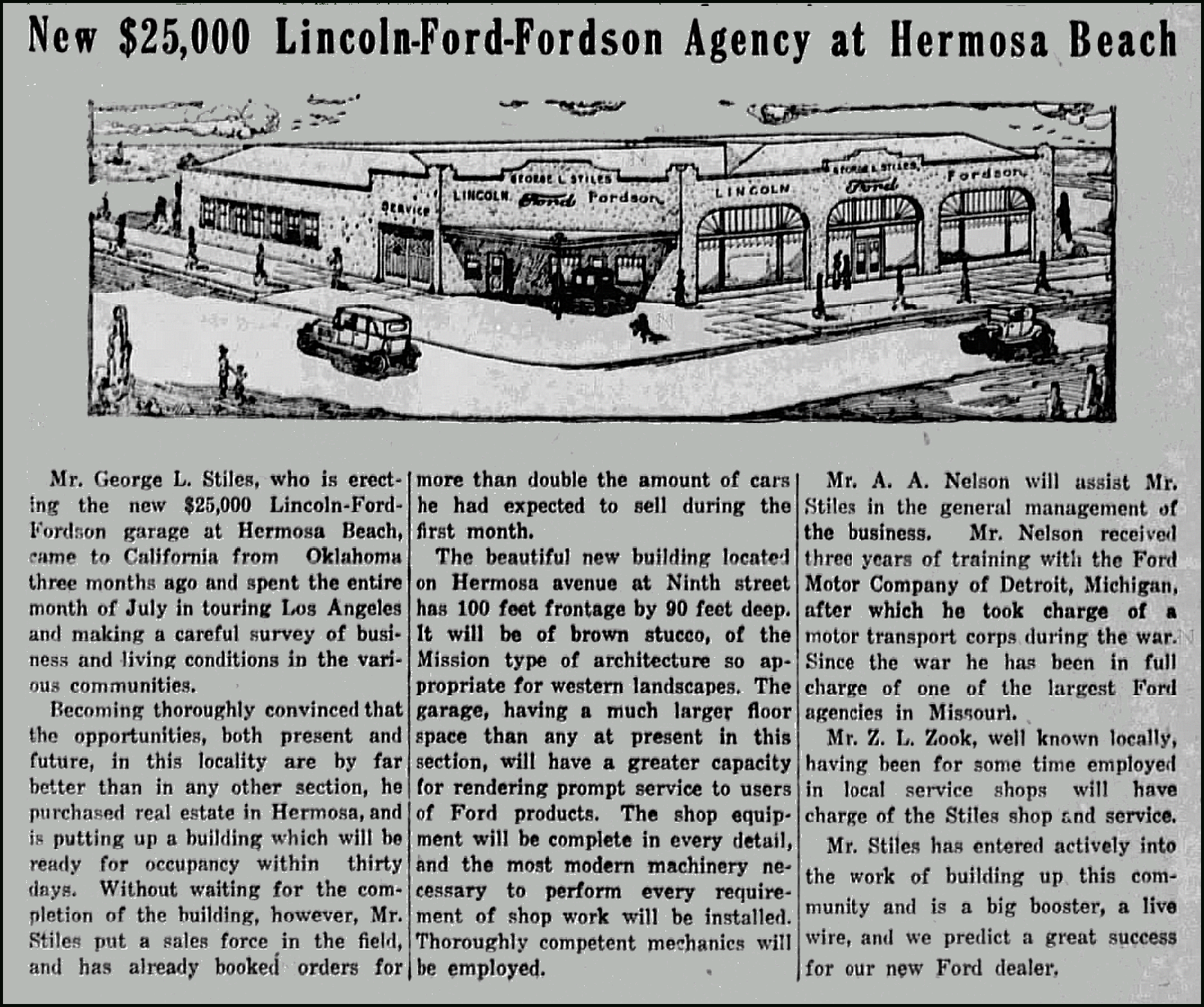
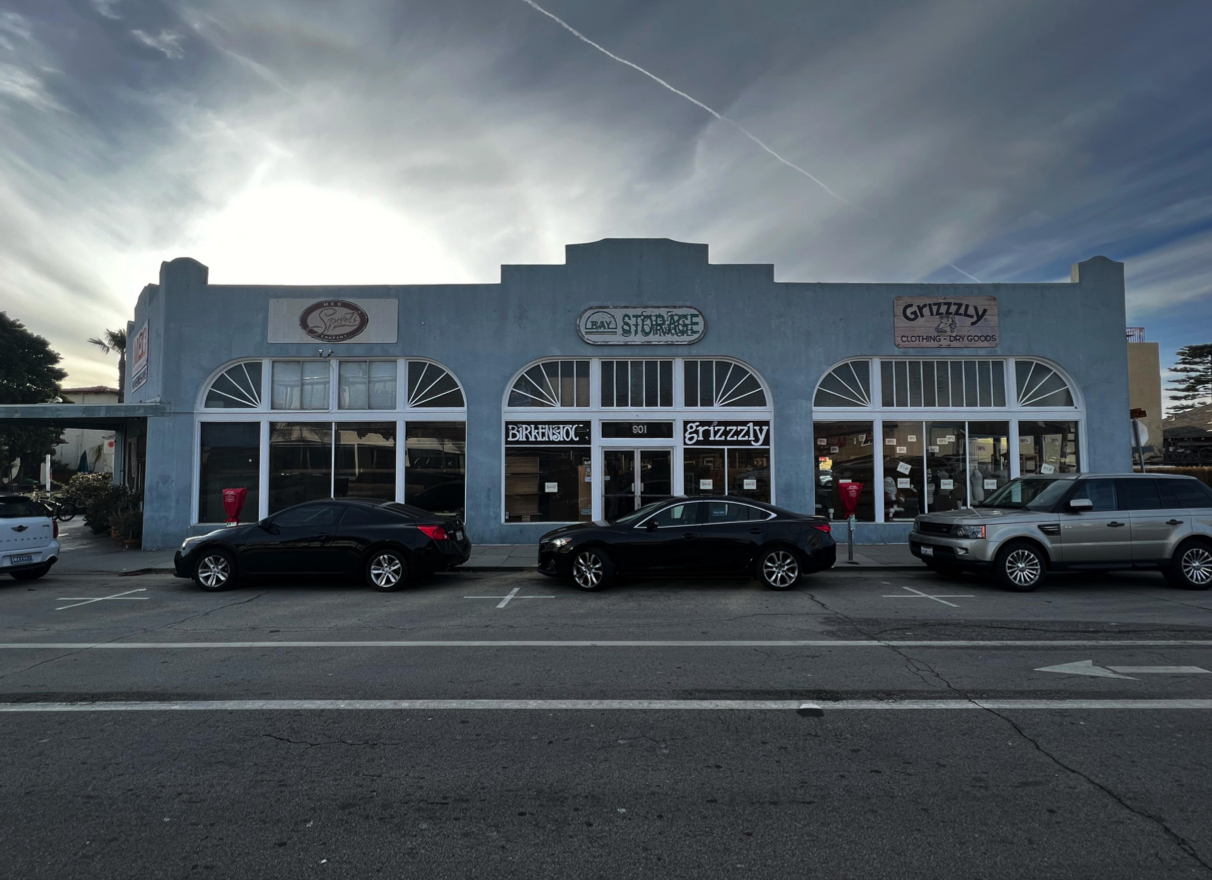
The project, proposed by applicant Kyle Ransford via 901 Hermosa Avenue Partners, would renovate the nearly century-old commercial building at the corner of Hermosa Avenue and 9th Street, adding a third story while preserving elements of the historic facade. The building, constructed in the 1920's, currently houses 12,012 square feet across two floors and three parcels.
Return Engagement
The application was making its second appearance before the commission. At an October 21 meeting, commissioners continued the item to allow the applicant and staff time to prepare a detailed breakdown of the existing and proposed building square footage after questions arose about the calculations.
"Obviously, for those who may not be familiar, this is our second attempt to address the issues raised in this," Commissioner Pete Hoffman noted.
Staff reported that since October, they had reviewed permitted floor plans for the building and confirmed the 12,012 square foot figure represents the accurate existing floor area. The revised plans now clearly delineate which spaces count toward that total and which don't, including areas like stairways, elevators, mechanical rooms, and the controversial "decommissioned" section.
The Parking Puzzle
The project's most controversial element emerged from an attempt to avoid triggering parking requirements. Under city code, adding more than 10% to a building's square footage requires additional parking spaces, a near-impossibility on the constrained downtown site.
The applicant's solution: "decommission" 1,340 square feet on the second floor. This space would physically exist but be structurally sealed off and prohibited from use, allowing the project to claim a net increase of only 793 square feet, safely under the 10% threshold.
The proposed third-floor addition would total 4,058 square feet and include office space, outdoor amenities, and raised gardens. A lot line adjustment would also merge the three underlying parcels into one.
Brandon Strauss, representing the applicant, emphasized that staff had carefully reviewed the calculations: "We really want to thank the staff for working so diligently with us to resolve the issues that came up in the last hearing."
The applicant also provided a letter from their structural engineer justifying the decommissioned area as "structurally critical for seismic force resistance," noting that the building has different floor heights on different sides to maximize usable space.
"What's the Punishment?"
Despite the clarified square footage calculations, Commissioner Hoffman voiced the strongest opposition, questioning whether the city has adequate tools to prevent future owners from simply cutting a door into the decommissioned space and leasing it out.
"How many garages in our city that are required parking are full of something besides parked cars?" Hoffman asked, before outlining his concerns about enforcement. "1,300 square feet at, what, $50 a square foot a year? This is a space that's worth $60,000. In a couple of years, we could pay off for it."
Hoffman acknowledged his appreciation for the project design but remained troubled by the precedent: "It doesn't feel right to me that we're just going to pretend like that 1,300 square feet, that cube has been pulled out, and now this problem has been solved."
Community Development Director Alison Becker explained that violations could result in fines starting at $250 and escalating to $1,000, plus potential revocation of the precise development plan and involvement of code enforcement.
But Hoffman remained unconvinced: "I simply can't approve this with pretending like those 1,300 square feet that are worth hundreds of thousands of dollars over the life of this new, renewed building are going to remain vacant."
The Enforcement Discussion
Chair Steve Izant attempted to address the concerns by asking whether the commission could recommend stronger penalties specifically for violations of the decommissioned space condition. After consultation with city staff and legal counsel, the commission ultimately agreed to forward a separate recommendation to City Council calling for a comprehensive review of enforcement mechanisms for precise development plans and conditional use permits.
As the discussion continued, Izant voiced his reluctant support: "I want to support this project. But at the same time, I don't want to, you know, five years from now, find out that this whole thing now has been leased out and they're making tons of money hand over fist."
Commissioner McNally offered a contrasting perspective, questioning the underlying assumption: "To your comment, Commissioner, wouldn't our goal be that every business makes money hand over fist? And that they bring value to the city"
As the discussion continued, it highlighted a fundamental question: whether the commission's role is to prevent potential abuse of the system, or to approve seemingly compliant projects while trusting that enforcement mechanisms, however imperfect, will address violations if they occur.
"So I do believe there needs to be a review of it," said Vice Chair Michael Flaherty, who supported the project despite sharing enforcement concerns. "And once again, I don't believe that's our role, but it needs to be looked at."
City staff clarified that the concept of decommissioned space isn't unprecedented, citing the Vista restaurant expansion as a previous example where interior space was decommissioned to enable outdoor dining areas.
The Case for Approval
Supporters of the project emphasized that the building, which has housed many small businesses over the decades, needs updating to remain viable.
"I see that building as a white elephant," said Commissioner Greg McNally. "And the businesses that are in it now will not be there very long. And there has to be some change."
Commissioner Kate Hirsh praised the applicant's approach: "I think it's unique that we have an owner-operator that's suggesting to try and preserve the character of the existing building that has been in the city for so long while trying to improve it and create a more usable space for it."
Kyle Ransford, the property owner, thanked staff for conducting site visits to verify the existing conditions: "We've had a nice on-site experience of going in every nook and cranny of the building and kind of looking at various things that I think we all discussed here before are very strange conditions that no one in this room was responsible for."
Mr. Ransford is a prominent commercial real estate investor through his firm Cardinal Investments. He was also the founder and CEO of El Segundo-based meal kit delivery business Chef'd which shut down abruptly in 2018, after failing to secure additional funding. Chef'd had previously raised around $40m in financing from outside investors.
What's Next ?
The final vote was 4-1, with Commissioners Hirsh, McNally, Flaherty, and Izant voting yes, and Commissioner Hoffman voting no.
The project will now advance to the City Council in January, where it could potentially be appealed by any opponent, or pulled by the council for a new public hearing. The approval includes a condition allowing the applicant to submit building plans "at risk" while awaiting Coastal Commission approval, meaning the applicant would forfeit fees if the coastal permit is denied.
The commission's concerns about enforcement will be transmitted to the City Council as a separate matter for future consideration.
RELATED CONTENT :
 Hermosa Review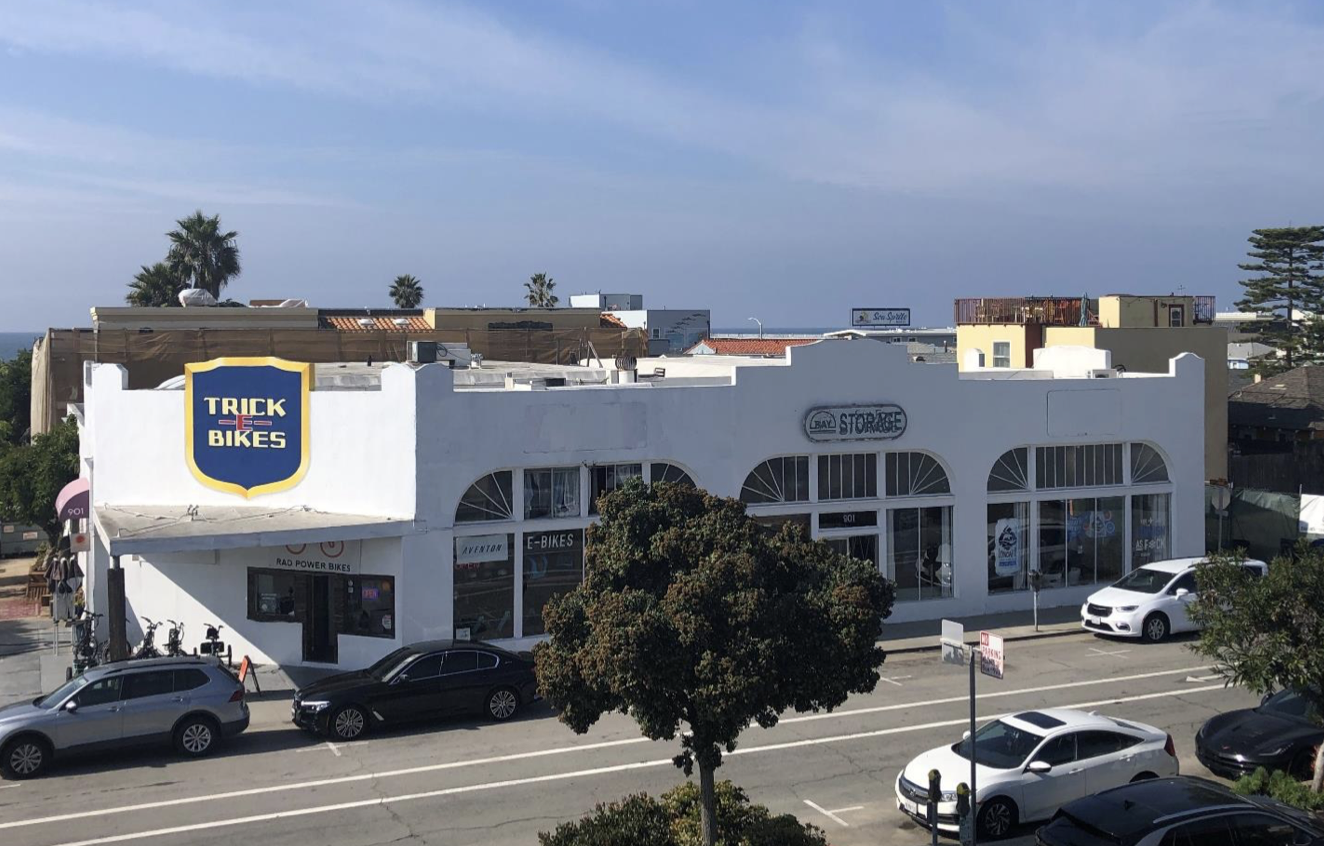
Read next

Detoy Elected Mayor, Keegan is New Pro-Tem as Saemann Passes the Gavel
Michael Detoy took the gavel as Hermosa Beach's new mayor Monday night, with Michael Keegan elected mayor pro tem on a 4-1 vote — a lone dissent the only crack in a mercifully drama-free evening

E-Bike License Plates A Step Closer With Sacramento Proposal
License plate scheme proposed in new State Assembly legislation

Robert's Liquor Gets the Deal It Was Promised — After a Last-Minute Reversal by City Staff
All's Well That Ends Well? City staff arrived at Tuesday's hearing with a last-minute revision. Robert's Liquor left with its 35-year-old permit intact and exactly the four conditions it was promised.

History Repeating? Hermosa's Gavel Game Set to Continue in Mayor Pro Tem Rotation
Forthcoming mayoral rotation seems set to be overshadowed by personal disagreements and tensions that have boiled over in recent weeks.