Tuesday's agenda charts opposite paths for two sports at the same facility. Pickleball is poised for expanded access after a million-dollar renovation. Basketball hopes to rescue hoops removed after an unscheduled safety review
The police department is already running overtime patrols to assist with public safety concerns, including problems with e-bikes. Now council will decide whether to provide that effort with new resources.
Hermosa Beach faces a $548K budget shortfall at midyear, with projected spending increases vs. original forecast outpacing revenue gains 3-to-1. Staff proposes one-time funds to close the gap for the third straight year.
The City Council postponed a decision on outdoor dining encroachment fees Tuesday night—this time at the last minute after an 11 a.m. email from a business owner requested more time to gather information—leaving frustrated business owners and supporters to wonder when, or if, relief will come.
Encroachment fees are levied on businesses who use city property for outdoor patios (or selling space as in the case of three affected Pier Plaza retail businesses). Councilmember Michael Keegan previously requested a council agenda item to potentially reduce the fees charged to businesses like Mickey's Deli or The Green Store, where the outdoor space is not used for full service dining or alcohol, and where the location is some distance from the main commercial downtown district. He also asked for the council to consider the retail businesses on the Plaza (Spyder Surf, The Treasure Chest and Heavenly Couture) for potential relief from recent fee increases.
A Community Gathering Place
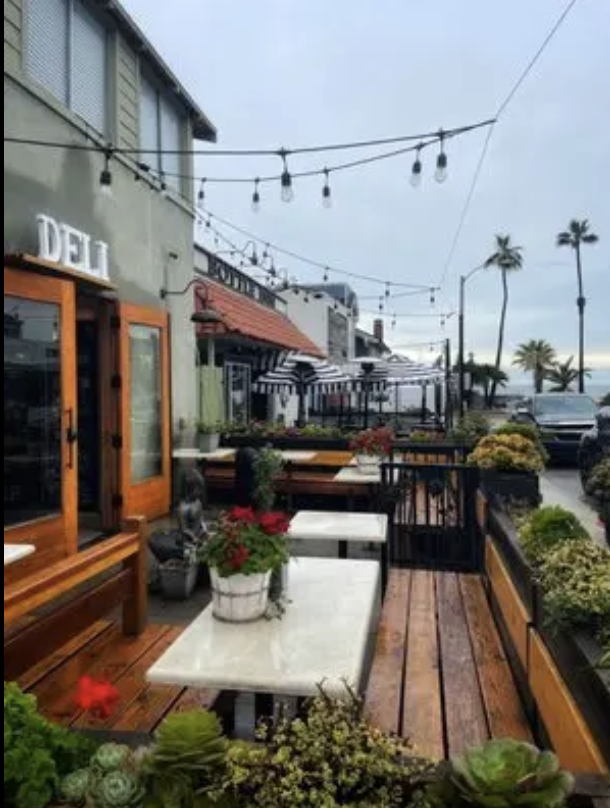
The Green Store emerged as the focal point of Tuesday's public testimony, with multiple speakers describing owner Lana Istwani's small outdoor patio as a neighborhood institution rather than a revenue-generating dining deck.
Elka Worner, who grew up in Hermosa Beach, painted a nostalgic picture: "Growing up, my friends and I would stop at the Green Store on our way home from the beach. We'd walk in with sandy feet and wet bathing suits to buy Abba-Zabas and Slurpees. Thankfully not much has changed at the Green Store."
Worner noted that Istwani works the deli and register from 7 a.m. to 7 p.m. every day, and that the patio serves more as a community space than a profit center.
"The Green Store patio... is a community space that Lana created for her customers and to make the store more welcoming," Worner said. "The patio is not a major revenue generator like it is for the Pier Plaza restaurants or Martha's across the street, which is known for its outdoor dining."
The Green Store patio
Mark Paaluhi, a longtime resident, seconded that view: "I live down the street from there and I meet some of my friends there to have a little drink or food and stuff on the little patio there. So I think it's very valuable. Lana and her family do a great job and her staff—they're really making it a community-based location."
Worner questioned the city's priorities, noting the contrast between debating fees that would cost the city roughly $4,000 annually and the recent $51,000 appropriation for the St. Patrick's Day Parade.
"Why are we hassling small businesses over nickels and dimes when we just gave the chamber $51,000 for the St. Patrick's Day parade?" Worner asked. "Don't get me wrong, I love the parade, but we should also be supporting small neighborhood stores that have been here for decades."
She urged the council to roll back encroachment fees to $1 per square foot for businesses like the Green Store, arguing the rate "reflects the difference between neighborhood grocery stores and full-service restaurants."
"Once these small iconic businesses are gone, they don't come back," Worner cautioned. "They get replaced by something generic or corporate, something that doesn't reflect the character of Hermosa Beach."
Lack of Transparency Criticized
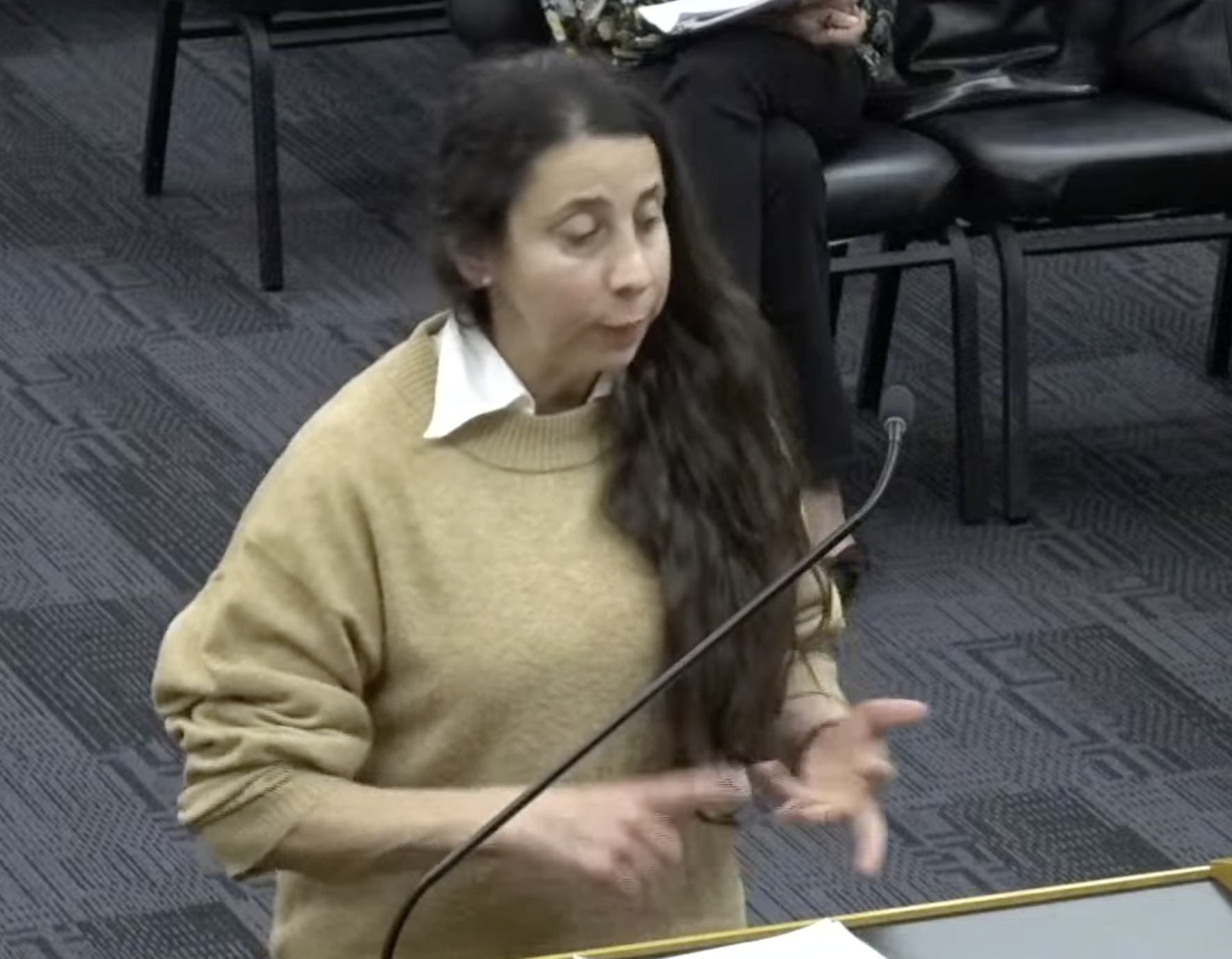
Lana Istwani herself spoke with evident frustration about how the fee increase was originally implemented.
Green Store owner Lana Istwani making her case at City Council on Tuesday evening
"I'm finding it a hard time that I'm still wrestling with the city about this encroachment fee that the city back in 2022 or 2023... took it upon themselves to impose on us small businesses without even giving us an opportunity to speak about it beforehand," Istwani said.
She described being "broadsided" with a letter announcing a 100% fee increase, then struggling to get answers from staff about the justification.
"I reached out to Douglas Krauss twice, emailed him, called him, had him come over, and I was like, how? What basis did you guys come upon this fee and how do you increase it a hundred percent?" Istwani recounted. "He just said, yeah, there were countless meetings. I was like, why were we not notified?"
When Krauss presented information to the council at a previous meeting, Istwani said she found it "very disturbing because it was supposed to be information guided to you so you are informed about the decision, but it wasn't. It was misinformation."
She criticized the lack of clear criteria for the fee structure: "There's no set criteria... he could not speak to the factors leading to the increase."
Istwani pointed out that her patio receives no sun for over half the year, doesn't serve alcohol, and has a vastly different business model than restaurants with table service—factors she said weren't properly considered.
"This is Who We Are"
Laura Peña, wearing a "We Are Hermosa" hat, framed the issue in terms of the city's identity and economic development priorities.
"1914—that's how old The Green Store is," Peña said. "We should want to do everything we can to keep them thriving and supporting our community."
Peña suggested the city should view small business patios differently: "Why don't we look at this as an opportunity for placemaking? Because when I went to the green store before they had their outside dining deck, I would go grab a sandwich, go on the beach. Now I go there to meet community."
She described a recent Saturday when the patio was packed with families, people moving tables and chairs to accommodate each other. "This is who we are. This is not just a hat that we wear. It's who we are because what we believe in."
Peña noted that insurance premiums and cost of goods are rising for business owners: "Fixed costs do [make a difference]. So anything that you can do to help... we say we support retail. Why don't we support our retail that needs us now?"
Councilmember Michael Keegan defended the postponement, noting he had spoken with Dennis Jarvis, co-owner of Spyder Surfwear, who also wanted the delay. Keegan promised to ensure any fee savings would be made retroactive to January so businesses wouldn't lose money during the delay.
Mayor Rob Saemann acknowledged the frustration but defended the delay, saying he hoped additional information might help inform the council's decision. He promised to support the idea that if fees are reduced at the next meeting, any savings would be made retroactive to January.
Tuesday's agenda charts opposite paths for two sports at the same facility. Pickleball is poised for expanded access after a million-dollar renovation. Basketball hopes to rescue hoops removed after an unscheduled safety review
The police department is already running overtime patrols to assist with public safety concerns, including problems with e-bikes. Now council will decide whether to provide that effort with new resources.
Hermosa Beach faces a $548K budget shortfall at midyear, with projected spending increases vs. original forecast outpacing revenue gains 3-to-1. Staff proposes one-time funds to close the gap for the third straight year.