Two residents have forced Hermosa Beach to restart its pickleball fee process, filing open-meetings complaints that the city council voted on fee increases buried inside an unrelated agenda item.
California lawmakers are taking another swing at the e-bike problem, and for a city like Hermosa Beach, where electric bikes have become a significant part of daily life and a persistent source of community conflict, the proposal is worth watching closely.
Assembly Bill 1942, introduced by Assemblywoman Rebecca Bauer-Kahan (D-Orinda) and dubbed the E-Bike Accountability Act, would require owners of Class 2 and Class 3 electric bicycles to register their bikes with the DMV and display a license plate. Riders would also need to carry proof of ownership tied to the bike's serial number, with fines for non-compliance.
Bauer-Kahan framed the bill as an urgent public safety response, arguing that the dramatic rise in e-bike injuries has made it difficult for law enforcement to hold reckless riders accountable, particularly on higher-speed Class 2 and 3 models, without a registration system and visible plates.
Hermosa has lived this problem in concrete terms. In December 2025, HBPD ran a coordinated enforcement operation on the Strand, citing seven riders in a single evening for wheelies in pedestrian-heavy areas, riding in walk-only zones, running stop signs, carrying passengers, and riding three-up on one bike. The operation impounded bikes. Within days, violations were back.
The Class System
Not all e-bikes are the same, and the distinctions matter for understanding what AB 1942 would and wouldn't do.
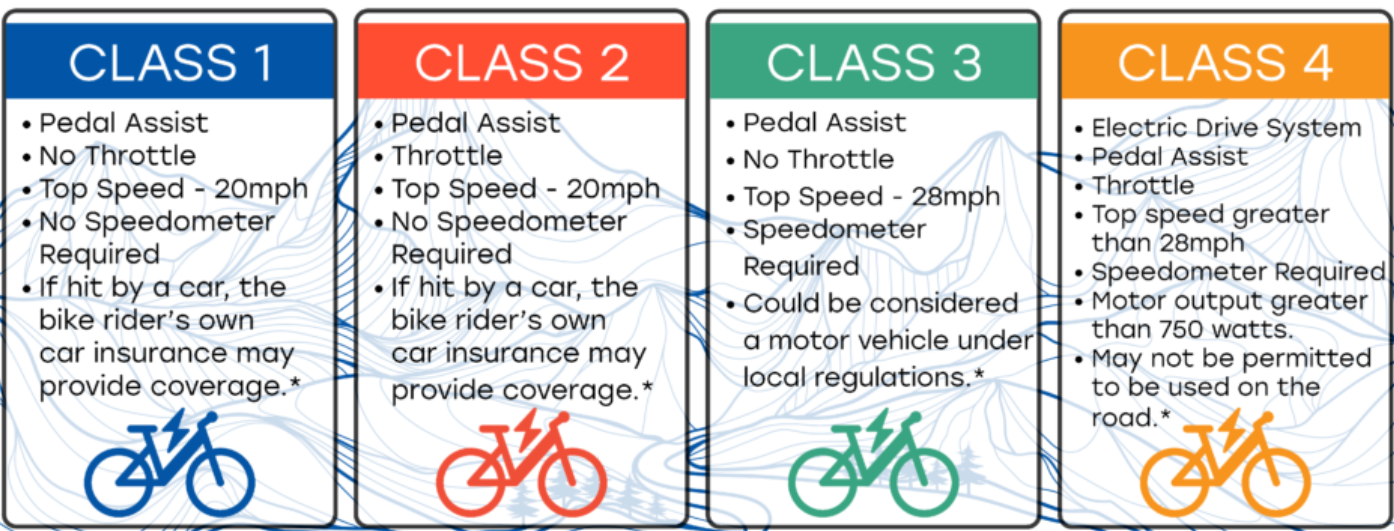
Under current California law, e-bikes are divided into three classes: Class 1 (pedal assist only, up to 20 mph), Class 2 (throttle-equipped, up to 20 mph), and Class 3 (pedal assist only, up to 28 mph). Class 1 bikes only provide motor assistance while the rider is pedaling and cut off at 20 mph, the e-bike equivalent of a traditional bicycle with a boost. These are the least powerful and generally the least controversial. AB 1942 would not touch them.
Class 2 bikes add a throttle, meaning the rider doesn't have to pedal at all to get up to 20 mph. Class 3 bikes go faster, up to 28 mph, but require pedaling to engage the motor. State law already restricts Class 3 to riders 16 and older and requires helmets. AB 1942 would require registration and plates for both Class 2 and 3.
Then there's a fourth, unofficial category: bikes that aren't legally e-bikes at all. Modified bikes, overseas mail-order "e-motos," and throttle bikes with motors well above the 750-watt legal limit regularly appear on Hermosa streets and the Strand. AB 1942 doesn't address them in any meaningful way, although existing laws already prohibit them for street use.
The Right Target?
Critics of the bill argue it would burden commuters, families, and workers who rely on legal Class 2 and 3 e-bikes for daily transportation, while doing little to address illegal e-motos and heavily modified bikes that already exceed legal speed limits and skirt existing rules. The bad actors won't register anyway, they say. Law-abiding riders would absorb the compliance costs. Supporters argue that failure to display a license plate would give police an easy way to identify non-compliance, and those fines could be used to support the system.
Hermosa's own enforcement experience complicates that framing, though. The violations that have drawn the most citations here, including wheelies in pedestrian areas, running stops, riding three-up, and ignoring walk-only zones, aren't being committed exclusively by riders on illegal hardware. They're being committed by riders on ordinary e-bikes who simply don't follow the rules. The problem, in large part, is behavior. A license plate doesn't change behavior. What it does is create accountability after the fact, which is something Hermosa currently lacks almost entirely.
Class 2 and Class 3 e-bikes, the two categories targeted by the bill, likely account for over 90 percent of road-legal electric bikes in California. Treating that entire population as a regulatory burden is a blunt instrument, but it's also the population doing most of the riding and, based on local enforcement data, most of the violating.
The Case for Plates Anyway
The accountability argument behind AB 1942 is real, and Hermosa has a specific example to point to. In November last year, a victim was assaulted by a group of juveniles at 11th Court and Beach Drive and required hospital transport. The assailants were on e-bikes. Whether a visible license plate would have deterred the attack or aided identification afterward is impossible to say with certainty, but the question isn't unreasonable. Anonymity has consequences.
More broadly, when a rider causes a collision or injures a pedestrian and rides off, a plate creates a trail that currently doesn't exist. For a city with limited officers and a geography that makes pursuit impractical, that's a meaningful change. The city has explored contract code enforcement officers as a cheaper alternative to sworn police for Strand patrol, but even that approach runs into the same wall: no plate, no record, no follow-up. The city is investing considerable amounts of money in license plate readers for other applications, and supporters of e-bike plates argue that this is another obvious use case.
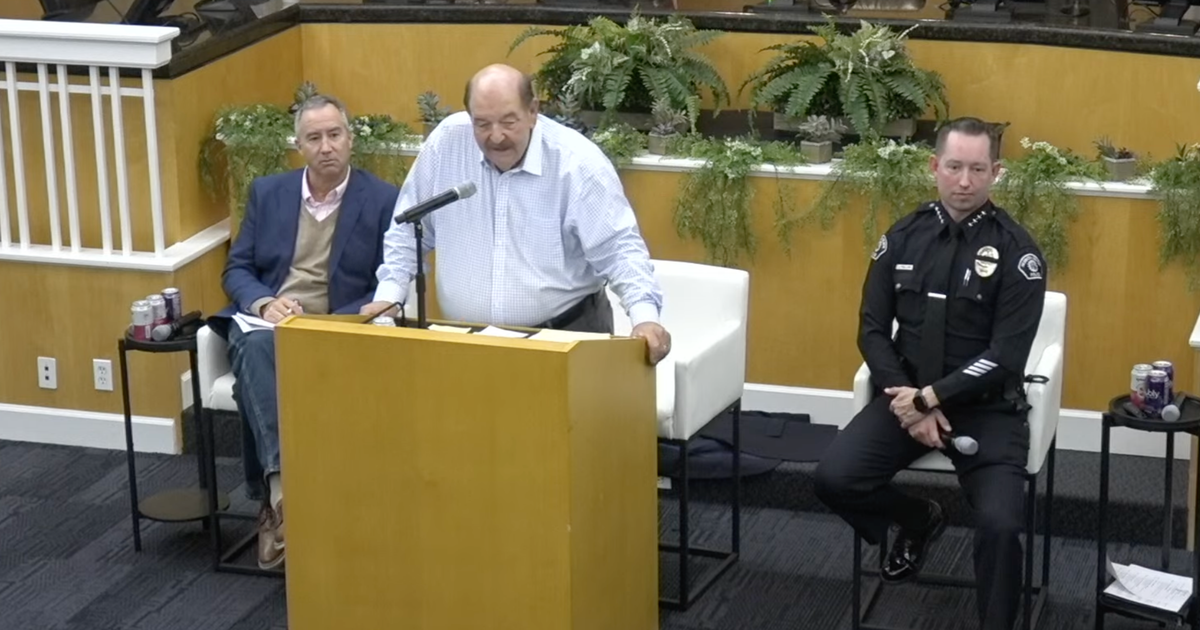
Hermosa has tried other approaches with mixed results. At a public safety forum late last year, city leadership discussed the challenge of juveniles in 'gangs' on e- bikes. Police Chief Phillips committed to ongoing targeted enforcement operations. The Beach Cities Health District began developing an e-bike diversion program. Hermosa Valley School launched a written and practical e-bike certification program for students who want to ride to campus, earning a Golden Bell Award from the California School Boards Association. These are all worthwhile efforts. None of them solve the accountability gap that a registration system would. Hermosa Beach Mayor Rob Saemann has also been gathering support for a local government coalition on this subject, using his position on the South Bay Cities Council Of Government to press for action. Speaking this week, Saemann said :
“I'm so happy to see this bill get started. It is exactly what I have been advocating for almost a year. I plan to support this in every way I can and encourage the leadership in the South Bay to do the same. First stop the SBCCOG.”
The bill is still in early stages, with committee hearings ahead. Hermosa's experience with e-bike enforcement, more extensive than most California cities of comparable size, gives the community standing to weigh in as it moves through Sacramento.
Two residents have forced Hermosa Beach to restart its pickleball fee process, filing open-meetings complaints that the city council voted on fee increases buried inside an unrelated agenda item.
A Los Angeles Superior Court judge tentatively sided with a local homeowner on Wednesday, finding the city acted outside its authority when it banned short-term rentals without state approval.